Why ANZ is the most cautious Big Four bank for PayID
ANZ was the last of the Big Four to fully integrate PayID into its retail offering, and the lag has shaped the bank’s posture in ways that customers feel. ANZ’s default daily transfer limit ceiling sits at A$20,000 per day — A$5,000 lower than the other three Big Four banks — and the Fraud Watch overlay runs more aggressively on first-time payees than any competitor outside NAB. For a casino-bound ANZ customer, the practical experience is slightly slower first deposits, slightly lower headline caps, and slightly more verification friction than the equivalent flow at CommBank or Westpac.
The flip side of all of this is that ANZ’s combined cautious limits and aggressive fraud overlay catch more scam-victim transactions than the other Big Four banks per capita. The customer who values that protection layer accepts the friction; the customer who wants the smoothest possible PayID-to-casino flow may find ANZ marginally more annoying than the alternatives. This piece walks the operational specifics so a current ANZ customer knows what to expect.
Setting up PayID in the ANZ app
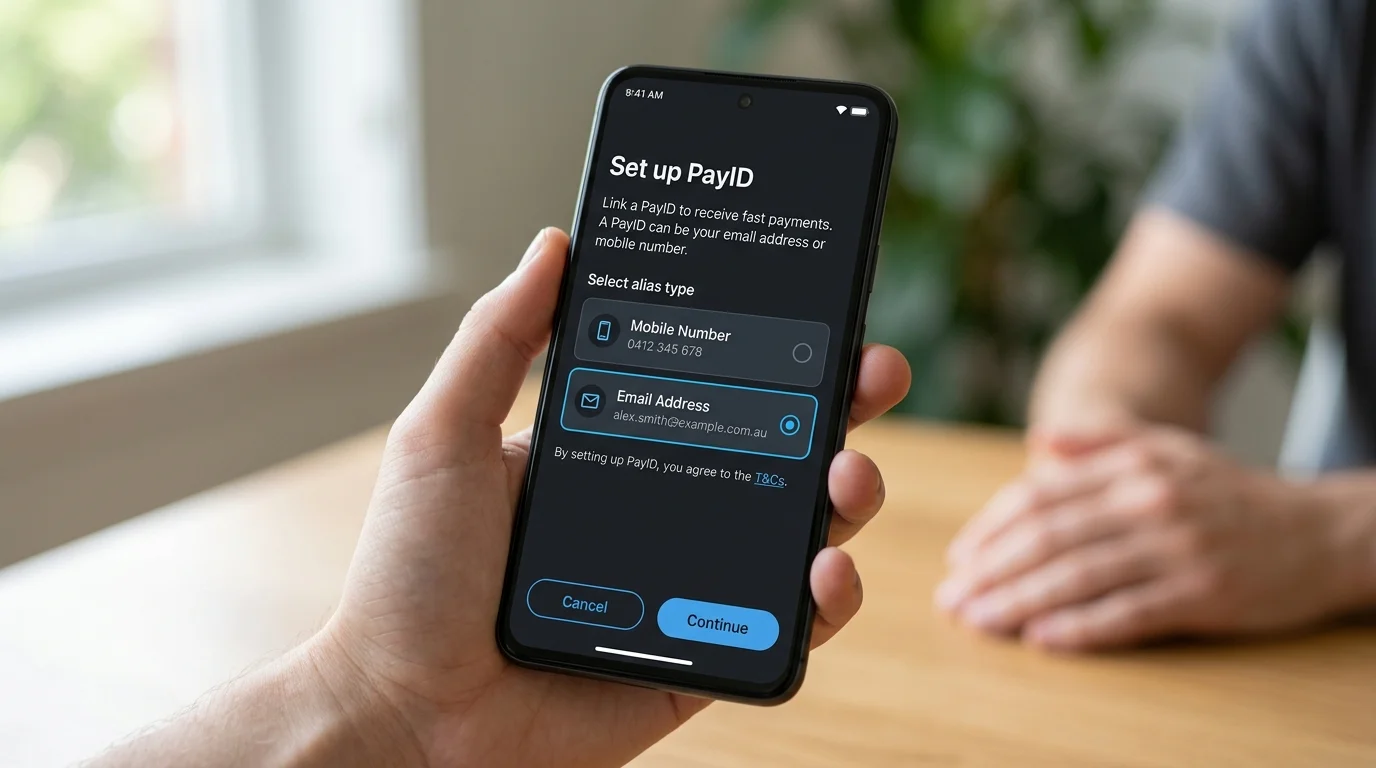
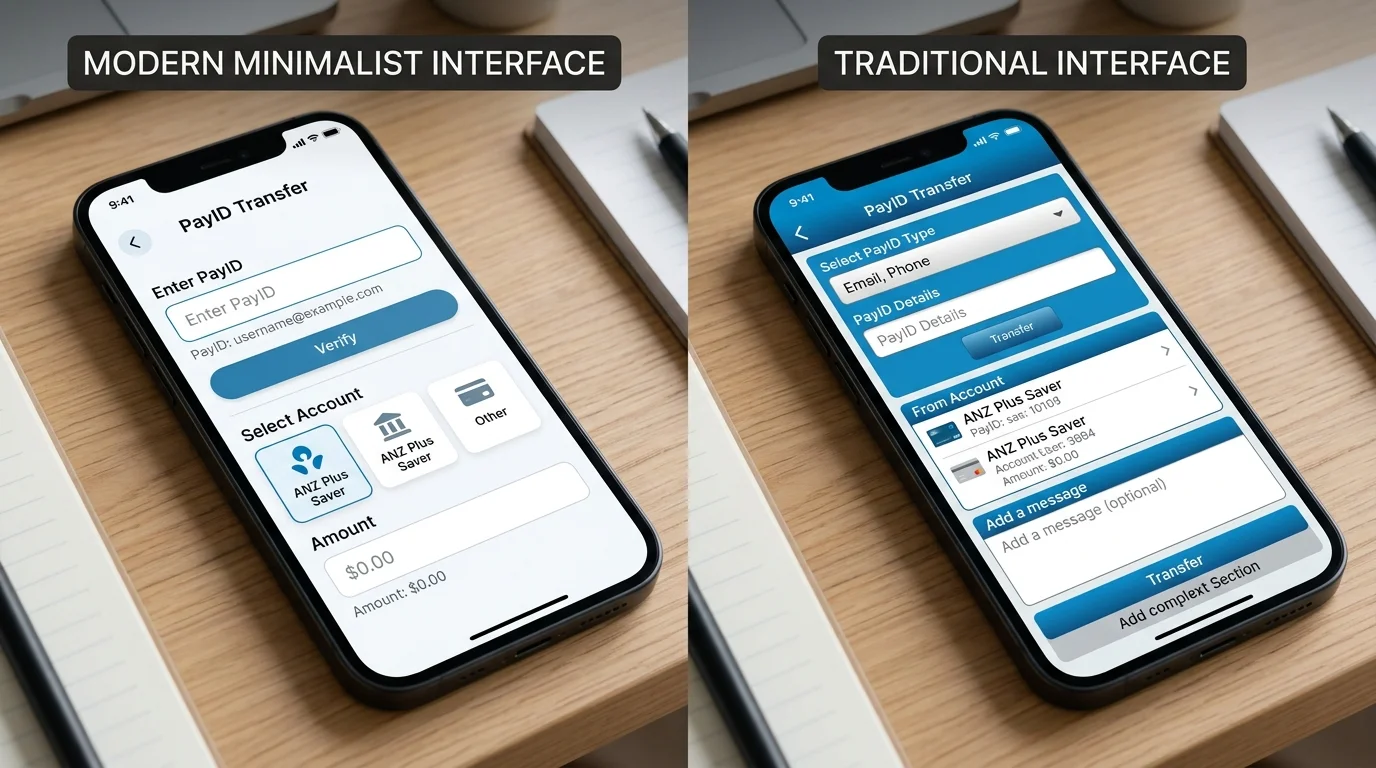
Open the ANZ App, log in, and tap the Pay tab from the bottom navigation. Select Manage PayID from the payment services list. The screen presents mobile and email alias options, plus ABN for business customers.
Tap Create PayID, choose mobile or email, and confirm the alias ANZ has on file. The bank sends a verification code or link to the alias, and you confirm to activate. The flow takes roughly three minutes for a customer who has both mobile number and email already verified on the account; first-time customers who need to add a phone number first should allow ten minutes total.
ANZ surfaces a more detailed consent screen than the other Big Four banks, walking through PayID’s data-sharing model and the bank’s responsibilities under the NPP rules. This is verbose but worth reading once because some of the disclosures explain why ANZ’s fraud overlay behaves the way it does.
The PayID attaches to your nominated transaction account during creation. If you have multiple ANZ accounts and want a different destination, change it during creation rather than after — switching the receiving account post-creation requires deactivating and recreating the alias, which takes another verification cycle.
ANZ Internet Banking on desktop supports the same flow with identical functionality. Most customers handle setup through the app because the verification flow is faster, but the web portal is fully functional for anyone who prefers desktop.
The A,000 daily limit ceiling and how to use it
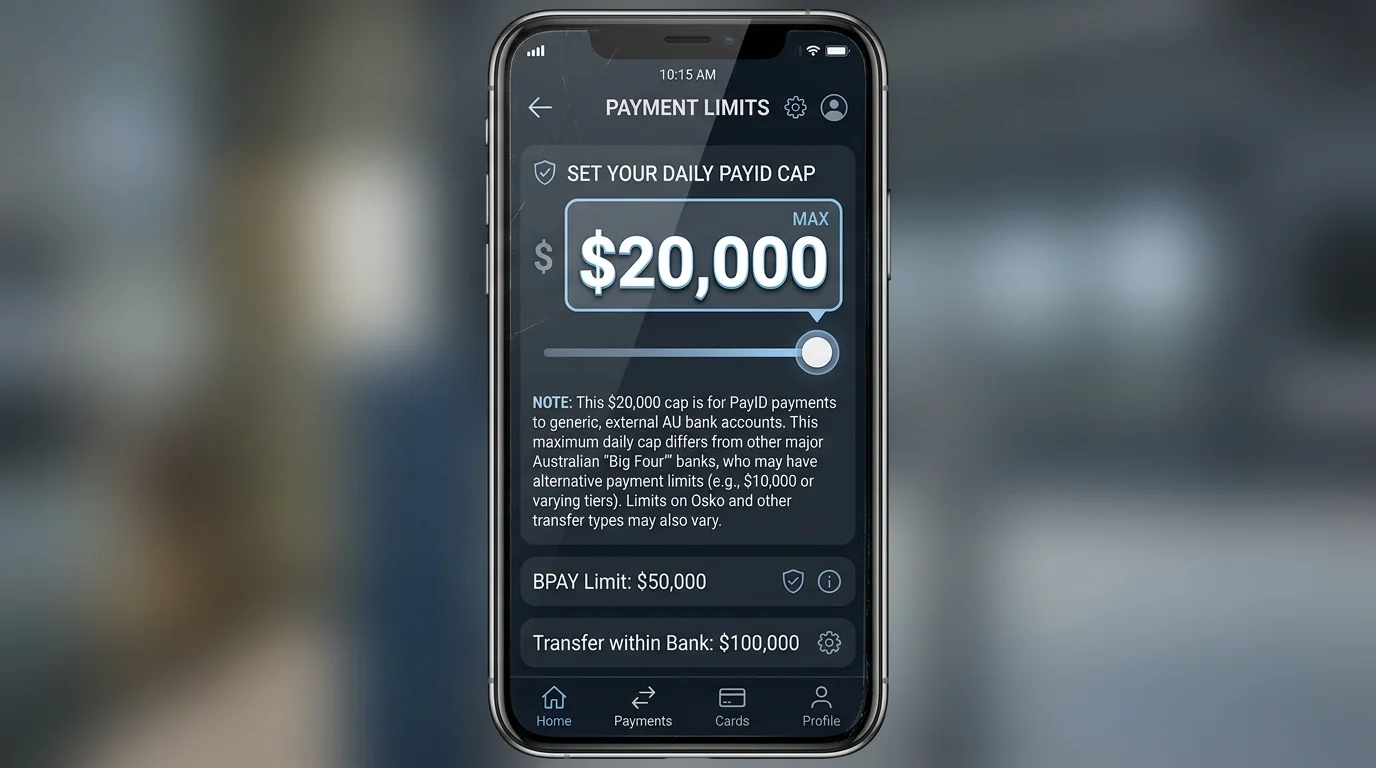
ANZ’s default daily transfer limit for new accounts sits at A$5,000, and the maximum addressable in-app sits at A$20,000 per day — the lowest of the Big Four. Across the major Australian banks the Big Four standard sits at up to A$25,000 per day in-app, with ANZ as the outlier; this difference is reflected in any guide that documents Big Four PayID caps.
To raise the limit, open the ANZ App, tap Profile, and navigate to Daily Payment Limits. The flow asks for the new limit value and applies it once you confirm via the app’s biometric or one-time code. Limit increases up to A$20,000 typically apply immediately, though ANZ occasionally adds a 30 to 90 minute delay on raises requested outside business hours.
Higher limits than A$20,000 per day require a phone call to ANZ. The customer service line can authorise temporary lifts up to A$100,000 for named transactions. The lift applies to the specific transfer only and the standing limit returns to A$20,000 immediately after the transfer clears.
The limit reset cycle is midnight Sydney time. An ANZ customer moving large amounts can use the rollover window to send A$20,000 at 11:55 PM AEST and another A$20,000 at 12:01 AM AEST, though ANZ’s fraud overlay is more likely to flag this pattern than the equivalent at CommBank.
How ANZ Fraud Watch handles first-time casino payees
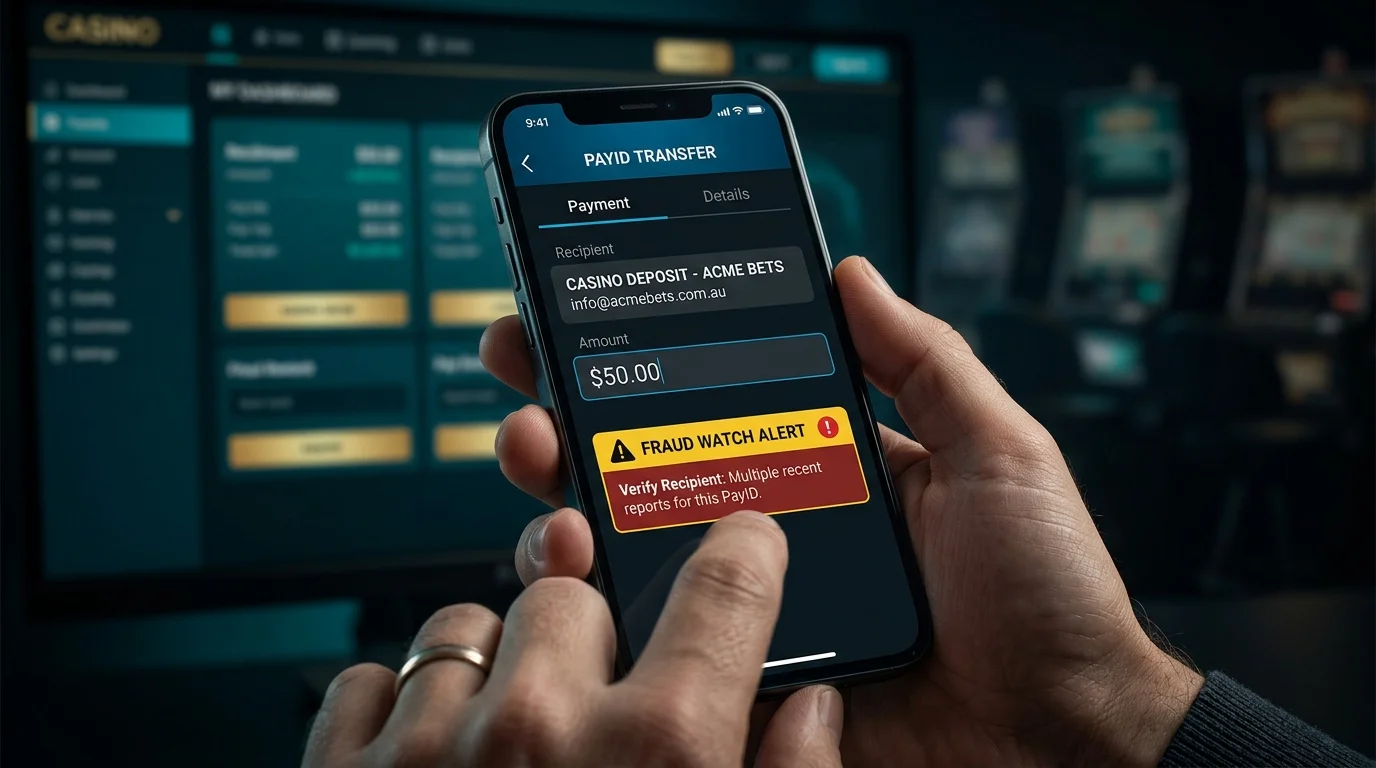
ANZ Fraud Watch is the bank’s outbound transaction monitoring system, and it is the most active fraud overlay among the Big Four for casino-bound transfers. The system flags first-time payees aggressively, with a heavier weighting on offshore-linked aliases. AUSTRAC’s published intelligence on “scambling” — the term for scams that use casino-style fronts to extract deposits from victims — has explicitly identified PayID as a channel of choice for fraudsters, and ANZ’s fraud team responds to that intelligence with more conservative defaults than its competitors.
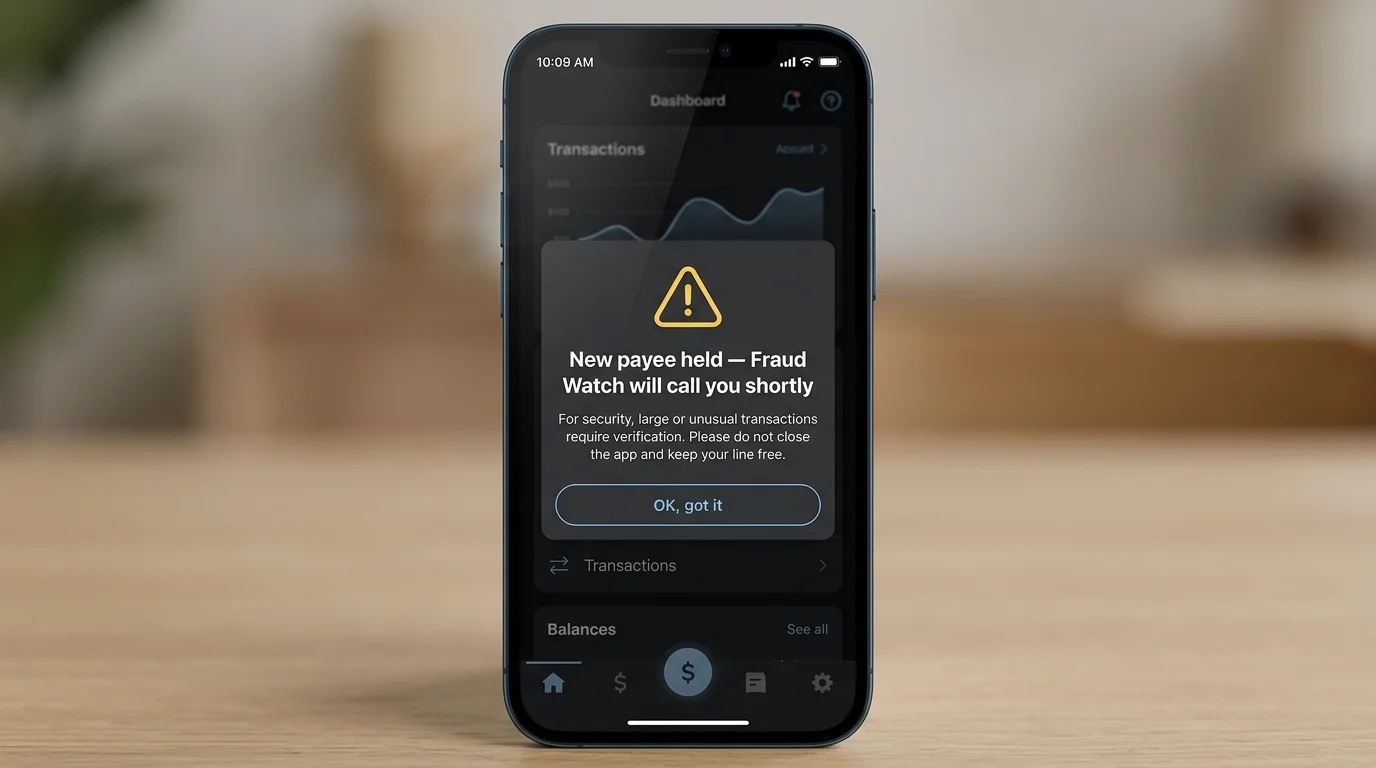
What happens in practice: an ANZ customer initiates a first PayID transfer to a casino’s alias. The transfer pauses on a “reviewing transaction” screen. The fraud engine runs three checks: the alias against ANZ’s internal watchlist, the customer’s transaction history for pattern matches, and the cumulative outbound flow on the account for the rolling 7-day window. One of three outcomes follows.
If all three checks clear, the transfer completes within 30 to 90 seconds. If one check flags but the others clear, the system surfaces an in-app confirmation prompt asking you to confirm the recipient and the purpose; confirm and the transfer proceeds. If multiple checks flag, the transfer holds and triggers an outbound call from ANZ’s fraud team within 10 minutes during business hours, 30 to 90 minutes outside. The call is similar to NAB’s: scripted scam-detection questions, honest answers release the hold, future transfers to the same alias usually clear without further pauses.
The hold rate on first transfers is higher than CommBank’s and Westpac’s. Roughly one in three first-time casino PayID transfers from an ANZ account triggers some form of additional verification — whether in-app prompt or fraud-team call. Plan for it. When the hold becomes a hard decline, the next step is the diagnostic process in our what to do when ANZ silently declines a casino deposit piece, which walks through the six common decline reasons in order.
ANZ Plus versus traditional ANZ accounts for PayID
ANZ Plus is the bank’s standalone digital product, built on a separate technology stack from the traditional ANZ retail platform. The two products handle PayID differently in ways that matter for casino customers.
Traditional ANZ accounts run the standard PayID flow described above, with the A$20,000 daily ceiling and the Fraud Watch overlay. ANZ Plus accounts run a streamlined PayID experience with a lower default ceiling of A$10,000 per day and a different fraud detection model that emphasises real-time signal analysis over the legacy rule-based approach.
For casino deposits, both products work, but the operational experience differs. ANZ Plus tends to clear first transfers faster (under 30 seconds in most cases) but has a lower headline limit. Traditional ANZ has the higher limit but slower first transfers due to Fraud Watch. Customers who deposit larger amounts at moderate frequency benefit more from traditional ANZ; customers who deposit smaller amounts more frequently benefit more from ANZ Plus.
The other difference is account opening. ANZ Plus accounts can be opened entirely in-app in under ten minutes, which makes them practical to set up specifically as a casino-deposit channel separate from the customer’s main banking. Some players use this pattern to compartmentalise gambling-related transactions away from the household account.
Common ANZ PayID casino transaction failures
First, the A$20,000 ceiling itself. ANZ customers who assume the Big Four ceiling is uniformly A$25,000 will find their larger transfers failing at the A$20,000 line. The fix is to either split across calendar days or phone in for a one-off lift.
Second, Fraud Watch holds that go unread because the customer dismisses the in-app prompt without confirming, or misses the fraud team call. The fix is to keep the app open after submitting the first PayID to a new payee and to answer phone calls from ANZ’s verified numbers during the following business hours.
Third, name mismatch between the ANZ account name and the casino account name. Standard across all Big Four banks: the originating name must match the registered casino player name exactly.
Fourth, alias updates at the casino end. If the casino changes their PayID alias for any reason and the customer attempts a transfer to the old alias, ANZ’s system returns “PayID not found” and the deposit fails. The fix is to verify the current alias in the casino’s cashier immediately before each transfer rather than copying from a saved note.
Fifth, transfers initiated during overnight maintenance windows. ANZ runs nightly maintenance from roughly 11:30 PM to 12:30 AM AEST, and PayID transfers initiated during this window sometimes queue rather than execute immediately, with delivery in the following hour.
Where ANZ sits in the Big Four PayID landscape
ANZ is the most cautious of the Big Four on first transfers, the most restrictive on standing limits, and one of the most reliable once an account-to-alias relationship is established. For a casino-bound ANZ customer who understands and accepts these characteristics, the bank is a perfectly functional rail. The first transfer to any new operator should be small and treated as a verification exercise rather than a serious deposit; once the alias is verified by both the bank and the casino, subsequent transfers run at standard speed and the friction disappears. The customer choosing between ANZ and another Big Four bank specifically for PayID-to-casino convenience would lean toward CommBank, but ANZ is not a reason to switch banks if you already have an account.
Why is ANZ"s PayID daily limit lower than CommBank"s?
ANZ joined the New Payments Platform later than its Big Four competitors and has maintained a more conservative product posture across multiple retail features, including PayID daily limits. The A$20,000 ceiling reflects an internal risk policy decision rather than a technical limitation — ANZ"s systems could support the A$25,000 limit the other Big Four banks offer, but the bank has chosen a lower cap as part of its broader fraud-prevention strategy. The limit is reviewed periodically and may rise to match competitors in future updates.
Does ANZ Plus support PayID for casino deposits?
Yes. ANZ Plus supports PayID with a lower default daily ceiling of A$10,000 per day and a streamlined fraud detection model. The product clears first-time PayID transfers faster than traditional ANZ accounts in most cases, though the lower headline limit may constrain larger deposits. ANZ Plus accounts can be opened entirely in-app in under ten minutes, making them practical for customers who want a dedicated casino-deposit channel separate from their primary banking.