CommBank PayID for Online Casinos
Why CommBank ends up being the default Aussie casino rail Roughly seven out of every ten PayID casino deposits I trace originate from a CommBank account. That dominance is not…

Working PayID casino no-deposit bonus codes for Aussies, plus the wagering and max-cashout traps that quietly cap your A$50 free chip
 Available in AU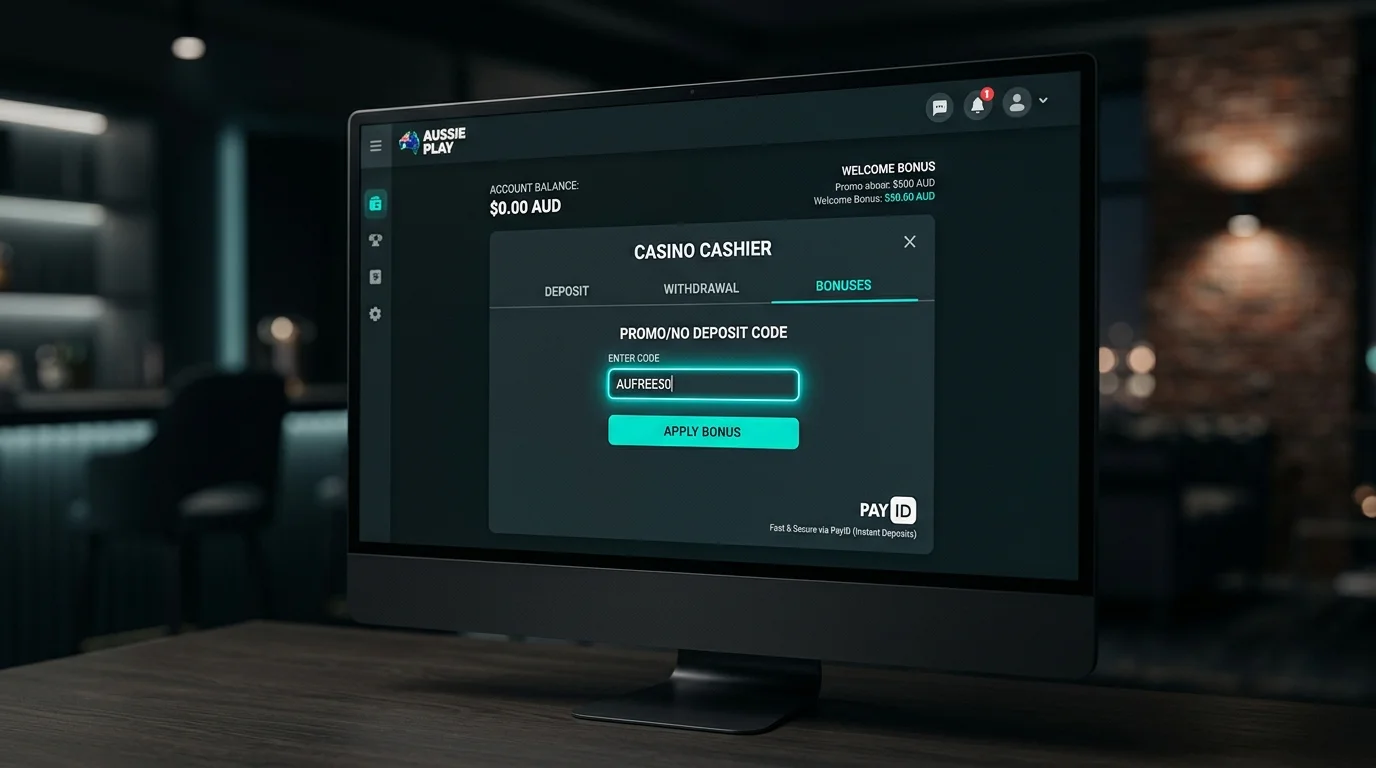
Three weeks ago I logged into seventeen PayID-accepting cashiers in a single session, looking for genuine no-deposit offers. I found four. That ratio is unusually low even for this market, and it tells you something important: operators who integrate PayID lean heavily toward post-deposit match bonuses, not bonuses that exist before you’ve put a cent into the account.
The reason is structural. A PayID deposit costs the operator effectively nothing to process — no card fees, no chargeback exposure, instant settlement. Match bonuses scale beautifully on that economics. No-deposit bonuses, by contrast, are pure customer acquisition cost with no upfront commitment from the player. Operators issue them, but selectively and with caveats designed to filter out bonus hunters. This article walks through how they actually work, what the typical numbers look like in 2026, and where the wagering trap usually sits — so you can read the small print faster than the cashier expects you to.
A no-deposit bonus is exactly what it sounds like: credit or free spins added to a fresh account without the player needing to fund it. The flow is consistent across every operator I’ve tested. You register an account using your real legal name. You confirm your email through a verification link. You enter a bonus code in the cashier or activate an automatic offer that appears on first login. The balance — usually a small amount of bonus cash or a fixed number of spins on a nominated pokie — appears in your account within seconds.

From there, you play. Anything you win sits in a “bonus balance” subdivision of your account, separate from cash, and is subject to wagering before it converts to withdrawable funds. To pull a single dollar to your PayID alias, you’ll need to clear KYC verification first — driver licence or passport, proof of address from the past 90 days, sometimes a selfie. Operators do this specifically because no-deposit offers attract multi-account abuse, and KYC is their primary defence. Expect the verification step to take longer than the bonus itself took to claim.
Bonus cash offers in 2026 cluster between A$10 and A$50. The lower end is more common than the upper — A$50 no-deposit cash is rare enough that I usually treat it as a flag worth checking the licence on. Free spin offers sit between 20 and 100 spins, each spin valued at A$0.10 to A$0.50, typically locked to a single nominated pokie chosen by the operator.

The number that actually matters is the maximum cashout cap. Every no-deposit bonus I’ve audited in the last twelve months caps your withdrawable winnings — usually at A$50, sometimes A$100, occasionally A$150. So even if you turn an A$25 bonus into A$800 through a fortunate spin sequence and complete the wagering, you walk away with the cap, not the actual winnings. The rest is forfeited. This cap is the single most-skipped clause in bonus terms, and it’s almost always buried in section three or four of the offer T&C.
Context for the size: the standard minimum deposit at PayID cashiers runs A$10 to A$30, which means an A$25 no-deposit bonus matches what a player would have funded themselves. Operators calibrate the offer to that benchmark deliberately — enough to feel meaningful, small enough that the cashout cap won’t hurt them.
This is where most no-deposit bonuses quietly die. Wagering requirements on no-deposit offers run between 40× and 60× — significantly higher than the 25×–35× you see on match bonuses tied to a player’s own deposit. That multiplier applies to either the bonus amount alone or the bonus-plus-winnings combination, depending on the operator. The difference between those two formulas is the difference between a possible and a probable outcome.
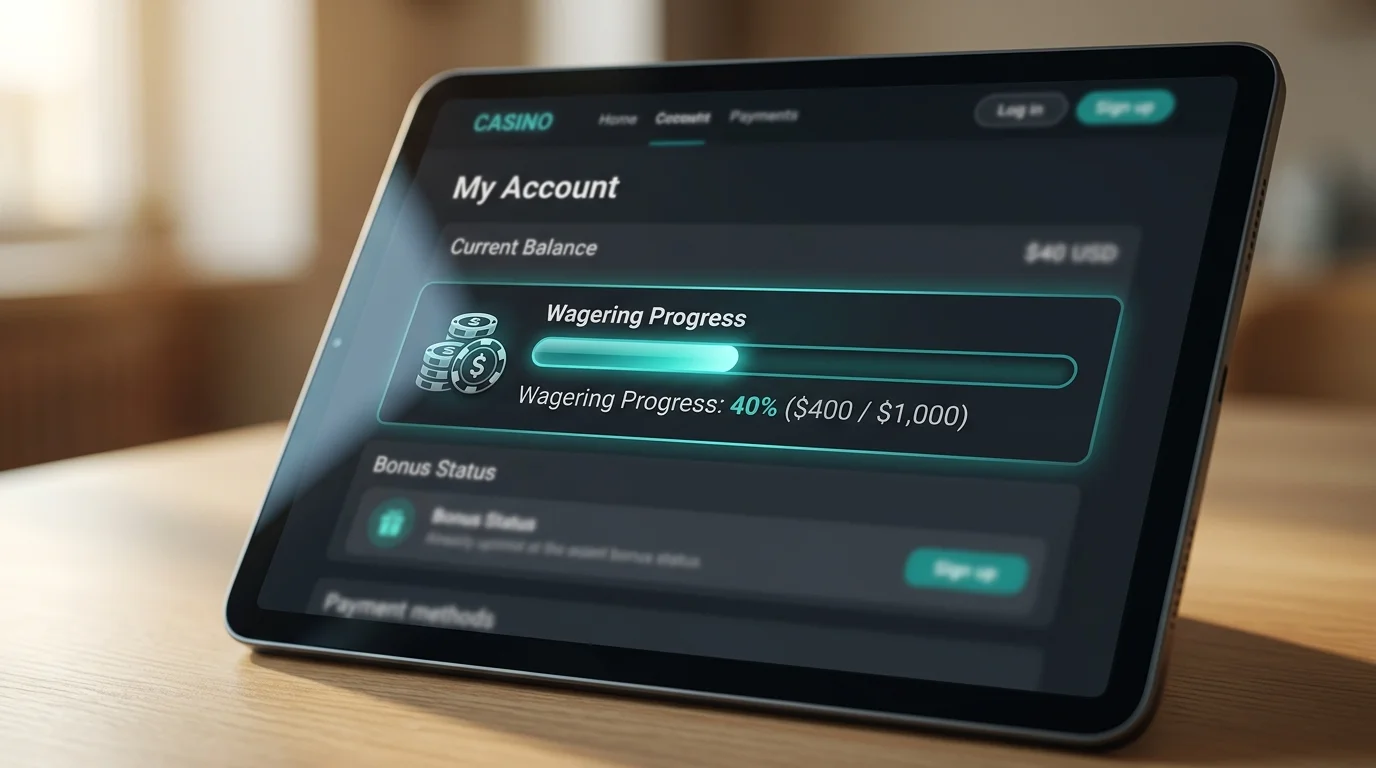
Let me run the numbers. An A$25 no-deposit bonus at 50× wagering on the bonus amount requires A$1,250 in turnover before the bonus converts to cash. At an average pokie bet of A$1 per spin, that’s 1,250 spins. With a 96% RTP, your expected balance after 1,250 spins is A$1,250 × 0.04 = A$50 of expected loss — meaning the bonus runs out before the requirement is met more often than not. Add the max-bet rule that typically caps your wager at A$3 to A$5 during the wagering period, and the variance window narrows further. Exceed the max bet once, even accidentally, and the entire bonus and any winnings are voided.
There’s a public-health dimension here too. The risky-gambling rate in Australia jumped from 13.7% in 2024 to 19.4% in 2025 according to the latest ANU POLIS research — a jump that researchers correlate partly with the speed of online deposit rails and the proliferation of high-frequency bonus mechanics. Wagering requirements are the structural mechanism that turns “free” credit into hundreds of fast spins. Understanding the maths is the first defence. The wagering mechanics in detail is worth a separate read before claiming anything significant.
Step one is registering with exact legal name as it appears on your ID. Nicknames and abbreviated first names are the most common cause of locked withdrawals later. Step two is confirming your email within the time window stated in the offer — usually 24 hours, sometimes 72. Step three is entering the bonus code in the cashier’s promo field before making any deposit, because retroactive bonus credit is almost never granted. Step four is reading the eligible-games list before spinning anything. Most no-deposit offers restrict play to a single pokie or a small whitelist; play outside that list and the bonus voids silently.
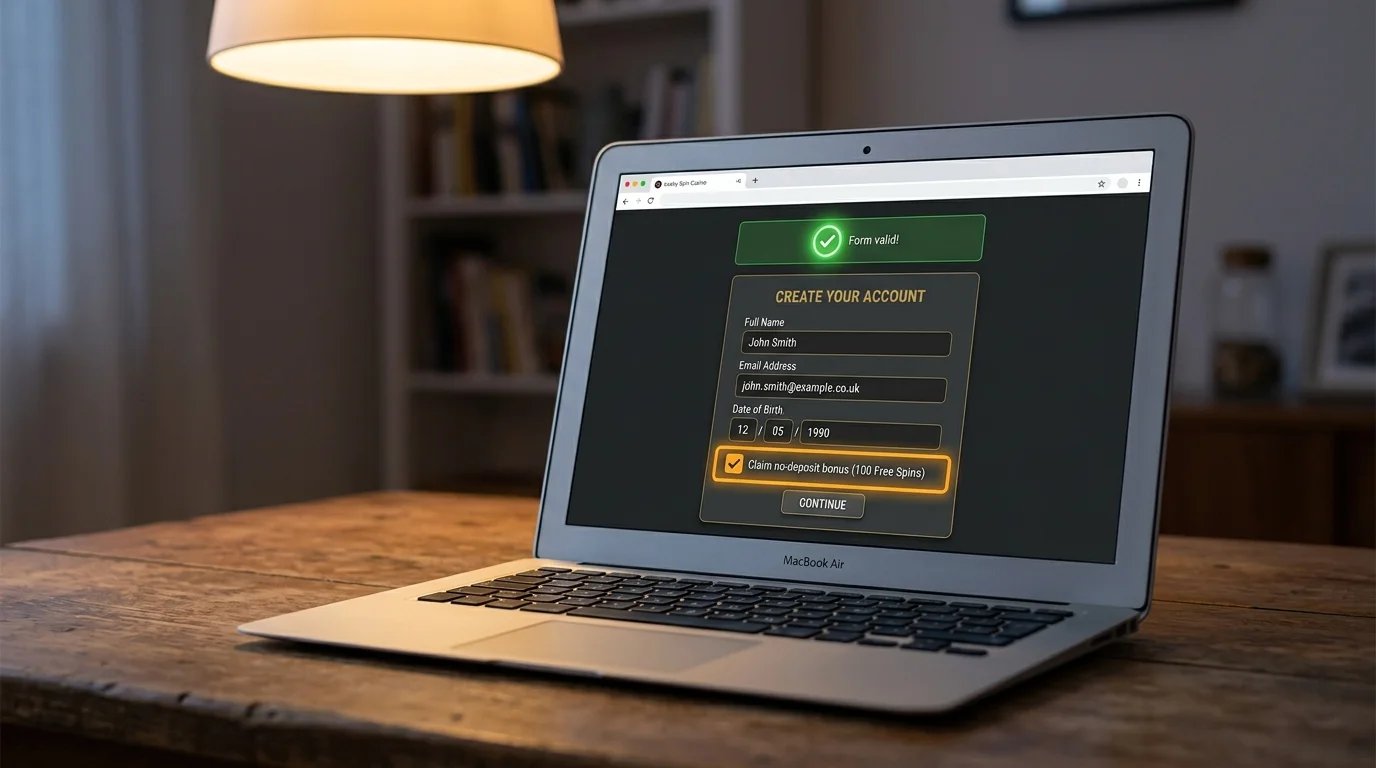
Step five — and this is the one experienced players skip — is uploading KYC documents before you start playing through the wagering. If your spins turn lucky and you hit the cashout cap, you’ll want your verification approved already, because operators frequently use KYC as the throttle on no-deposit withdrawals. I’ve watched players win the maximum cashout on a 25× wagering completion, only to wait nine days for KYC clearance because they started the documents after the win instead of before.
The no-deposit segment has shrunk meaningfully since the credit card and crypto ban took effect in mid-2024. Operators who lost access to those funding channels tightened their acquisition spend, and the easy-to-claim no-deposit offers were the first casualty. What’s left in 2026 falls into three categories.

First, low-value cash offers in the A$10–A$25 range with 50× wagering and an A$50 cap, available at most PayID-friendly platforms during onboarding promotional windows. These are functionally a tour-of-the-cashier rather than a profit opportunity. Second, spin-only offers of 20–50 free spins on a nominated pokie, max cashout A$100, restricted to fresh accounts only. Third, time-limited reload no-deposit offers sent to existing dormant accounts via email — typically the most generous in raw terms because they target reactivation rather than acquisition.
None of these categories has a stable list of operators behind it. Promotions cycle quarterly. The right question is not “which casino is currently offering it?” but “does this operator have a track record of honouring no-deposit cashouts?” — and that’s a function of independent complaint volume, not bonus generosity.
No-deposit bonuses are useful for one thing: testing a cashier without financial commitment. You’ll see how the registration form handles your details, whether the KYC team responds within their advertised window, and how the support chat reacts when you ask a procedural question. That’s worth doing before committing a serious deposit.

Beyond that diagnostic value, the structural maths makes them low-yield as a regular play strategy. Cashout caps, high wagering, narrow eligible-games lists, and short expiry windows compound against you. If your goal is variance and longer sessions, match bonuses tied to your own PayID deposit deliver materially better expected value. If your goal is a controlled tour of the platform, the no-deposit offer is a useful instrument — just don’t mistake it for the main event.
Created by the "casinopayidau.com" editorial team.