PayID Pokies in Australia
Why pokies and PayID became inseparable The first time I timed a deposit-to-spin loop on an Aussie pokies session, the stopwatch barely cleared eighteen seconds — phone unlocked, PayID alias…

POLi shut down in September 2023. Here is the technical and regulatory story of how PayID filled the gap for Aussie casino players
 Available in AU
POLi was the default Australian casino deposit method for nearly seventeen years. Founded in 2006, it processed billions of dollars of bank-direct deposits across the local online gambling segment, especially at the offshore casinos that couldn’t easily access merchant card processing. When POLi shut down in September 2023, the AU-facing casino market lost its main funding rail overnight, and the eight months that followed were genuinely chaotic — operators experimented with vouchers, e-wallets, and crypto while players waited to see which replacement would stick. PayID won that vacuum.
The story of why POLi died and why PayID inherited its position is more than ancient history. It explains the structural design of the current payment landscape — why offshore casinos accept PayID specifically, why the banks tolerate the rail’s use at offshore destinations even when they actively discourage it at the merchant category level, and why the cashier flow you see today looks the way it does. The mechanics of the replacement are worth understanding even if you never used POLi yourself.
POLi was a screen-scraping intermediary. When you initiated a POLi deposit at a casino, the operator’s cashier opened a POLi-controlled browser window that mimicked your bank’s login page. You’d enter your bank credentials into that window. POLi would then, on your behalf, log into your bank’s online banking, initiate a transfer to a designated POLi clearing account, and return a confirmation to the casino. The casino credited your balance. POLi separately settled with the operator.
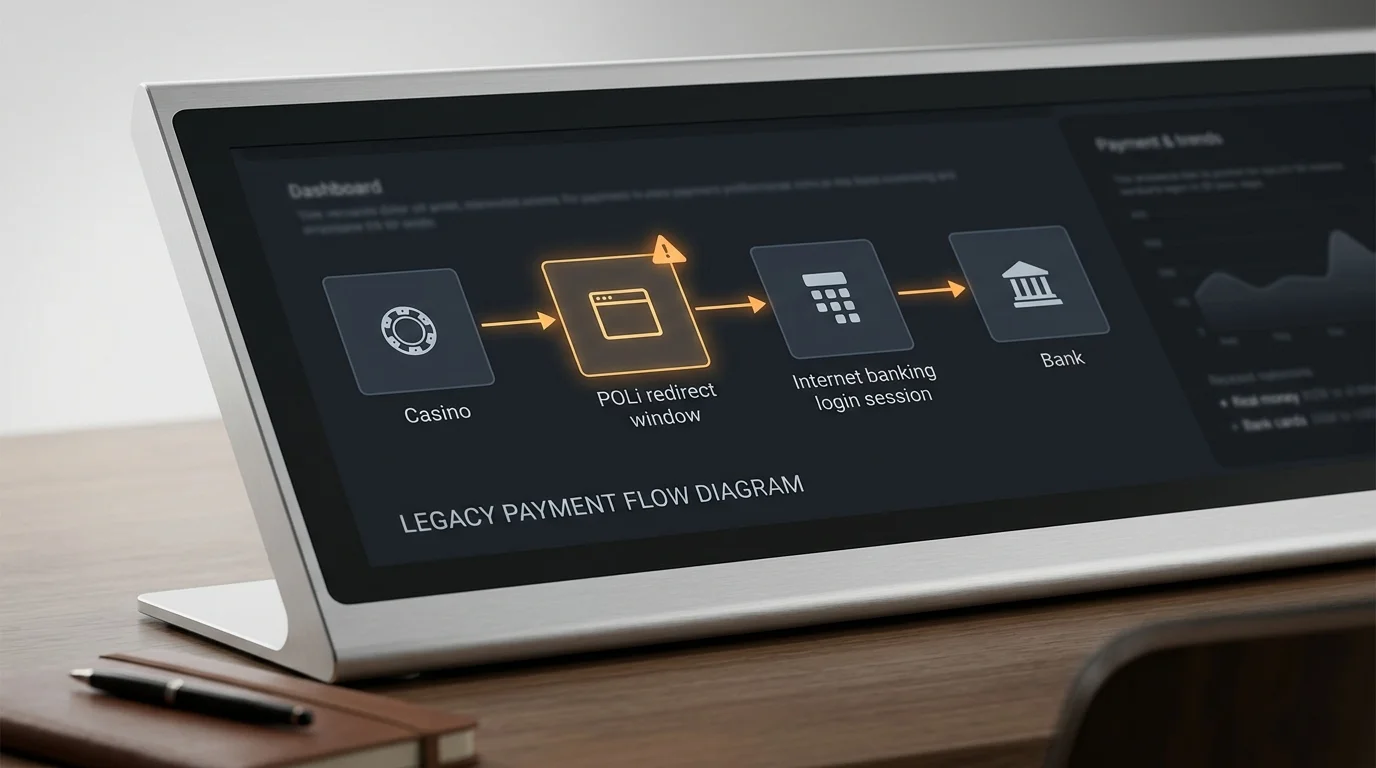
The fundamental issue was that no Australian bank ever officially supported POLi. Banks viewed credential-sharing as a security risk that violated their terms of service, and most banks’ terms specified that users who shared online banking credentials with third parties were liable for any consequent fraud. POLi operated in a perpetual grey zone — tolerated because it had become widespread, never sanctioned, often actively discouraged through bank advisories warning customers against using it.
The screen-scraping model also had practical fragility. Every time a bank updated its online banking interface, POLi’s scraper would break temporarily until the integration was rewritten. Sessions failed mid-transfer. Login flows behaved erratically. The user experience was workable but never polished.
Multiple pressures converged in 2023. The Australian Securities and Investments Commission had been increasingly vocal about screen-scraping risks for several years, partly driven by the rise of safer alternatives like Open Banking under the Consumer Data Right framework. The Australian Banking Association issued repeated guidance against the practice. NPP adoption was accelerating — by mid-2023, real-time payments through NPP had become mainstream, with daily transaction volumes that dwarfed everything that came before.
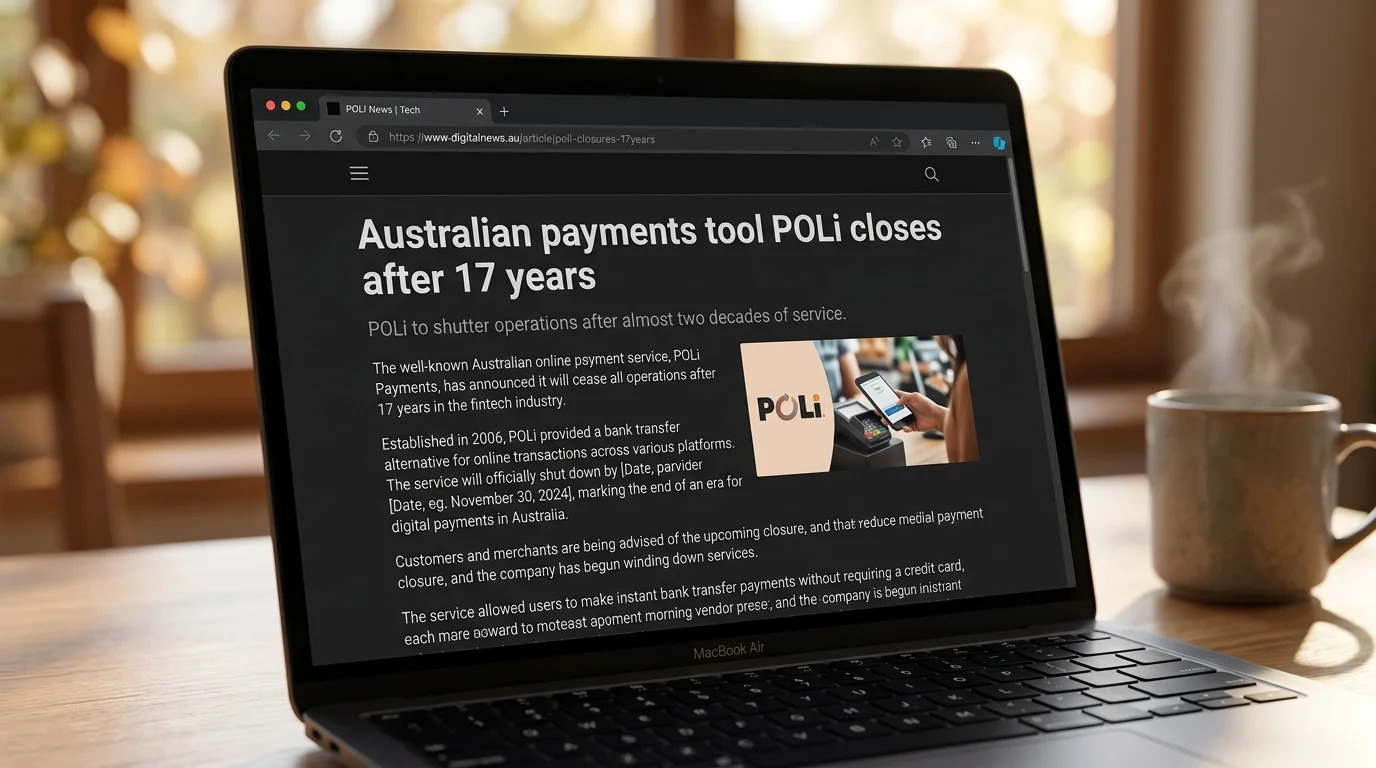
The proximate trigger was reporting by the major banks that they would actively block screen-scraping connections to their internet banking systems. POLi couldn’t sustainably operate against active bank-level blocking. The company announced closure in September 2023, and its services ceased without a transition plan for the operators that depended on it.
This wasn’t a single villain story. POLi was an outdated technical model that survived past its expiration date because the alternatives weren’t yet ready. When the alternatives became ready — when PayID had broad enough bank coverage and consumer adoption to handle the volume — POLi’s underlying value proposition (bank-direct deposits without entering card details) became redundant. The technology that replaced it could do everything POLi did, with bank approval and better security.
September 2023 through April 2024 was a transitional period that aged me considerably as someone monitoring this market. Operators scrambled to onboard alternative deposit methods. Some leaned hard into Neosurf vouchers — fine for casual players, useless for anyone wanting consistent funding above A$500. Some pivoted to crypto, which had its own problems and would become formally restricted at licensed operators by mid-2024. A few experimented with e-wallets like Skrill and Neteller, which had limited Australian adoption and weren’t really suited to the segment.
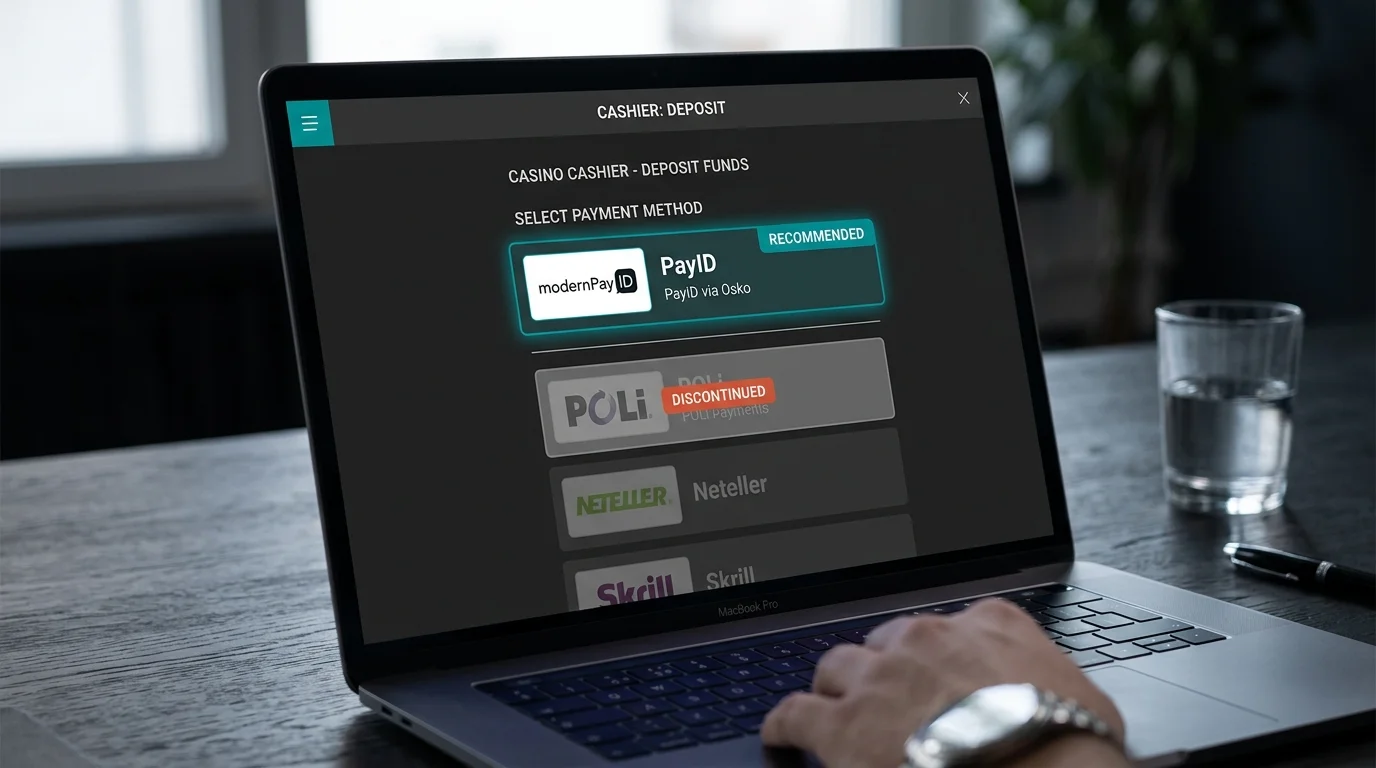
Players reacted with a mix of frustration and curiosity. Some moved to crypto for the first time. Some reduced their play volume because the friction of the alternatives wasn’t worth the entertainment. Many waited to see what would emerge. The forums I monitored at the time were full of comparison threads, often three or four payment methods deep, with no clear winner.
The casino operators were the ones with the most direct economic pressure. POLi had been their best deposit channel for years, and its loss meant immediate revenue impact. Several operators that I had been auditing visibly reduced their AU marketing during the gap period, presumably waiting for clarity on what the new default rail would be.
PayID had been live since 2018 but had taken time to reach broad adoption. By the time POLi shut down, PayID registrations had crossed 20 million, more than 100 financial institutions supported the rail, and consumer awareness had finally caught up to the infrastructure. Five characteristics made PayID the natural successor for offshore casino operators.
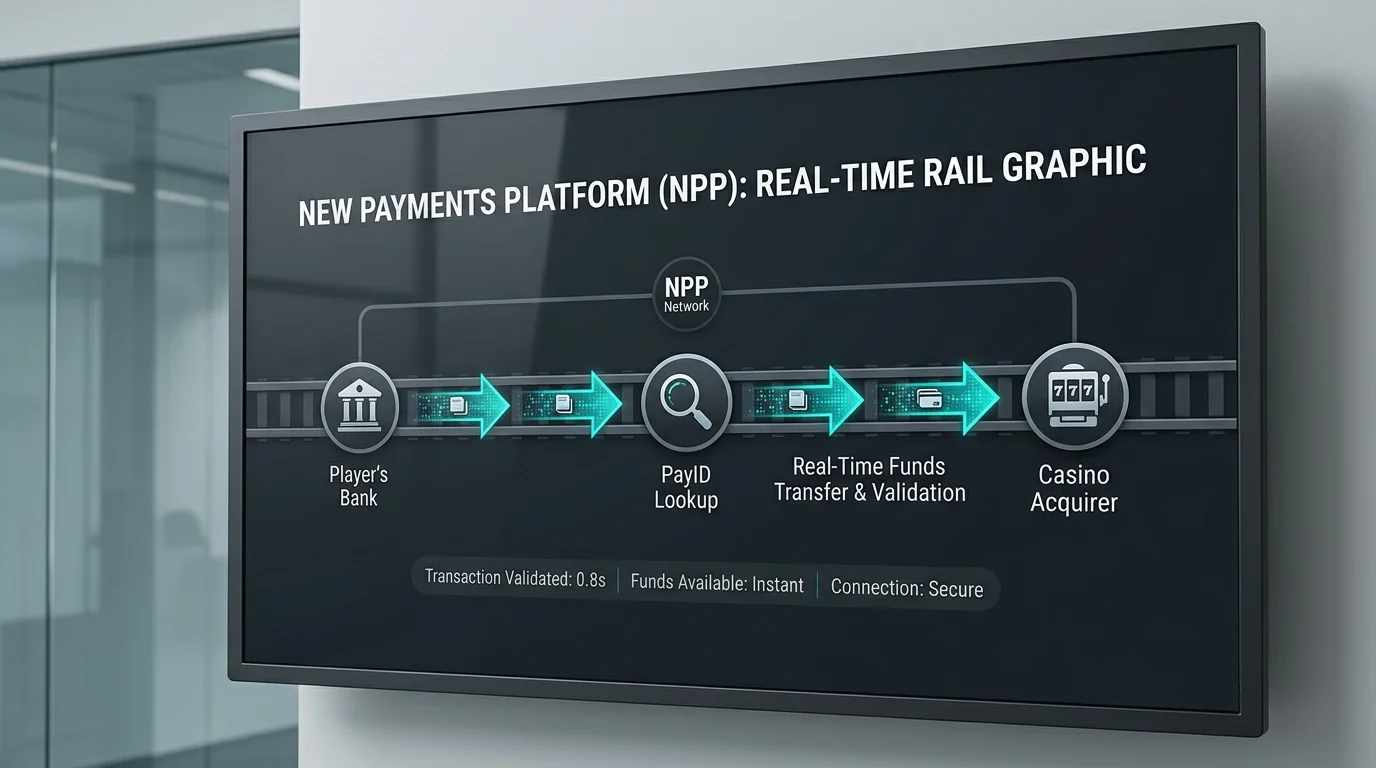
First, bank-sanctioned. Every Big 4 bank and most mid-tier institutions actively supported PayID — no grey-zone tolerance, no terms-of-service ambiguity. Second, instant. NPP processed transfers in under 60 seconds, matching POLi’s user experience without the screen-scraping fragility. Third, free. No per-transaction fees at the bank end, no merchant fees at the operator end — the cleanest economics any method had offered. Fourth, scalable. The same rail that handled rent payments could handle A$25,000 single transfers, far beyond POLi’s typical session sizes. Fifth, name-checked. The confirmation-of-payee handshake gave the operator a stronger identity signal than POLi ever provided.
The growth curve since then has been steep. PayID registrations crossed 27 million by mid-2025, and adoption grew by 18 percentage points across 2025 alone, with about half of Australian payment respondents reporting at least one PayID transaction in the previous year. The mainstream infrastructure caught up to the user demand exactly when the offshore casino segment needed an alternative.
The cashier flow for the player looks similar but feels meaningfully different. POLi opened a separate browser window that imitated your bank’s login page — you entered credentials into a third-party-controlled interface and trusted that the screen-scraper handled them honestly. PayID launches your own banking app — you authenticate using whatever method your bank requires (biometric, PIN, 2FA), and you confirm the transfer inside the bank’s own interface.
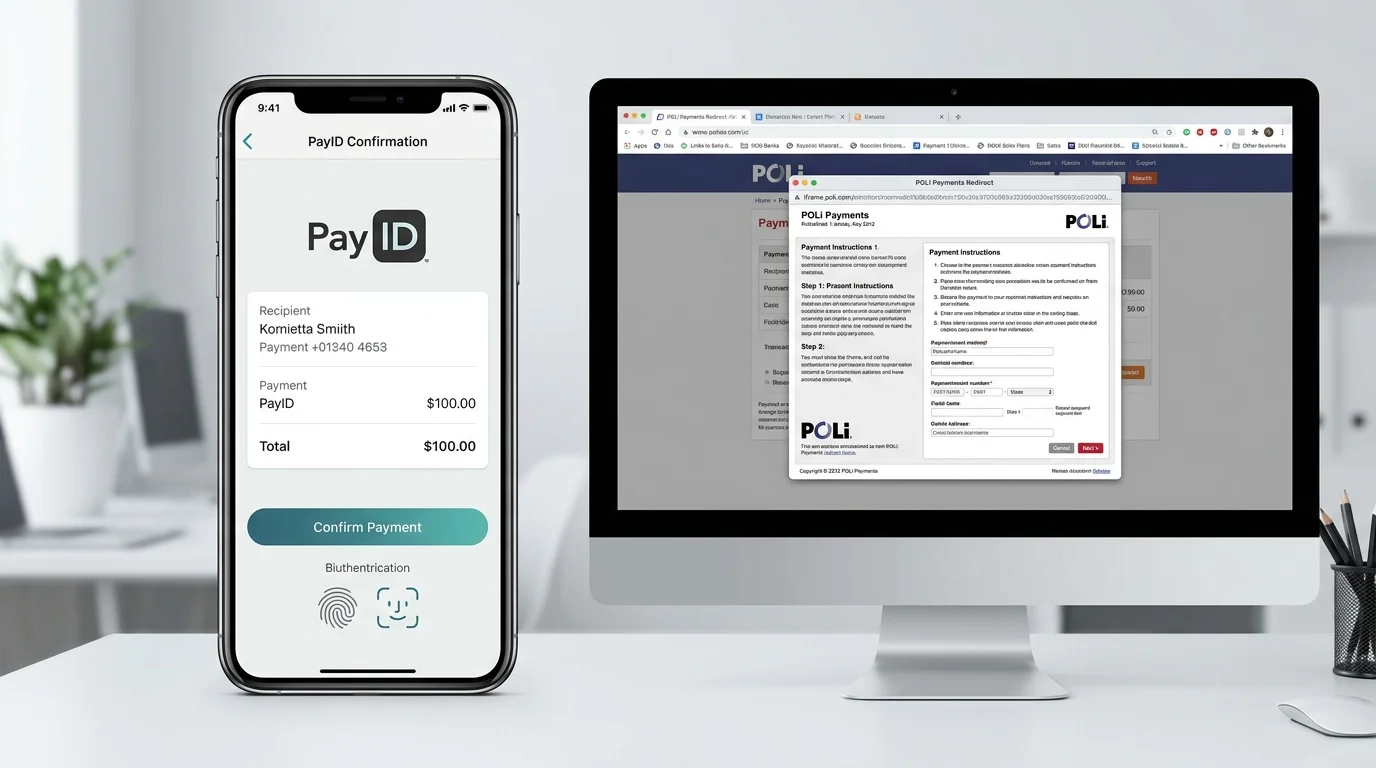
The structural improvement is significant. PayID never sees your credentials. The bank handles authentication entirely within its own controlled environment. The PayID alias is the only piece of information that crosses between systems — and the alias is non-sensitive, designed to be shared. The “what could go wrong” surface area shrank dramatically.
The user experience also gained on resilience. POLi sessions failed unpredictably when a bank tweaked an interface element. PayID sessions only fail when the rail itself has an outage, which happens far less often. The casino’s deposit reliability moved from “usually works” to “essentially always works.” Detailed fee comparison between the two rails sits in the PayID fee structure compared to POLi piece for players curious about the cost arithmetic.
Some artefacts of the POLi era remain. A handful of old operators still display “POLi accepted” badges in their cashier interfaces despite POLi being shuttered for over two years — usually because the marketing pages haven’t been updated, not because the method actually works. If you see “POLi” listed as a deposit method at any AU-facing casino in 2026, it’s a stale page, not a working option.
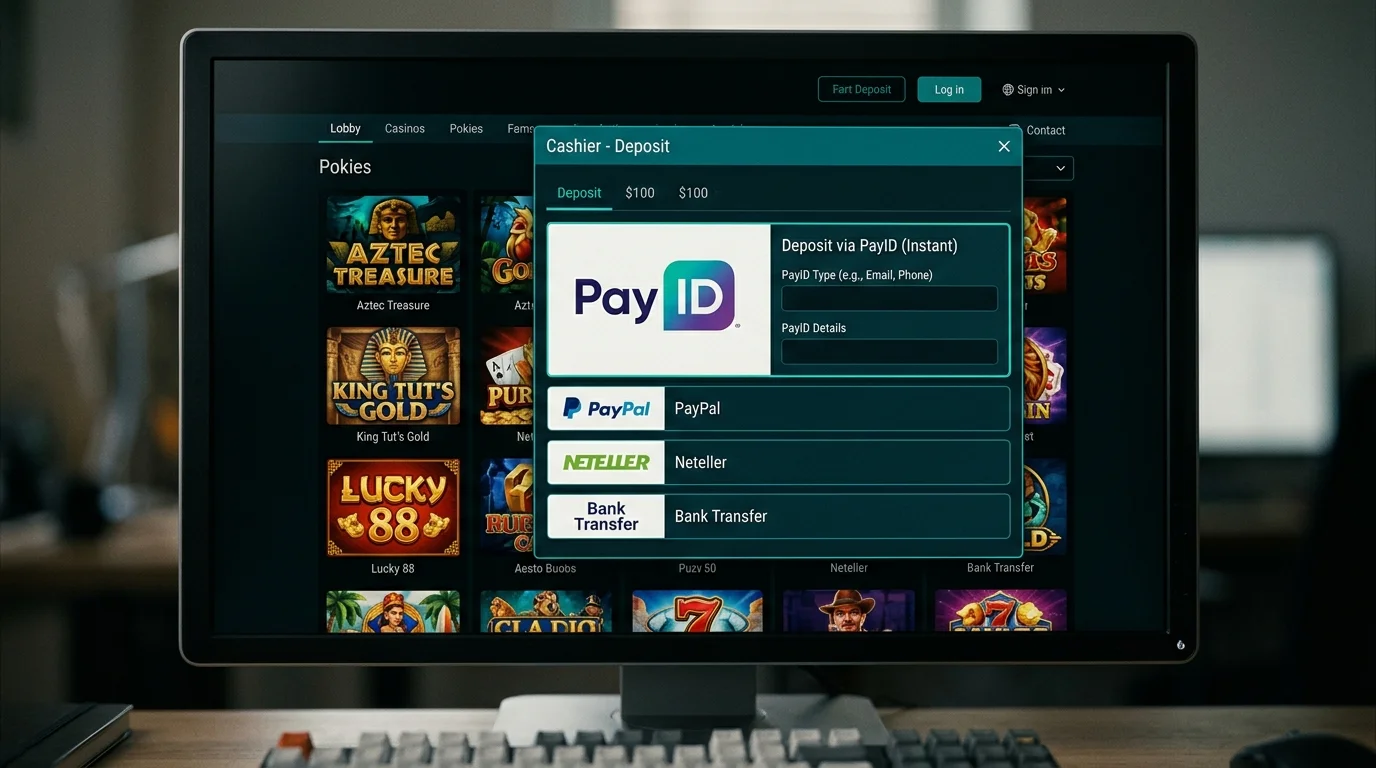
The other legacy is the player generation that learned online casinos through POLi. Many veterans still use the verb “POLi” generically to mean “bank-direct deposit” — they’ll say “I’ll just POLi A$200” when they mean “I’ll PayID A$200.” The vocabulary lagged behind the technology by about a year before settling.
The deeper legacy is structural. The offshore AU-facing casino market reorganised itself around PayID specifically because the rail’s combination of speed, bank approval, and scalability made it durable in a way POLi never was. The current cashier designs, the current bonus structures, the current KYC timing — all of these are calibrated to the rail PayID provides, in ways that POLi’s technical limitations would have constrained.
POLi was the right answer for its era — a workable bank-direct alternative when nothing better existed, supporting a market that the formal banking sector wasn’t eager to serve. Its replacement by PayID was inevitable from the moment NPP reached mainstream adoption; the only variable was timing. The transition closed an era of fragile, semi-tolerated payment intermediation and opened the current era of bank-sanctioned real-time transfers.
For players, the practical effect is overwhelmingly positive. PayID delivers everything POLi did, more reliably, with the bank as a participant rather than an opponent. The only “feature” that didn’t transfer was POLi’s quasi-tolerance for credential-sharing — which was never really a feature, more a structural risk that the market mistook for convenience. Good riddance to that, on balance.
Prepared by the casinopayidau.com editorial staff.