PayID Pokies in Australia
Why pokies and PayID became inseparable The first time I timed a deposit-to-spin loop on an Aussie pokies session, the stopwatch barely cleared eighteen seconds — phone unlocked, PayID alias…

AUSTRAC's scambling phenomenon explained: how fake PayID casinos trick Aussies, 12 red flags and the exact recovery steps after losing funds
 Available in AU
The word “scambling” first appeared in AUSTRAC intelligence material in December 2025 to describe a financial-crime pattern that had been visible across the Australian fintech landscape for at least eighteen months prior: scams that operate behind a casino-style front, harvest deposits from victims via PayID and other fast rails, and then disappear without ever delivering a working game product. The term combines “scam” and “gambling” and captures something the existing fraud categories did not: this is not casino fraud in the sense of operators stiffing genuine players on withdrawals, and it is not pure scam fraud in the sense of fake invoices or romance manipulation. It is a hybrid where the casino interface is itself a prop.
Understanding scambling matters because the AU online casino landscape now includes a layer of operators that are not casinos at all — they are scam fronts using gaming visuals as social engineering. The pattern is sophisticated enough that even careful players miss it, and the dollar value at risk has climbed steadily through 2025 as the schemes have refined their conversion funnels. This piece walks the mechanics, the victim demographics, the red flags, and the recovery options if you have been hit.
The scambling funnel follows a predictable shape. AUSTRAC’s intelligence work has explicitly identified PayID as a channel of choice in these schemes because it bypasses card-network fraud signals and clears in seconds — exactly the properties that make it useful for legitimate transactions also make it valuable to fraudsters who need irreversibility. AUSTRAC also documented the Fintel Alliance’s joint response with the Big Four banks around MCC 7995 in December 2025, but the MCC mechanism does not apply to PayID — that is part of why the channel works for the scammers.

Step one is exposure. The victim sees a casino-style advertisement on social media — Facebook, TikTok, Instagram. The ad shows winnings, animated slot reels, dollar figures, and a call to claim a “free A$500 welcome bonus.” The ad creative often features apparent video testimonials, which are usually deepfake voiceovers over stock casino footage. The targeting is demographic: low-income suburbs, regional postcodes, communities with high unemployment.
Step two is the landing page. The link leads to a website that looks like a casino — lobby graphics, game thumbnails, a fake live chat widget. The site name often mimics a legitimate operator with a single-character substitution or a different top-level domain. The footer contains either no licensing information or a fabricated licence number that returns nothing when looked up.
Step three is registration and deposit. The registration form requires only basic information and skips the KYC steps a real casino would impose. The cashier presents PayID as the primary option. The victim transfers A$50 to A$500 to the operator’s PayID alias. The balance updates on screen, sometimes with an apparent “welcome bonus” credited. The victim plays a few rounds of what looks like a slot game — but the outcomes are scripted, not RNG-driven, and the early rounds usually let the victim “win” to build confidence.
Step four is withdrawal denial. The victim tries to cash out, the site requires a “verification fee” or “release deposit” before the withdrawal can process, the victim pays, the cycle repeats until the victim either gives up or runs out of money. The site then disappears, support contacts stop responding, and the PayID alias deactivates.
The structural reasons PayID has become the channel of choice for scambling are exactly the features that make it valuable for legitimate users. Speed: PayID settles in seconds, which means the funds are out of the victim’s reach before any second-thoughts kick in. Card transactions, by contrast, sit in a pending state for hours and can sometimes be cancelled before settlement. Irreversibility: PayID transfers, once settled, cannot be reversed by the sender unilaterally. A card transaction can be disputed through chargeback; a PayID transfer cannot.

Bank trust: PayID is widely recognised as the modern Australian payment rail, with brand recognition that overrides the suspicion players would apply to a more obscure method. Victims who would refuse to send funds via wire transfer or crypto wallet because those rails feel suspicious will send the same amount via PayID without hesitation.
MCC absence: the bank-side gambling blocks that exist at all Big Four banks operate on merchant category codes attached to card transactions. PayID transfers do not carry MCCs. A victim who has enabled their bank’s gambling block specifically to prevent themselves from gambling will find that the block does not apply to PayID, and the scam site exploits this gap deliberately. The Fintel Alliance work to track MCC 7995 misuse, announced in December 2025, applies to card transactions — not PayID, which sits outside the MCC system entirely.
Real-time alias deactivation: scammers can register a PayID alias against a money-mule account, run the scheme for a few weeks, then close the alias and open a new one against a fresh mule. By the time complaints reach the bank, the alias is already gone and the trail goes cold quickly.
AUSTRAC’s published intelligence on the pattern identifies specific demographic concentrations. Low-income households are over-represented among victims. Regional and remote postcodes show higher concentrations than capital-city averages. Indigenous communities show particular over-representation, partly reflecting broader patterns of financial exploitation and partly reflecting targeted ad delivery on certain social platforms.
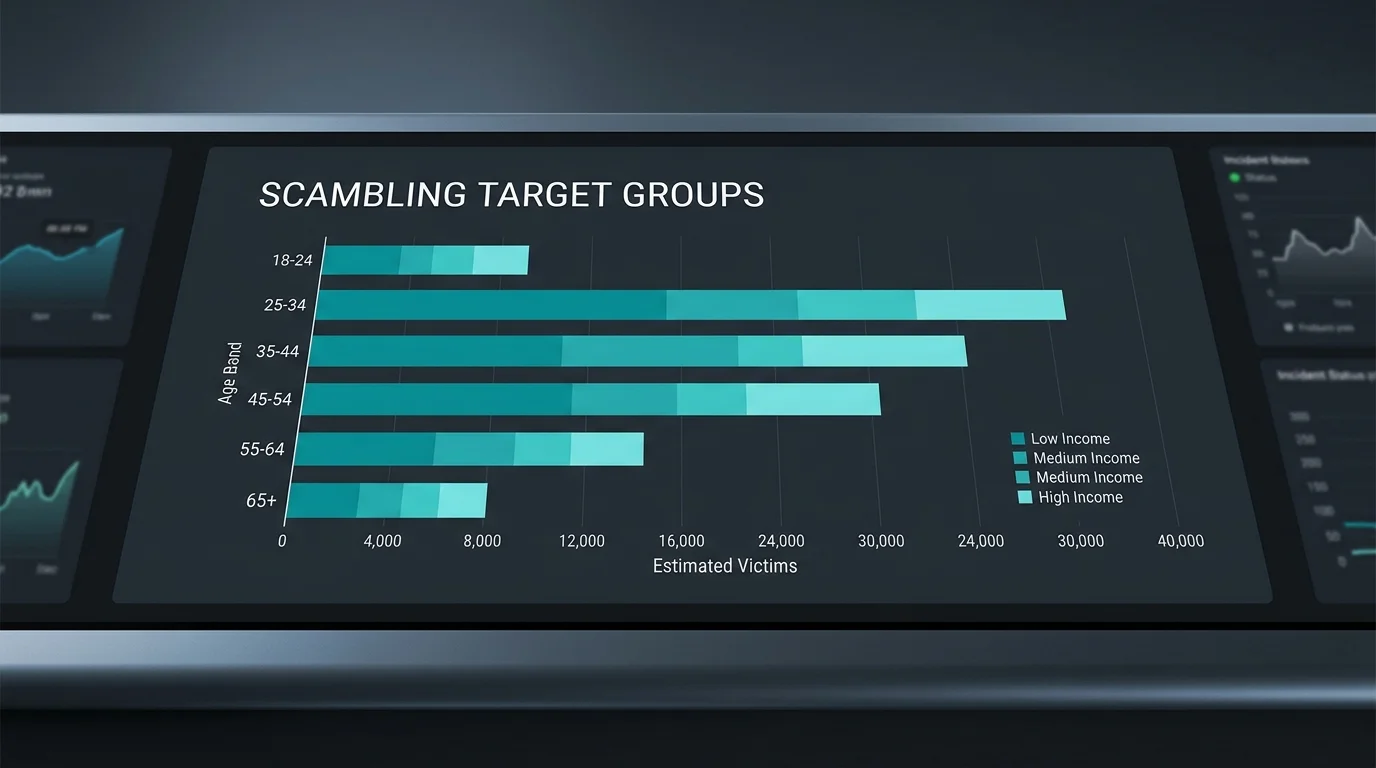
The Fintel Alliance’s analysis of cross-bank patterns has worked across more than 50 million cash transaction reports filed by the major banks, and the scambling pattern surfaces clearly in that data: clusters of small PayID outbound transfers from specific demographic segments to a constellation of newly-registered aliases that consolidate into a small number of mule accounts.
The targeting is not accidental. The late Peta Murphy, in her final term as MP, argued that gambling advertising functions as “grooming” of vulnerable communities — and the scambling scheme is the most explicit operationalisation of that pattern. The ads target audiences operators believe will be most receptive: financially stressed, with limited exposure to fraud-detection education, often outside the geographic centres where consumer protection campaigns concentrate. The result is a fraud pattern that compounds existing inequality rather than spreading evenly.
One: domain age under 60 days. Run a WHOIS lookup on the site URL. Newly registered domains running aggressive casino-style ads are almost always scam fronts because legitimate operators take months to launch and build search presence.
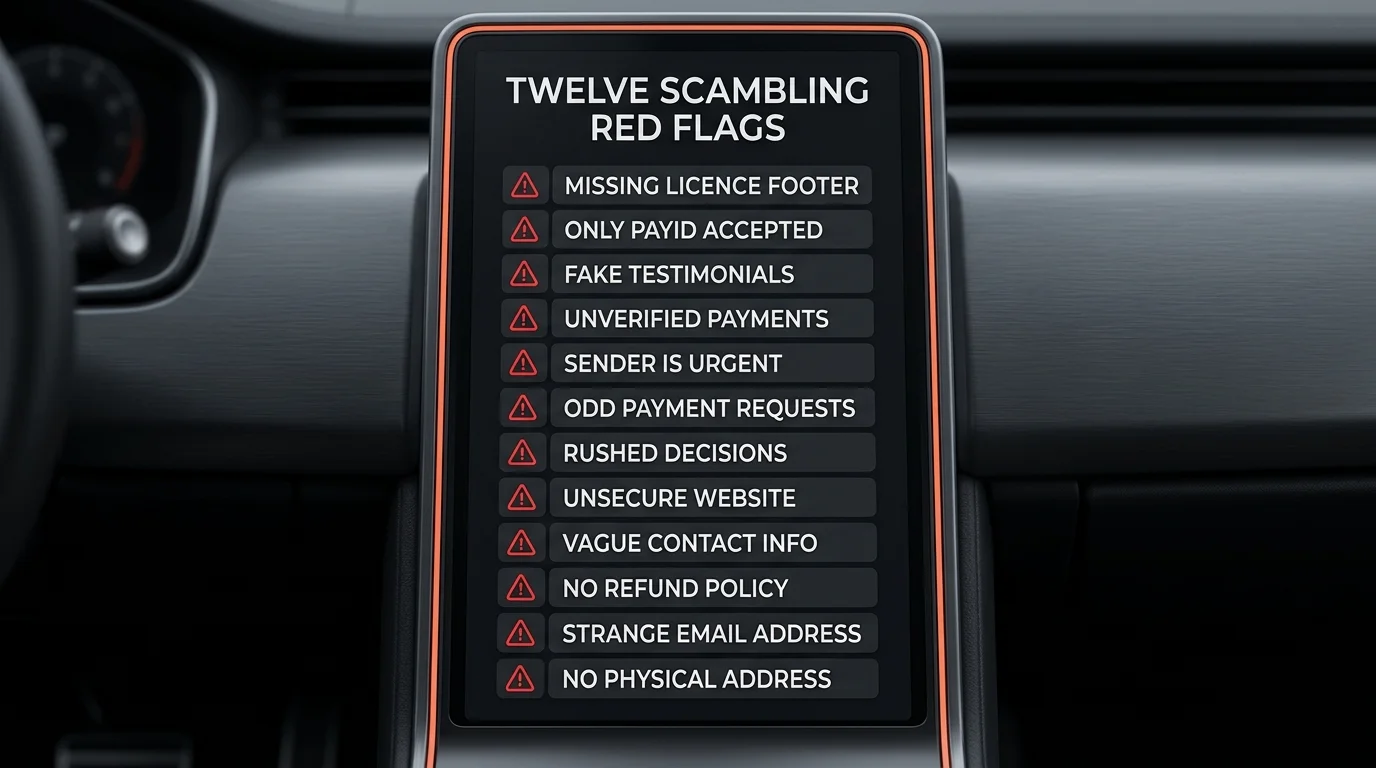
Two: no footer or footer without licensing detail. Real casinos display licence numbers, corporate entity, regulatory disclosures. Scam sites display a payment-method icon grid and nothing else.
Three: support only via Telegram. Real operators run live chat, email, and often phone. Telegram-only support means no audit trail and the operator can disappear with no recoverable communication history.
Four: promise of instant 200% bonus with no wagering requirement. The economics of “no wagering” 200% bonuses do not work for any legitimate operator — anyone offering them is not actually paying them.
Five: registration form skipping KYC entirely. Real operators must run KYC because their licensors require it. A registration form that requires only email and password is not a regulated casino.
Six: PayID-only deposit option with no card or crypto alternative. Real operators offer multiple rails for redundancy. PayID-exclusive cashiers usually indicate the operator cannot get other payment processors to approve them.
Seven: ad creative featuring fake video testimonials. Look at the testimonials in the ad — if the lip movement does not match the audio, or the people in the footage appear in stock libraries, the ad is fabricated.
Eight: pressure tactics during the funnel. “15-minute countdown” pop-ups, “only 3 spots left” messaging, agents in chat demanding immediate deposit.
Nine: T&Cs in broken English or machine-translated phrasing. Real operators run legal review on their T&Cs; scam fronts cannot afford that step.
Ten: withdrawal requires a “verification fee” or additional deposit. No legitimate operator charges a fee to process a withdrawal you have already won.
Eleven: licensor link returns nothing. Click through the licence claim — if the licensor’s register does not list the operator, the licence is fabricated.
Twelve: search returns no independent reputation data — no reviews, no forum posts, no complaint records. New scam sites have none of this because they have not existed long enough to accumulate any.
If the deposit is within the last 24 to 48 hours, contact your bank immediately and request an NPP recall. The recall mechanism is the formal process for attempting to claw back a PayID transfer that was sent under fraud or scam conditions. The success rate is low — the funds usually move out of the receiving account quickly — but it is the only direct recovery option. Provide the bank with the transaction reference, the operator’s PayID alias, and any evidence you have of the fraud (screenshots, ad creative, communication transcripts).

File a complaint with Scamwatch (run by the ACCC) within the same timeframe. The complaint adds your case to the consolidated fraud intelligence pool, which feeds into law enforcement and AUSTRAC analysis. Filing takes 10 minutes online.
Submit a SuspMatter Report to AUSTRAC if amounts involved are significant. This is the formal channel for suspicious matter reports and AUSTRAC’s intelligence team uses these reports to map the scam-operator ecosystem.
If the operator was claiming to be a licensed Australian-facing site, file a complaint with ACMA. ACMA cannot recover your funds directly but the complaint feeds into site-blocking decisions and broader enforcement against the operator’s payment processors.
Finally, if the loss has triggered or compounded a gambling problem, the self-exclusion infrastructure is the protective layer for the future. The self-exclusion as a long-term protective step piece walks through how BetStop registration interacts with PayID rails and what it actually closes off.
The recovery options for scambling are real but limited. The NPP recall mechanism works only in narrow windows. Law enforcement action against offshore scam operators is rare. The realistic protective strategy is the twelve-flag checklist before any deposit to any unfamiliar operator, and to assume that any advertisement promising unusually generous bonuses or instant winnings is a scambling front until proven otherwise. The cost of being wrong about a deposit is real money; the cost of being cautious is two minutes of WHOIS lookup and licensor verification.

Why pokies and PayID became inseparable The first time I timed a deposit-to-spin loop on an Aussie pokies session, the stopwatch barely cleared eighteen seconds — phone unlocked, PayID alias…
Why new casinos sit in a category of their own A reader…
Why you'll never find a native casino app on your phone The…
The legal answer that ends the comparison before it starts The crypto-versus-PayID…
Published by the casinopayidau.com team.