ANZ PayID Casino Banking
Why ANZ is the most cautious Big Four bank for PayID ANZ was the last of the Big Four to fully integrate PayID into its retail offering, and the lag…

Operator-side PayID withdrawal limits explained: daily, weekly, monthly caps, AML throttling and how Aussie high rollers negotiate above defaults
 Available in AU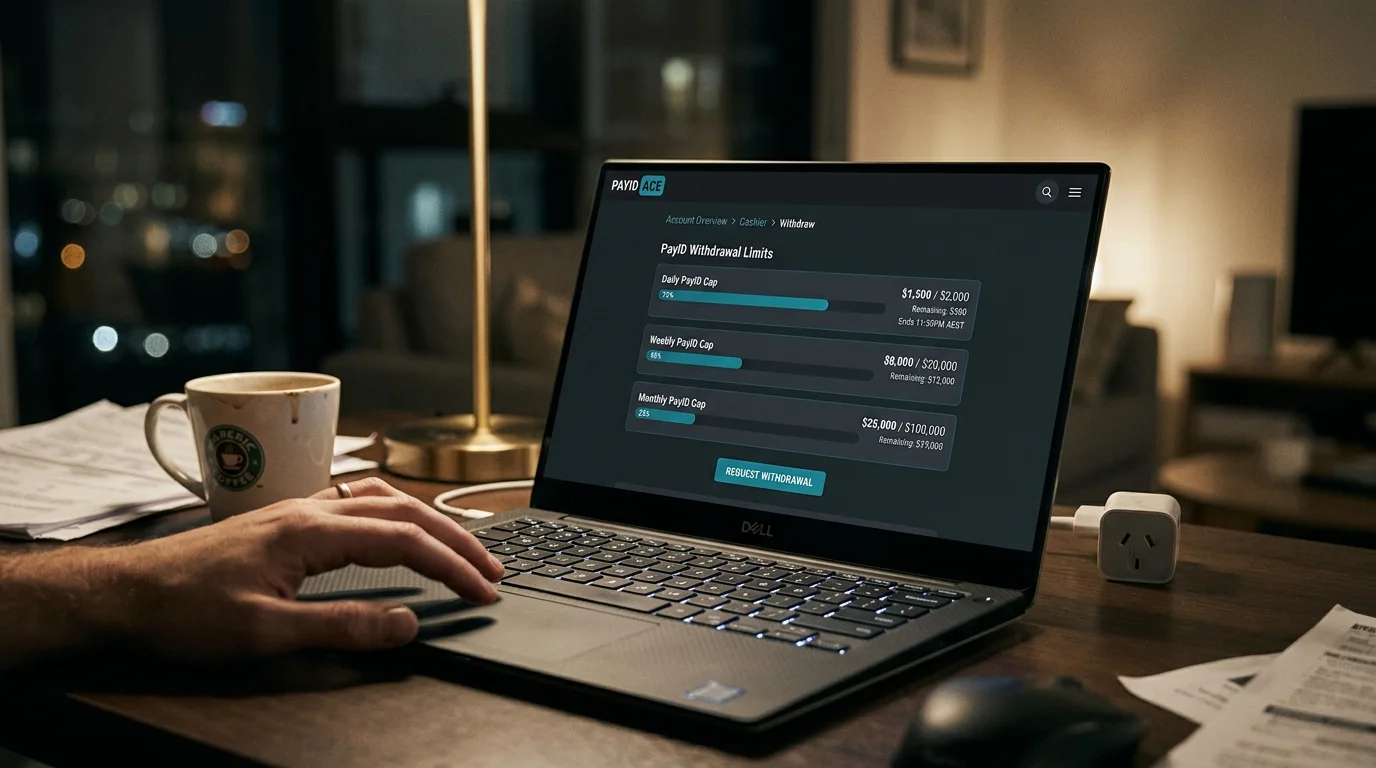
A player who has just hit an A$30,000 win on an A$5 spin is in for a surprise the first time he tries to withdraw the lot in one go. The cashier accepts the request, returns a success message, and then the breakdown begins: “Your withdrawal will be processed in tranches over the next 5 business days.” The player thinks the operator is stalling. The operator is in fact following its standard treasury policy, which limits any single withdrawal cycle to a daily cap regardless of the player’s tier or the casino’s PayID receiving capacity.
This is the structural fact about casino withdrawals that nobody mentions during the deposit flow: the limit on outbound payments is not in the bank or the NPP rail — both can handle the volume. The limit is in the operator’s treasury policy, which is a separate decision from the deposit limits and which most players discover only when they try to cash out a large balance.
Across the AU-facing offshore market, the typical withdrawal limit structure looks like this. Daily cap: A$5,000 to A$10,000 per 24-hour period. Weekly cap: A$25,000 to A$50,000 per 7-day rolling window. Monthly cap: A$100,000 to A$250,000 cumulative. These are caps on outbound flow, not on the balance you can hold, and they apply regardless of whether your account is standard or elevated tier.
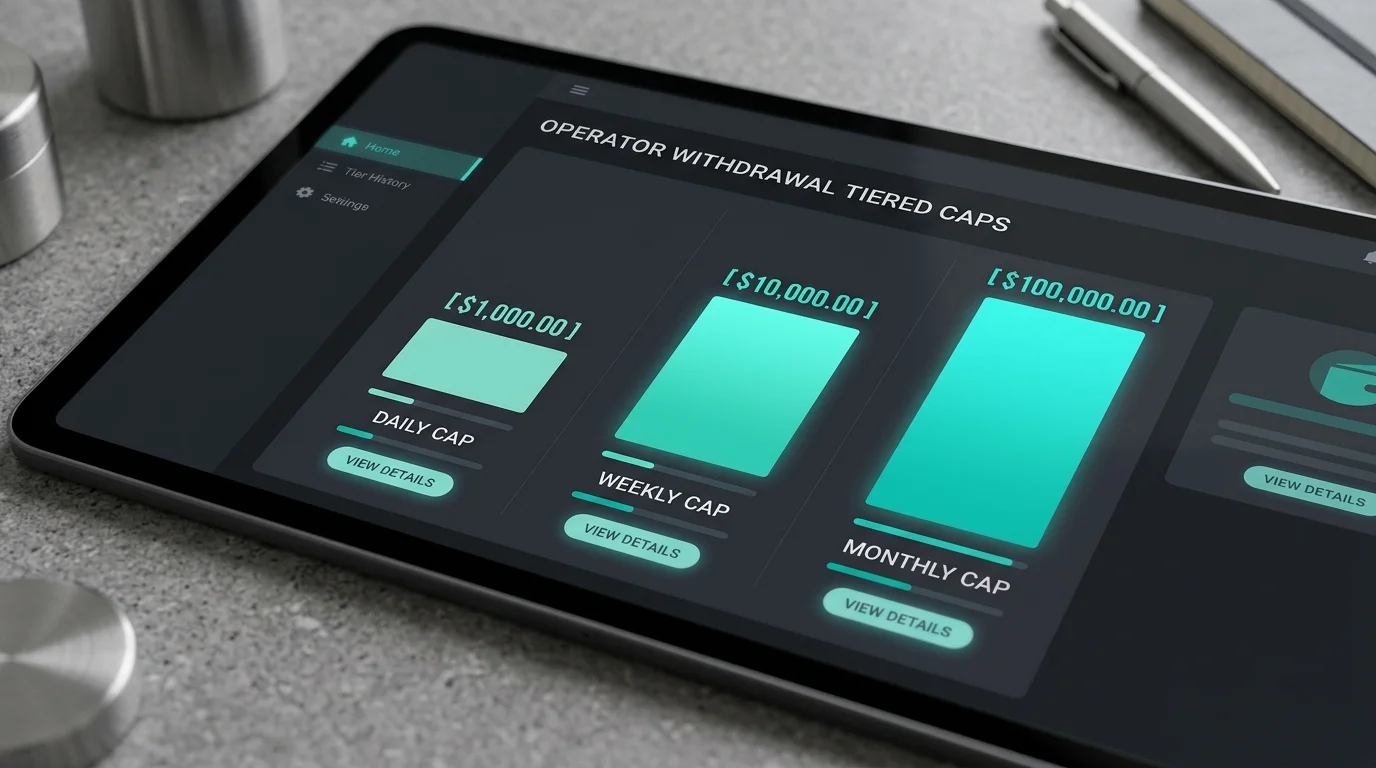
Per-transaction caps run differently. PayID itself supports per-transaction minimums of A$10 to A$30 and per-transaction maximums of A$5,000 to A$20,000 depending on the operator. A single PayID transfer cannot exceed the operator’s per-transaction maximum, which means an A$30,000 withdrawal might consist of three A$10,000 transfers or six A$5,000 transfers depending on the operator’s configuration.
The per-transaction structure also shapes how operators batch payouts. An operator with an A$5,000 per-transaction maximum will process an A$30,000 withdrawal as six separate PayID transfers in sequence, often spaced 10 to 30 minutes apart to avoid triggering anti-fraud rate limits on the receiving bank. Each tranche shows separately on the player’s bank statement, which can be confusing the first time it happens.
Some operators run a hidden first-cashout-only ceiling that is lower than the standing limits. This is the first A$1,000 or A$2,000 paid out without additional verification, then a KYC review trigger before further payouts. The hidden ceiling is documented in the T&Cs but rarely surfaced in the cashier. Worth checking before assuming the headline daily limit applies to your first cashout.
The standard limits described above apply to the unmodified retail account. VIP, Platinum, Diamond, and invite-only Black tiers typically negotiate custom limits with the operator’s compliance team, with the negotiated structure documented in writing as part of the tier upgrade.
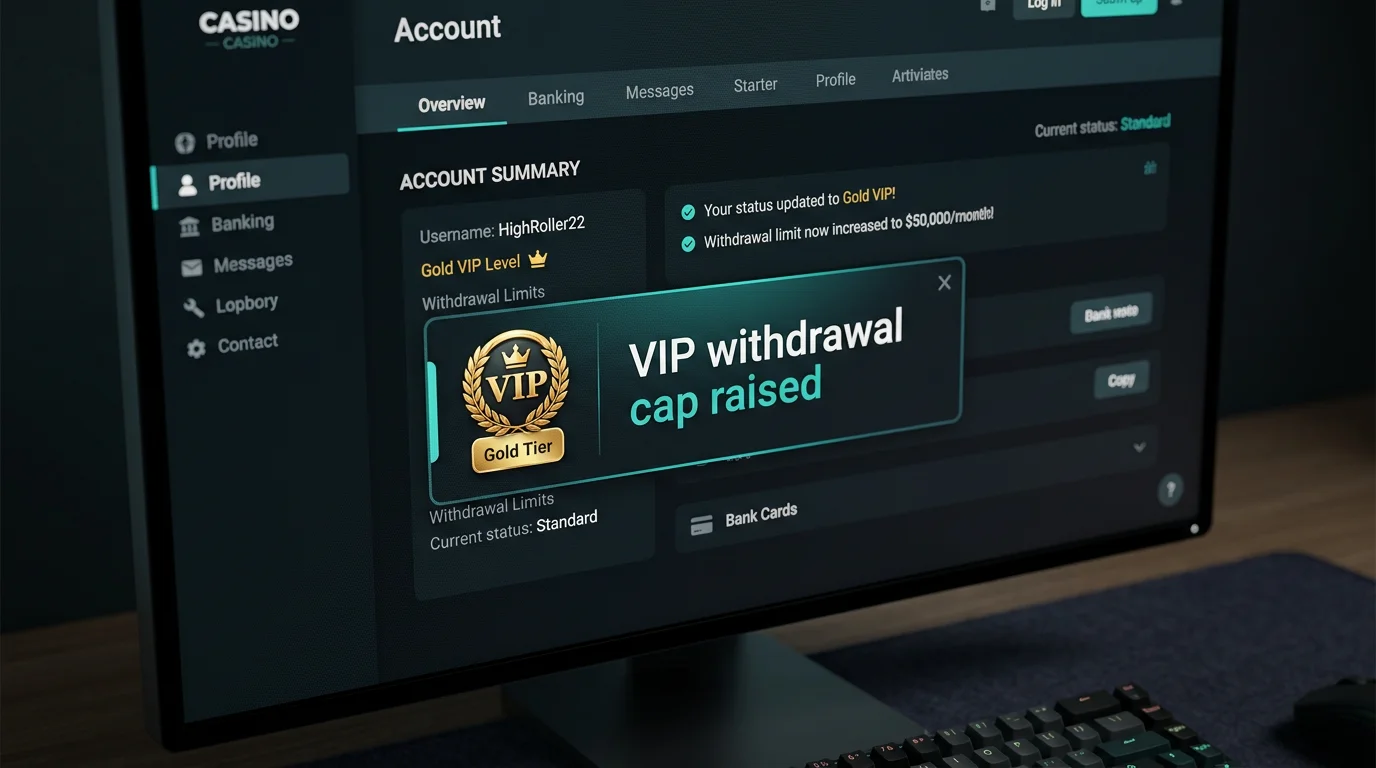
The typical negotiated structure runs daily A$25,000 to A$50,000, weekly A$100,000 to A$200,000, and monthly uncapped or A$500,000 plus. Above those numbers the negotiation gets bespoke — a player turning over A$1 million a month and winning at expected variance against the house edge will be paying out tens of thousands a week, and the operator needs to plan treasury accordingly.
The negotiation happens through the personal account manager who is assigned at Gold tier or above. The conversation is usually framed around “withdrawal velocity” — how quickly the player wants their winnings out — rather than the cap itself, because operators are reluctant to publish higher caps that other players will then request. The terms are confidential to the player and the operator, which is part of the value the tier carries. For a fuller picture of how custom limits sit alongside the rest of the high-roller package, see custom limit negotiation for high rollers.
The trade-off for the custom limit is usually a turnover-based maintenance condition. The player must continue to generate a defined monthly turnover to maintain the elevated cap; falling below the threshold for two or three consecutive months reverts the account to standard limits. The condition is reasonable from the operator’s perspective but worth knowing about because it means the elevated cap is not a permanent feature of the account.
This is the layer that catches even VIP players off guard. Above a withdrawal threshold of roughly A$10,000 in a single payout cycle, operators apply anti-money-laundering throttling that splits the payout into smaller tranches with documentation checkpoints between them. AUSTRAC has analysed over 50 million cash transaction reports from the major Australian banks as part of its broader financial crime intelligence work, and the throttle thresholds at offshore operators are calibrated to keep individual outbound transfers below the reporting trigger levels in receiving jurisdictions.
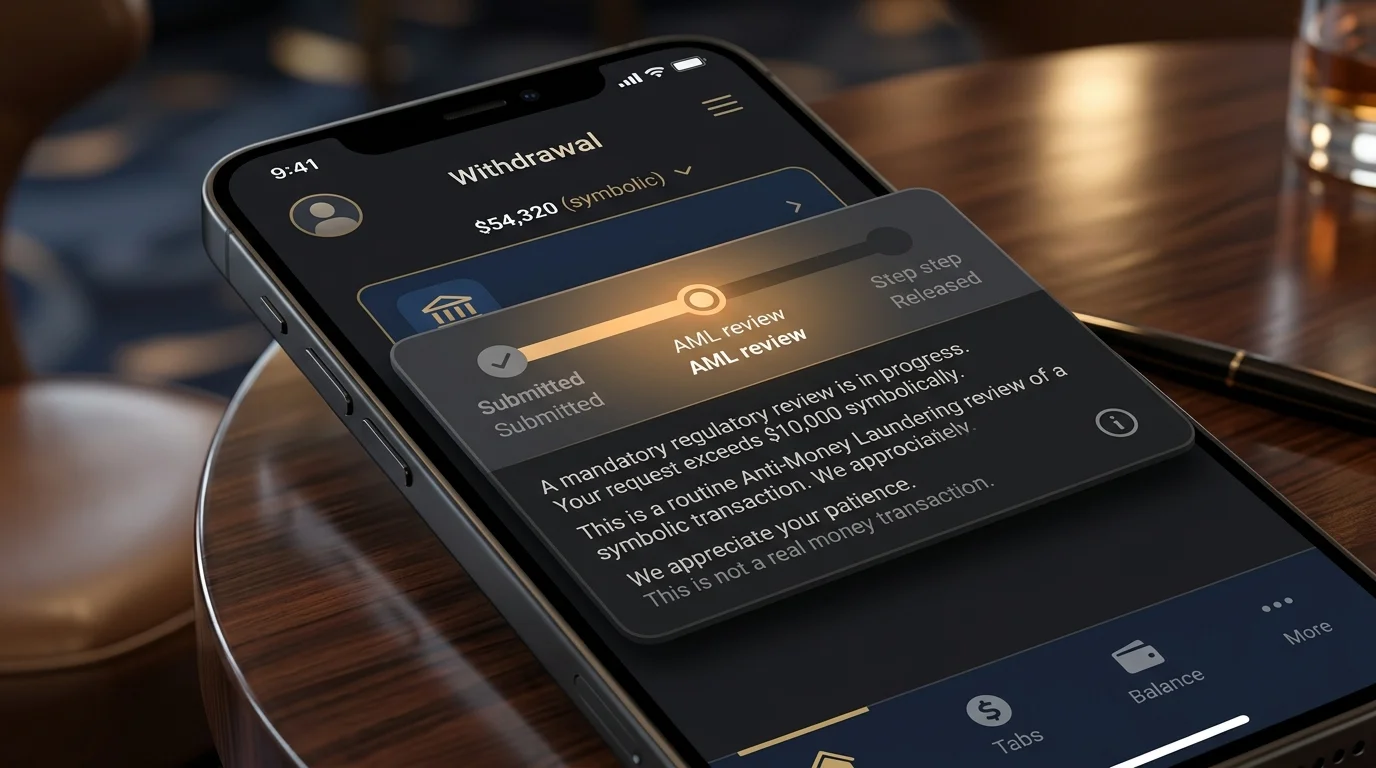
The mechanics: a player requests an A$50,000 PayID withdrawal. The cashier accepts the request and assigns it a batch number. The operator’s compliance team reviews the source of funds — typically by checking the deposit history against the wins ledger and verifying KYC documents are current. The review completes within 12 to 48 hours and the first tranche releases. Tranches then process in daily increments: A$10,000 on day one, A$10,000 on day two, and so on until the full amount clears.
The throttle is universal across operators that take AML compliance seriously. Operators that do not throttle large payouts are either ignoring their compliance obligations (red flag) or have negotiated specific compliance arrangements with their banking partners that allow larger single-transaction throughputs (rare). The presence of throttling is, paradoxically, a positive signal about the operator’s regulatory posture.
The player can sometimes negotiate faster tranche release with the account manager, particularly if KYC is already complete and the wins are clearly attributable to the deposit history. But the throttle itself is not negotiable below the AML threshold — that is the cost of operating in a regulated payment rail with cross-border money movement.
The NPP runs 24/7/365 and PayID transfers settle in seconds regardless of time of day or day of week. This is true. What is also true is that casino treasury teams do not run 24/7, and the approval-to-release pipeline that sits between the cashier and the PayID transfer engine operates on business hours.
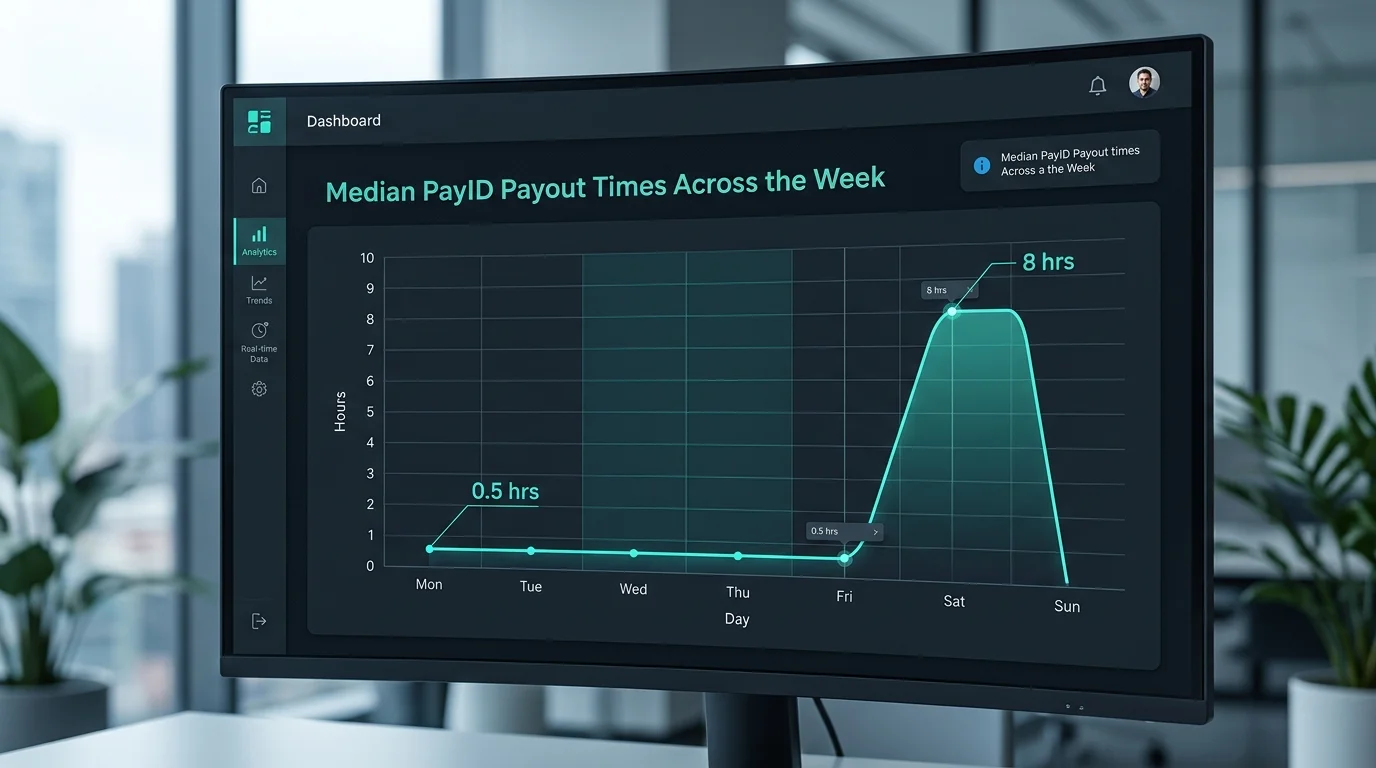
What this means in practice: a withdrawal requested at 3 PM Friday AEST will typically queue in the operator’s approval pipeline, sit through the weekend, and process Monday morning. The actual PayID transfer, once approved, clears in seconds — but the approval itself waited two and a half days. A player who does not know this will think the casino is stalling and may escalate to support unnecessarily.
The fix is timing. Requesting withdrawals Monday through Thursday during the operator’s stated business hours typically gets the approval through the pipeline within 4 to 12 hours. Requesting Friday afternoon onward almost always means the approval waits until Monday. A handful of larger operators run weekend treasury shifts that close the gap, but they are a minority — and the operators that do run weekend treasury usually market it prominently because it is a genuine competitive advantage.
Three things move the average cycle time from days down to hours. First, pre-emptive KYC completion. Submitting identity and proof-of-address documents during account setup, before any large withdrawal is needed, eliminates the KYC pause at withdrawal time. The pause normally adds 12 to 48 hours; the pre-completion eliminates it.
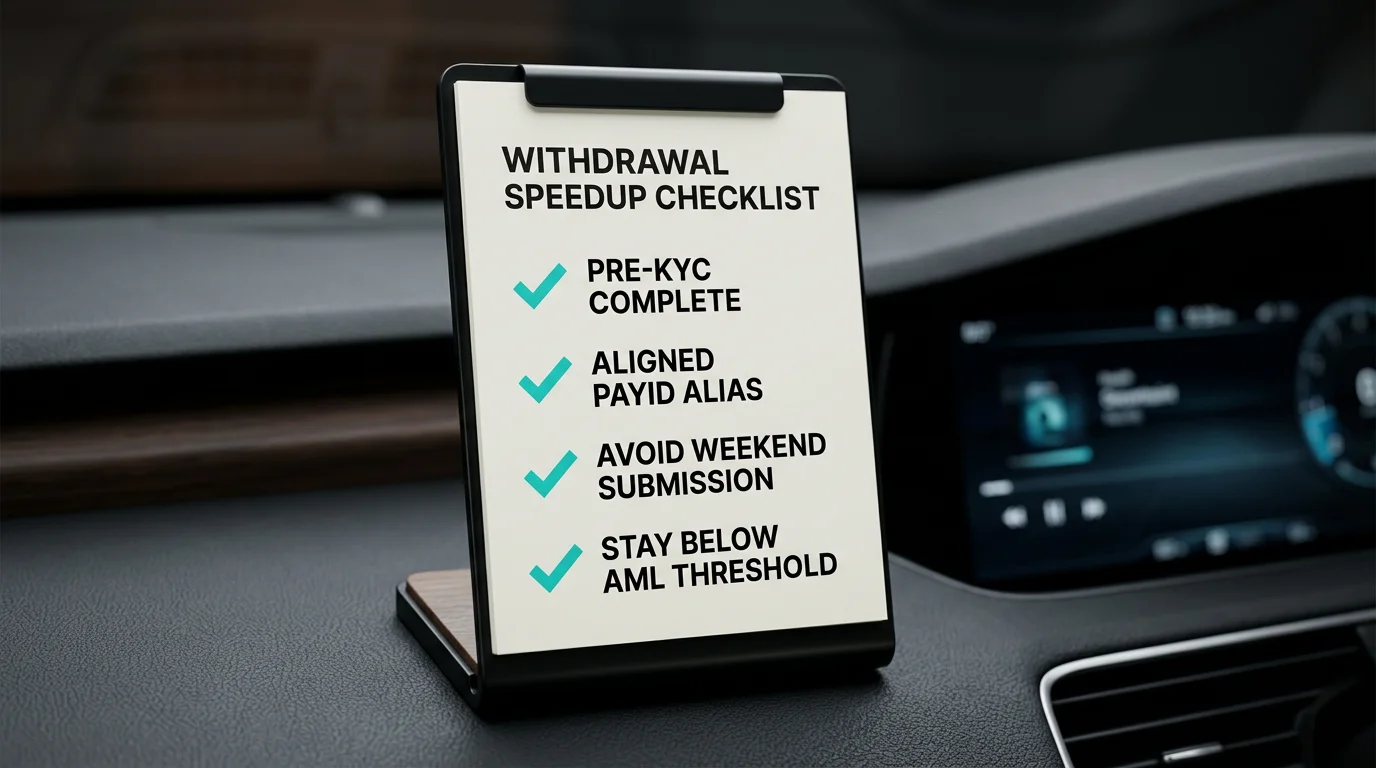
Second, requesting a daily-limit increase ahead of the cashout rather than at the moment of the cashout. Limit increases for established players are usually approved within 24 hours when requested in advance. Requesting at the moment of need queues the increase behind the withdrawal request itself, doubling the total wait.
Third, choosing operators with higher default limits over operators with promotional headline caps that require manual escalation. The operator that publishes A$25,000 per day standard runs that cap automatically; the operator that publishes A$100,000 “available on request” requires a phone call and a discretionary approval for every transaction above the visible cap.
For VIP-tier players, the personal account manager relationship is the single largest accelerator. A manager who knows the player’s withdrawal patterns can flag the request to compliance ahead of time and prevent the throttle from defaulting to maximum-caution mode. The manager cannot bypass AML throttling — no one can — but they can ensure each tranche releases at the earliest possible moment within the throttle structure.
The standard retail limits are non-negotiable for the vast majority of accounts. They exist to manage operator treasury risk and AML exposure, and a casino is not going to bend them for a player with A$3,000 in winnings. Above roughly A$25,000 of weekly turnover, the conversation changes — operators have a financial interest in retaining higher-volume players and the discretionary levers become real. The negotiation is always individual, always through the assigned manager, and always conditional on sustained activity. For the recreational player, the standing limits are the genuine ceiling; for the higher-volume player, the published limits are an opening offer.

Why ANZ is the most cautious Big Four bank for PayID ANZ was the last of the Big Four to fully integrate PayID into its retail offering, and the lag…
Why no-deposit bonuses are the unicorns of the PayID segment Three weeks…
Why RTG remains the most Australian-feeling provider in offshore catalogues Walk into…
The welcome bonus is the operator's bet on you, not yours on…
Created by the "casinopayidau.com" editorial team.