PayID Casino Free Spins in Australia
Free spins look simple — the economics aren't Free spins are the bonus type I get asked about most often, and they're also the one that gets misunderstood most consistently.…

Live blackjack, roulette and baccarat with PayID deposits: Evolution and Pragmatic Live coverage, AUD tables and bet limits at AU casinos
 Available in AU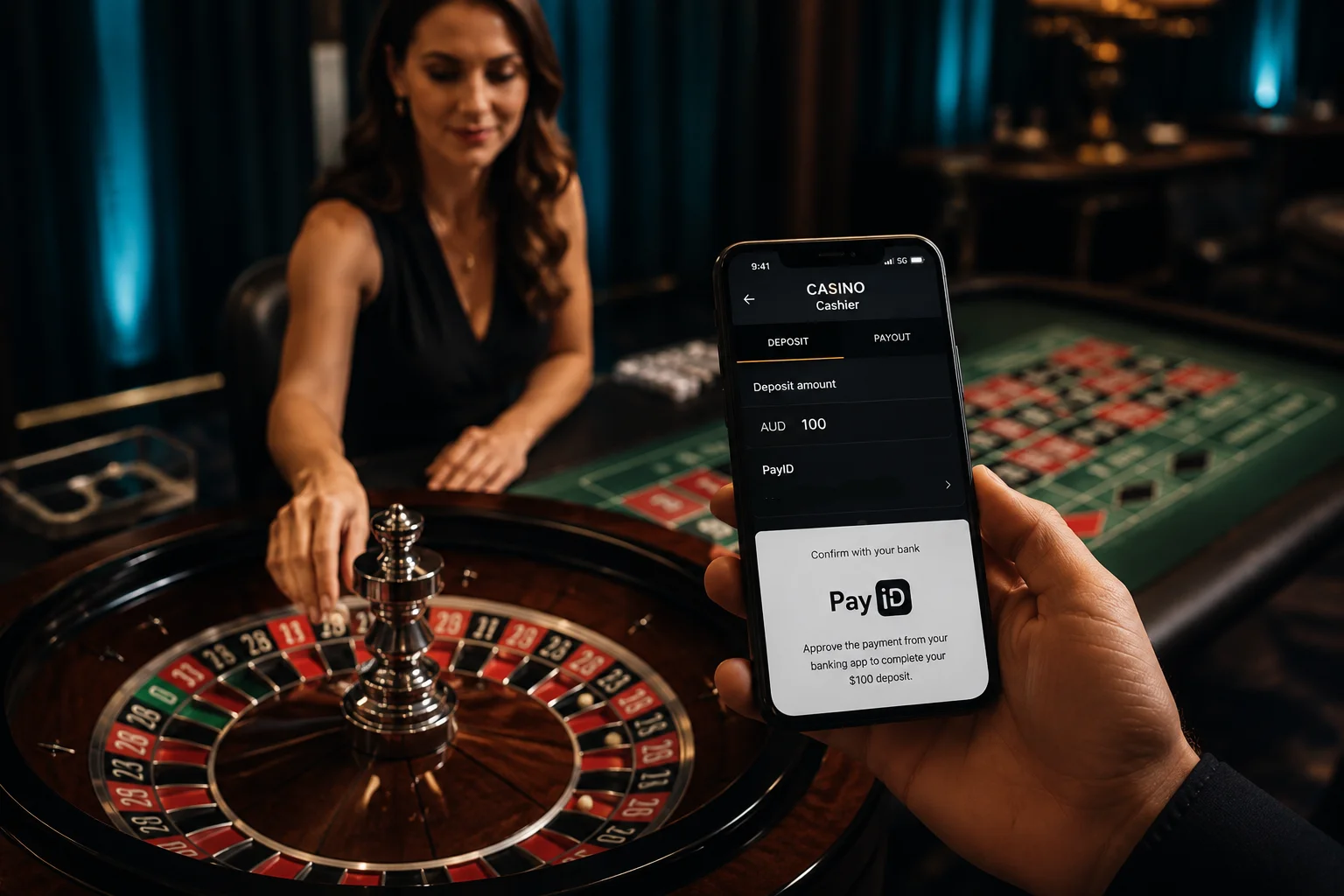
The first time I watched a punter run out of chips at a live blackjack table mid-shoe, the dealer was about to deal a soft 17 and the player had to either step away or top up in under thirty seconds. He fumbled with a card deposit, watched it sit on pending for ninety seconds, and missed the next four hands. That is the precise moment PayID earns its keep — and the precise reason live dealer punters have moved off cards faster than any other segment I track.
Live dealer is the most turnover-intensive format in an online casino. Hands per hour at blackjack sit around 60 to 80, roulette spins land every 50 to 70 seconds, and baccarat shoes deal continuously. A player with an A$200 buy-in at A$10 minimum can churn through stake in a quarter hour. Any deposit method that needs more than a minute is functionally broken for this format. PayID — running on the NPP with sub-15-second settlement — is the only Australian rail that fits the cadence.
I get asked this constantly: how is the dealer real when the cards still seem to obey RNG rules? The answer is layered, and the layers matter for understanding what you are paying into.
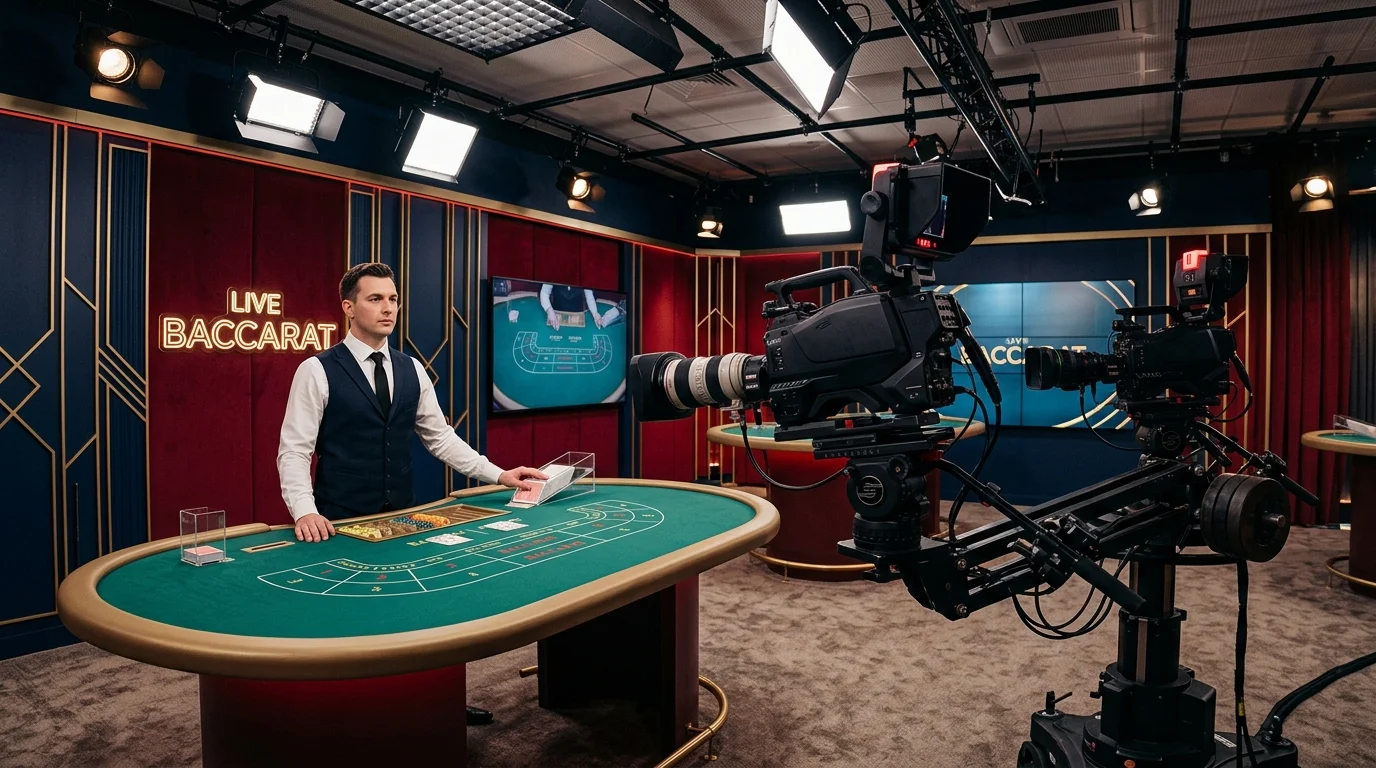
A live dealer table is a physical studio installation: a real croupier, real shoe of cards or real wheel, real chips, and a tightly framed camera rig. The video feed streams over WebRTC or a similar low-latency protocol. The bet interface — chips, side-bet markers, timer — is an HTML overlay rendered on top of the feed. When you click to bet, the action goes to the operator’s bet engine, which holds the wager, settles against the visual outcome the dealer produces, and writes the result back to your balance.
The RNG element appears only in side bets and certain game variants. The main hand outcome at live blackjack comes from a physical shoe — usually eight decks, shuffled by machine, with optical character recognition reading each card. Roulette outcomes come from a physical wheel with a sensor under the rim that detects the pocket. So when you fund a session by PayID, the money flows into a balance that backs both the live wager and any RNG side bets at the same table. There is no separate live wallet: the deposit hits the cashier, the cashier credits the main balance, and the live interface draws from that balance like any other game window.
Walk into any AU-facing offshore casino with a live section and you will see the same four names behind the studios. The branding sometimes hides under a casino’s own skin, but the studio infrastructure belongs to a small group of providers.
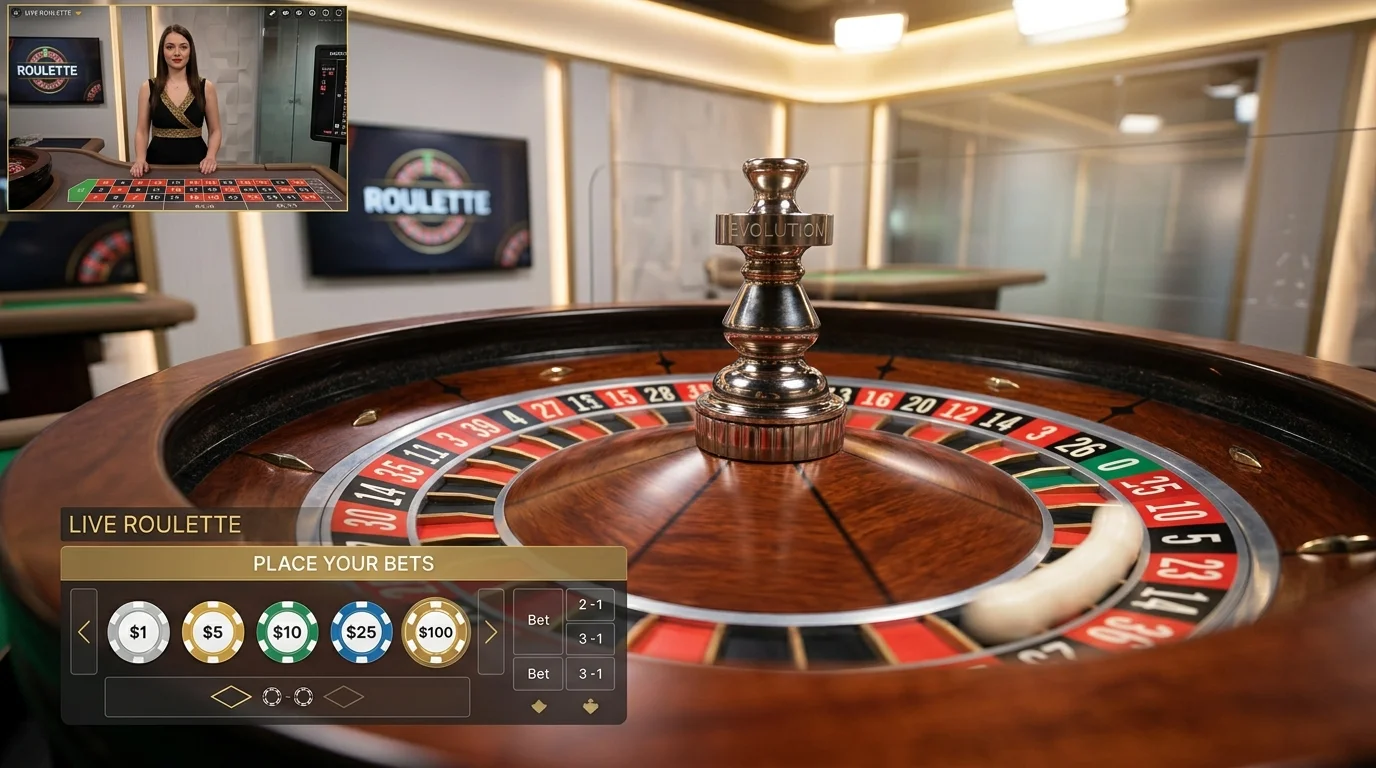
Evolution is the dominant force. Their studios in Latvia, Malta, and Georgia run the bulk of premium tables, and Crazy Time, Lightning Roulette, and Monopoly Live have become a category of their own. Evolution tables carry the highest limits — VIP rooms with A$500 minimums and A$50,000 ceilings are usually their work — and the feed production quality is consistently the best.
Pragmatic Play Live is the aggressive challenger. Their Bucharest and Sofia studios stream a full suite of blackjack, roulette, baccarat, and Mega Wheel. They undercut Evolution on minimums and tolerate low-stake players, which makes their tables a fit for the A$1 to A$5 segment.
Playtech Live runs out of Riga with strong baccarat coverage that has historically targeted Asian markets — some of their squeeze-baccarat tables have the lowest commissions in the industry. Authentic Gaming is the specialist — they stream from actual land-based casino floors, so the Saint-Vincent and Foxwoods feeds you sometimes see are theirs. Knowing the provider tells you the game economics: Evolution and Playtech run higher-overhead studios, which is why their minimums sit higher than Pragmatic’s.
Here is something that catches every new live dealer player by surprise: most live tables are not denominated in AUD. The Australian online casino market hit US$1,657.2M in 2024, with desktop accounting for 53.97% — yet the live tables Aussies actually play on are overwhelmingly priced in EUR or USD. The reason is supply economics: live studios are expensive, and providers run currency-specific tables only when there is enough concurrent demand to keep a dealer busy.
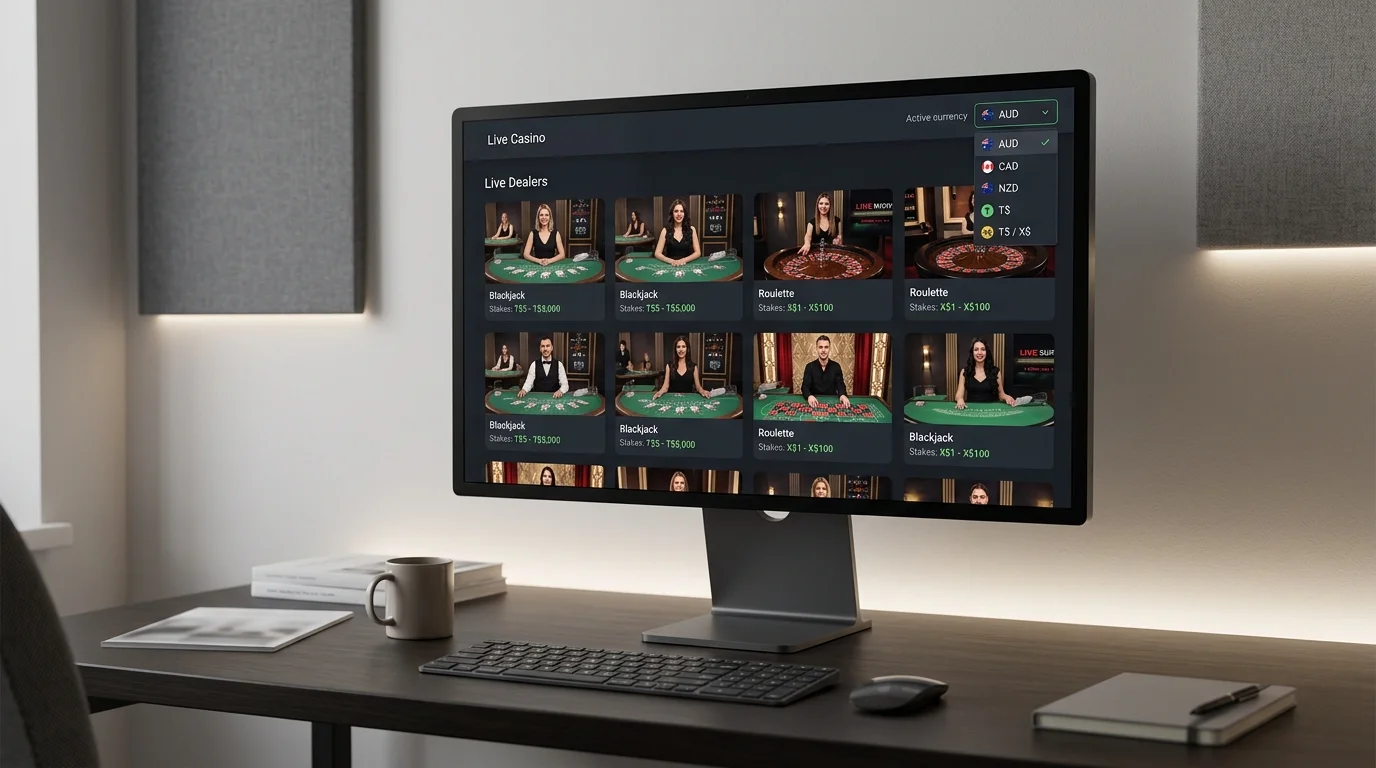
What this means in practice: you deposit A$500 via PayID, the cashier converts it to your account currency — usually USD or EUR — at the operator’s internal rate, and you sit down at a EUR-denominated roulette table with EUR chips. Conversion happens twice: once at deposit, once at withdrawal. Each pass typically costs 2 to 4 per cent against mid-market.
There are operators that have negotiated dedicated AUD tables, usually with Evolution. They are rare and tend to be reserved for the larger AU-facing brands with enough Australian volume to justify the studio fee. The appeal is straightforward: no FX on bets, no FX on cash-out, and chip values match the deposit you sent. The trade-off is smaller dealer pools, which means longer queues during AEST evening peak — I have seen AUD blackjack tables go to a 12-person waitlist between 8 PM and 11 PM Sydney time on a Friday.
The first question I get from anyone migrating from pokies to live dealer: how much do I need to sit down? With 56.1% of Australian gamblers now playing primarily online in 2025, the live segment is pulling in players who were never going to walk into a brick-and-mortar venue — and the minimum bet structure is what makes that work.
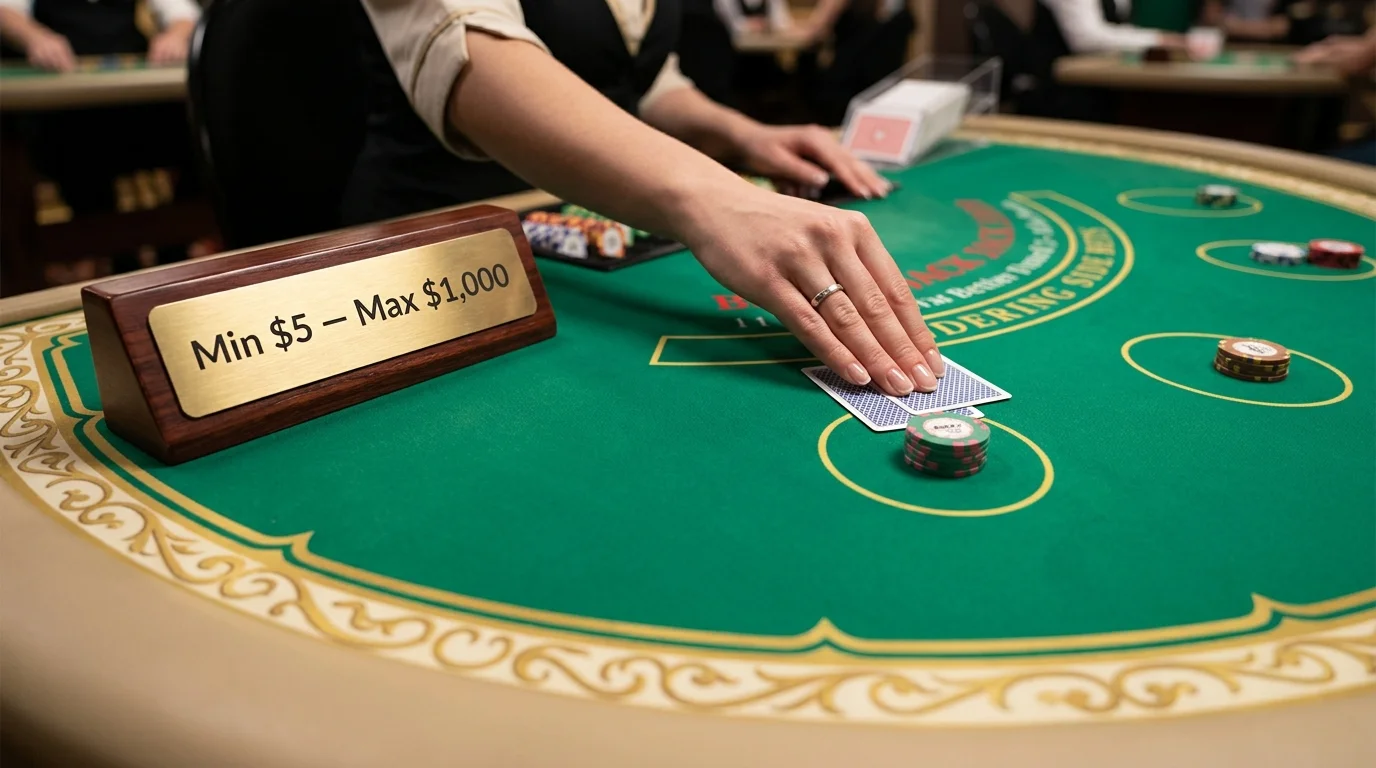
At the floor, you can sit at a Pragmatic Live or Evolution low-limit blackjack table with an A$0.50 minimum. These are mostly EUR €0.50 tables converted at deposit, so the practical floor is closer to A$0.80 once FX bites. Roulette runs lower at the inside-bet level, but the table minimum totalled across all your bets is usually A$0.50 to A$1. Baccarat sits at A$1 to A$5 minimums in standard rooms.
Move up to standard limit tables and minimums jump to A$5 to A$10. VIP tables — Salon Privé, Diamond VIP, Speed Baccarat A — start at A$25 and run to A$100 minimums, with maximums anywhere from A$10,000 to A$100,000 per hand. Game shows sit at A$0.10 to A$0.25 minimums but expect chaotic, low-RTP play.
For a PayID-funded session, the practical sweet spot is A$5 minimums. That gives 40 to 80 hands per A$200 buy-in at expected loss rates — roughly an hour before you either run hot or top up.
Rather than name a shortlist that would age out by Q2, let me describe the profile I look for when vetting an operator’s live-dealer-plus-PayID combination. Seven attributes, and an operator either has them or it does not.
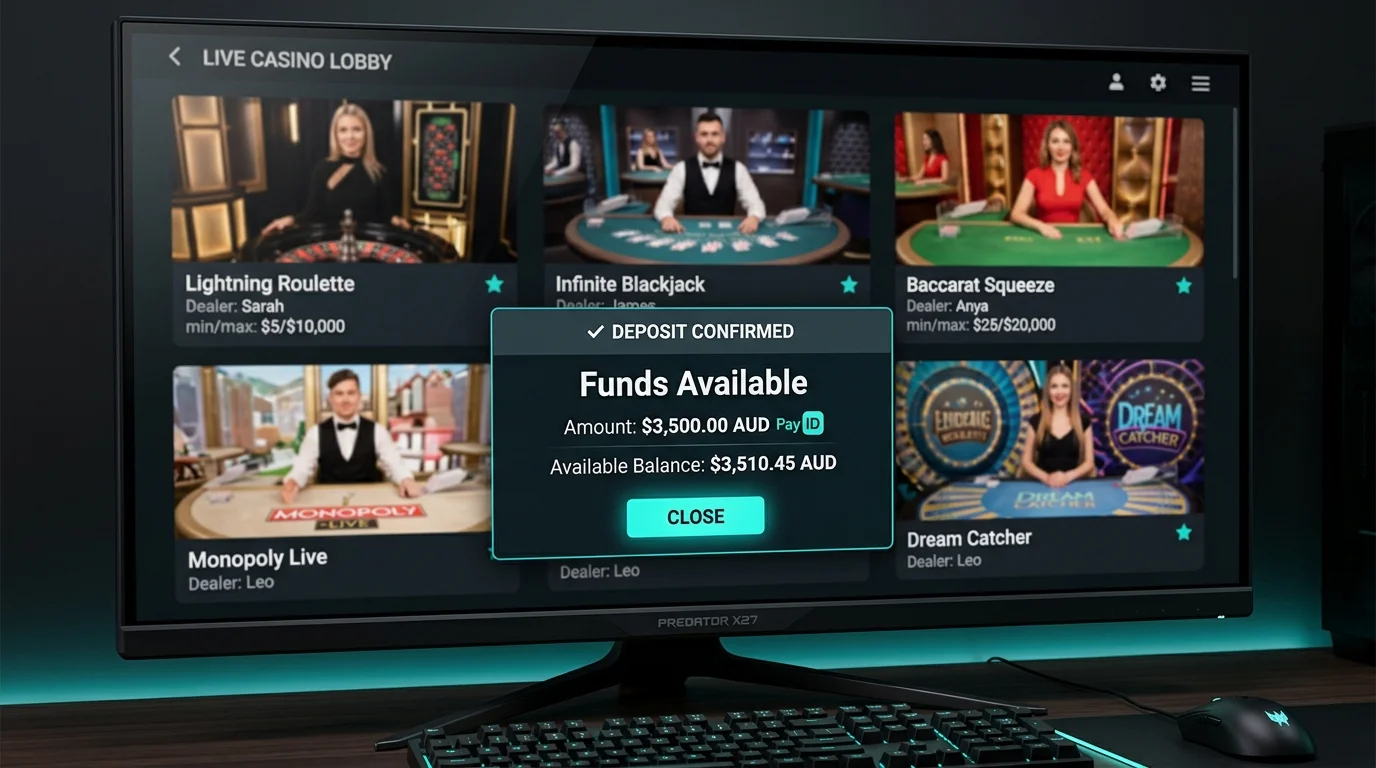
First, the cashier shows PayID at the top of the deposit list, not buried under cards and crypto. Second, the live section has at least three providers — typically Evolution plus Pragmatic Live plus one of Playtech or Authentic. Single-provider operators tend to have less competitive limits and skip premium variants. Third, the live lobby shows table latency and number of seats live, not a static screenshot. Fourth, table currency is visible before you sit down. Fifth, the live section has at least one AUD-denominated table during AEST evening hours.
Sixth, the operator’s deposit flow does not bounce you to a card form when you select PayID — a common dark pattern where the PayID button is decorative but the actual rail is a card processor. Seventh, withdrawals back to PayID complete within 24 hours from approval.
Operators that hit six or seven of these are doing live dealer correctly. The ones at three or four are running it as marketing, not as a real product.
This is the section every welcome-bonus user needs to read before they ever touch a live table with promotional funds. Live dealer games contribute somewhere between 10 and 20 per cent to wagering requirements at almost every operator — and many ban live tables from bonus play entirely.
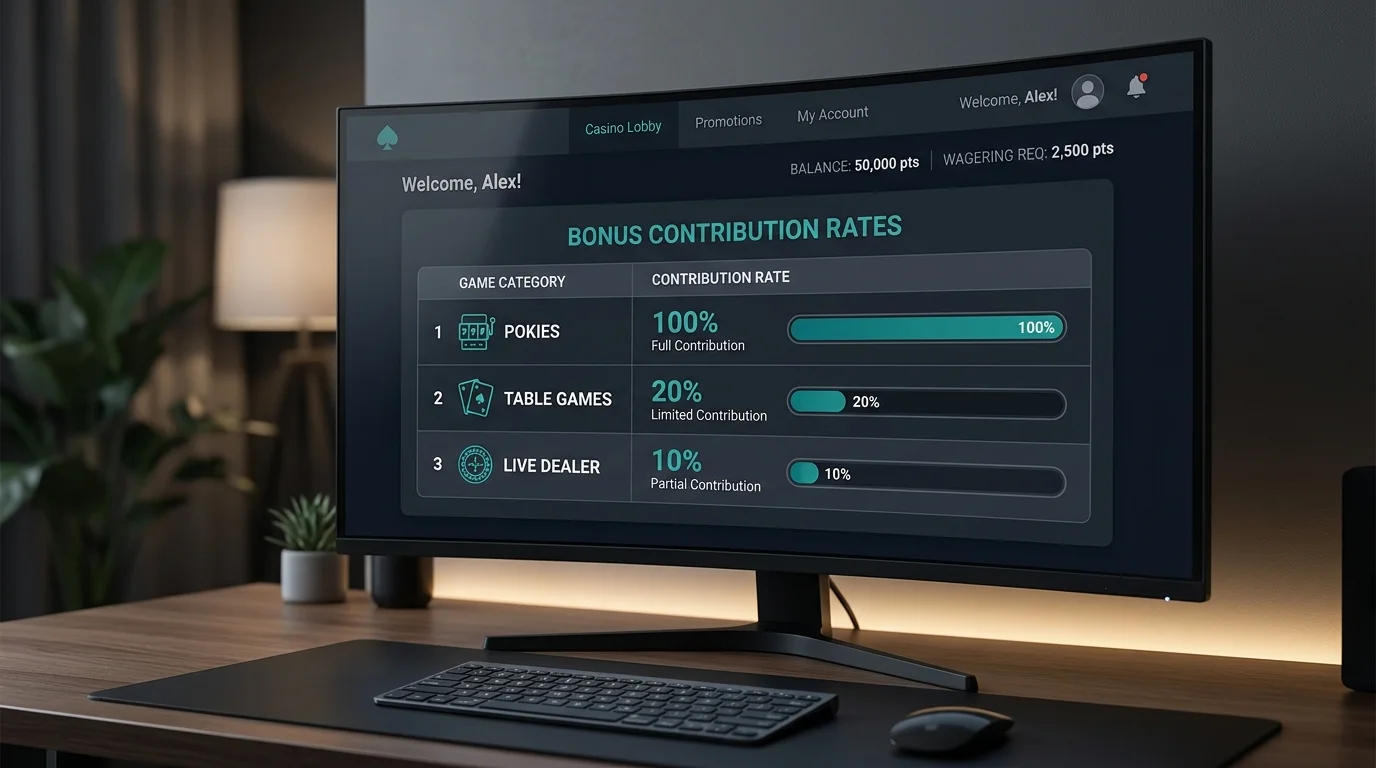
The mechanics are simple. An A$200 bonus with a 35x wagering requirement means A$7,000 of qualifying wager before any bonus-balance can be withdrawn. Spin an A$1 slot bet and the 100 per cent contribution rate credits a full A$1 against that A$7,000. Bet A$10 on live blackjack with a 10 per cent contribution rate and you credit A$1 — your A$10 wager moved the bar one hundredth of the way.
The reason is house edge differential. Slot edge sits at 3 to 5 per cent. Live blackjack edge with basic strategy is 0.5 per cent. If live counted at full contribution, bonus farming would be trivially profitable. Some operators apply 20 per cent to baccarat, 0 per cent to live blackjack, 15 per cent to live roulette — the exact ratios are buried in T&Cs and they matter more than the headline match percentage. I dig into the wagering contribution rules for live tables at every operator I review, because a 200 per cent welcome match means nothing if live tables contribute zero.
The combination works because both halves are built for speed. PayID clears the deposit in under a minute, the live engine accepts the credit instantly, and you are seated at a table within the time it takes to refresh the lobby. For a punter who came up on EFTPOS card forms and three-day clearance windows, the experience feels almost suspicious in its smoothness.
The friction points that remain are not in the rail. They sit in AUD-table scarcity, bonus contribution rules, and operator-specific cashier quirks. Pick a table with a currency you understand, a provider whose reputation you trust, and an operator whose PayID flow has been tested — the rest is your hand against the dealer.
Free spins look simple — the economics aren't Free spins are the bonus type I get asked about most often, and they're also the one that gets misunderstood most consistently.…
Why no-deposit bonuses are the unicorns of the PayID segment Three weeks…
Two payment methods solving completely different problems The "PayID vs Neosurf" question…
Why the device choice matters less than the platform policies behind it…
Written by the editors at casinopayidau.com.