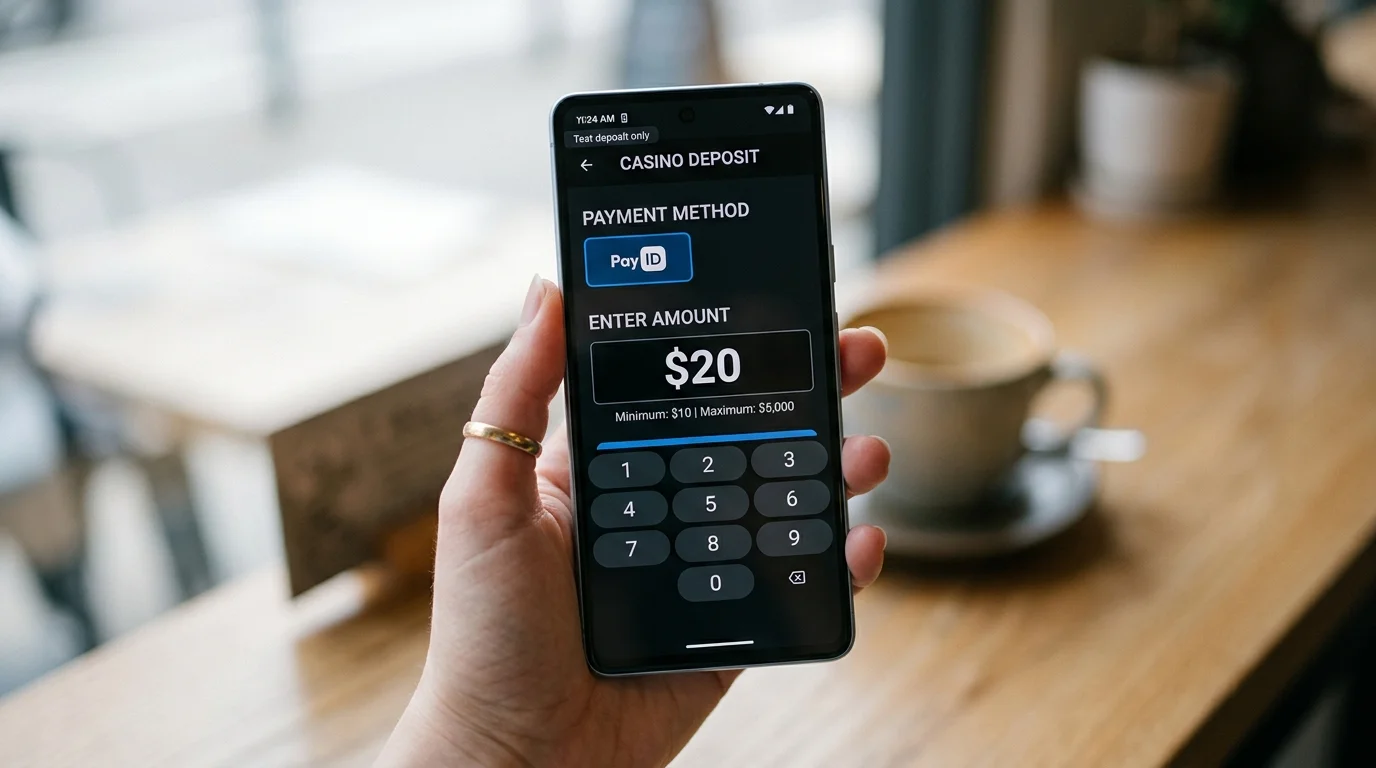
A reader emailed me in February asking why I had not yet added a particular operator to my notes — the site had been live for six weeks, was running aggressive Reddit ads, and apparently paying out withdrawals quickly. I had not added it because six weeks is not enough. By the end of March, that operator had quietly stripped the AUD cashier rail, replaced PayID with a card-only fallback, and locked three players’ balances behind a sudden KYC re-verification demand. The reader who held off saved A$1,200.
New PayID casinos are the most interesting and the most dangerous segment in the Australian offshore market. They run the freshest game catalogues, the loudest welcome offers, and the cleanest UX — and they have no operational history. Six-week-old casinos are a different risk class to six-year-old casinos, and the entire framework for evaluating one does not map onto the other. The job, when you find a new site that looks promising, is to figure out which side of the line it sits on before any of your money moves through it.
What a fresh operator actually offers that established ones do not
The case for new casinos is not just hype. There are structural reasons fresh sites can be better than established ones, and the people who only chase legacy brands miss them entirely.
Fresh providers, first. A new operator launching in 2026 is signing contracts with providers whose 2025 releases are still on shelf — Pragmatic Play games from last year, Hacksaw mechanics not yet on legacy operators’ lobbies, Nolimit City titles a quarter ahead of the broader market. Established casinos rotate slowly because their cashier integration cycle is locked to quarterly updates; new operators ship the latest builds because their integration is fresh.
Aggressive welcome economics, second. A new operator has nothing but the welcome offer to convert first-deposit traffic. Match percentages run higher than legacy averages, free-spin counts are inflated, and minimum deposits to qualify sit lower.
Clean UX, third. A new operator builds on current frameworks — React or Vue front-ends, mobile-first PWA, modern cashier components — and skips legacy patterns that drag down older sites. The deposit flow is shorter, the live chat is on the page rather than buried in a help centre, and the PayID button actually works the first time.
And why fresh is also where most of the risk sits
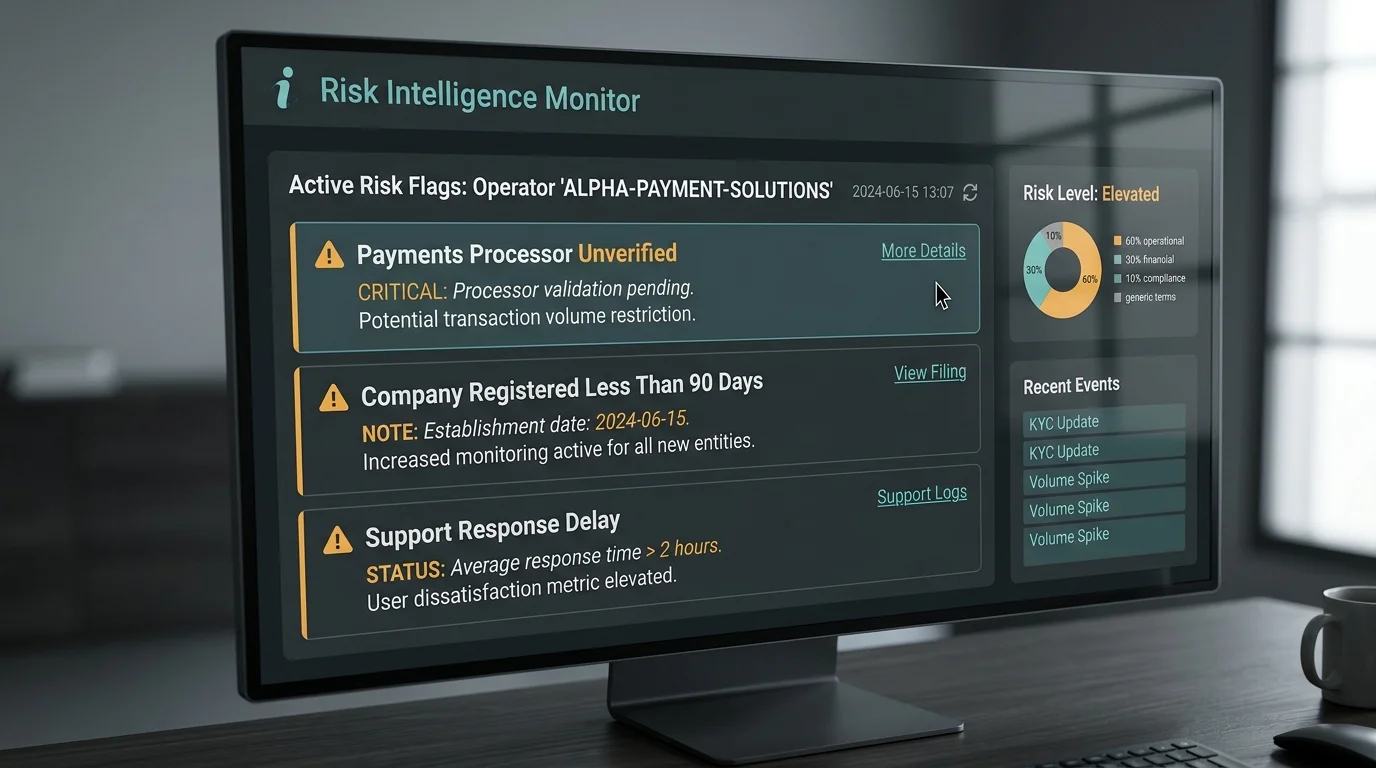
Now the harder side. The Australian market has blocked 1,455 illegal gambling sites since November 2019, and ACMA logged 411 complaints in Q3 2025 alone, with breaches found in 28 of 29 investigations. The concentration of those breaches sits overwhelmingly in operators that launched recently — because operators with established Australian volume have either left the market voluntarily or been kicked out by repeated enforcement. The newest sites are the ones still arriving from the same risk profiles ACMA has been blocking for six years.
ACMA chair Nerida O’Loughlin has been blunt about the regulatory frame: “There are no excuses for gambling companies that are putting profit above customer protection.” That position is not abstract — it is the operating assumption behind every site-blocking decision ACMA makes. New operators arriving in the AU market in 2026 face exactly the enforcement intensity that closed the last cohort, and the survival rate among Q1 launches is historically under 40 per cent by Q4.
What this means for a punter is straightforward: a new casino is more likely than not to be either an unsuccessful business that will fold within twelve months, or a scambling operation designed to harvest first-month deposits and disappear. Both outcomes are bad for the money you put in. The case for caution is empirical, not theoretical. Operators with five-plus years of clean payout history are a small minority of the universe and they all used to be new — they just earned trust by surviving, and the survival bias is doing real work in the statistics.
The nine-step vetting protocol I run on every fresh site
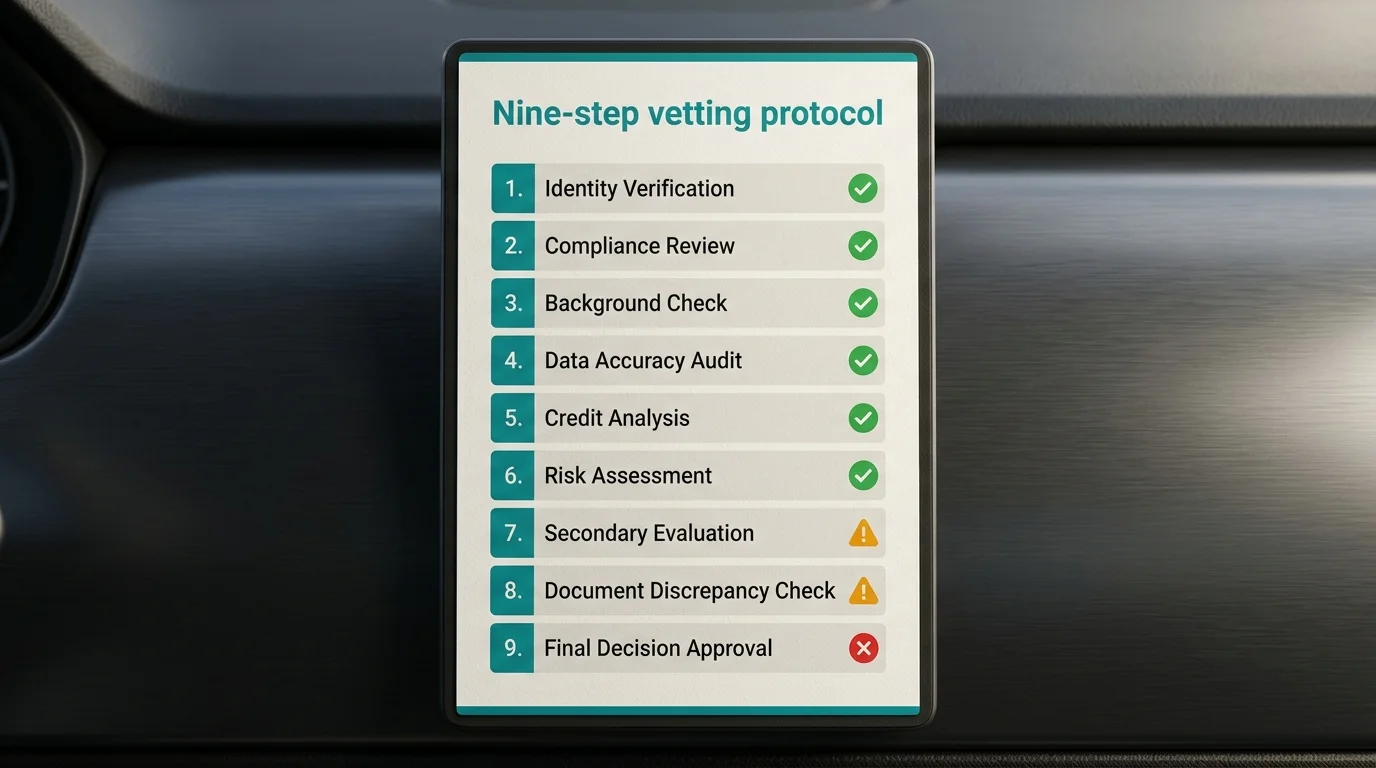
This is the checklist I built after the third reader email about a deposit that went into a black hole. Nine steps, in the order I run them, with no skipping. If a site fails any one of the first five, I do not even open the cashier. AUSTRAC’s scambling intelligence work has made it clear that PayID itself is increasingly a channel of choice for fraudulent operators because it bypasses card-fraud signals — meaning the rail that protects you most at established casinos is the same rail that exposes you most at unknown ones.
Step one: WHOIS lookup. Domain registered more than six months ago is the floor. Registrations under 60 days are an immediate fail. Privacy-redacted registrars (which is most of them now) do not disqualify, but combined with anything else off, they pile on the risk score.
Step two: licence verification. Curaçao, Anjouan, Kahnawake, or Costa Rica all appear in the AU offshore market. The licence number must appear on the licensor’s public register, and the operator’s listed corporate entity must match the licensee. Three minutes on the licensor’s site catches half the fraud.
Step three: corporate ownership trail. The operator’s T&Cs name a legal entity. That entity must exist in a company register somewhere — usually Cyprus, Malta, Estonia, or Curaçao. If the name returns nothing, the operator is hiding ownership.
Step four: deposit test. A$30 via PayID. Time the deposit. Verify the funds appear in the casino balance. Note any extra screens, any KYC prompts before deposit completion, any redirect to a card form.
Step five: withdrawal test. Before playing through the deposit, request a withdrawal of A$20. Many operators will reject this — that is fine, but the rejection reason matters. Legitimate rejections cite minimum withdrawal or pending KYC. Illegitimate rejections cite bonus terms when no bonus was claimed, or a sudden source-of-funds demand. The scambling identification framework in our dedicated piece walks through the rejection patterns that signal exit-scam intent.
Step six: KYC document handling. Send identity documents and watch response time and the security of the upload channel. Anything not encrypted, anything that asks for documents over chat, anything that demands a selfie holding a credit card — fail.
Step seven: 24/7 support test. Three queries at three different times of day. At least one must be outside European business hours. Response times under five minutes during the day and under thirty minutes overnight is the bar.
Step eight: T&Cs read. Search for “sole discretion”, “void winnings”, “irregular play”, “bonus abuse”. Each phrase has a legitimate meaning, but definitions must be specific. Vague definitions are the lever operators use to refuse payouts.
Step nine: external reputation. Forum search across at least three independent sources for the operator name plus terms like “withdrawal”, “payout”, “rejected”. Two weeks of clean reports is the minimum signal.
The profile of new operators that have actually passed vetting
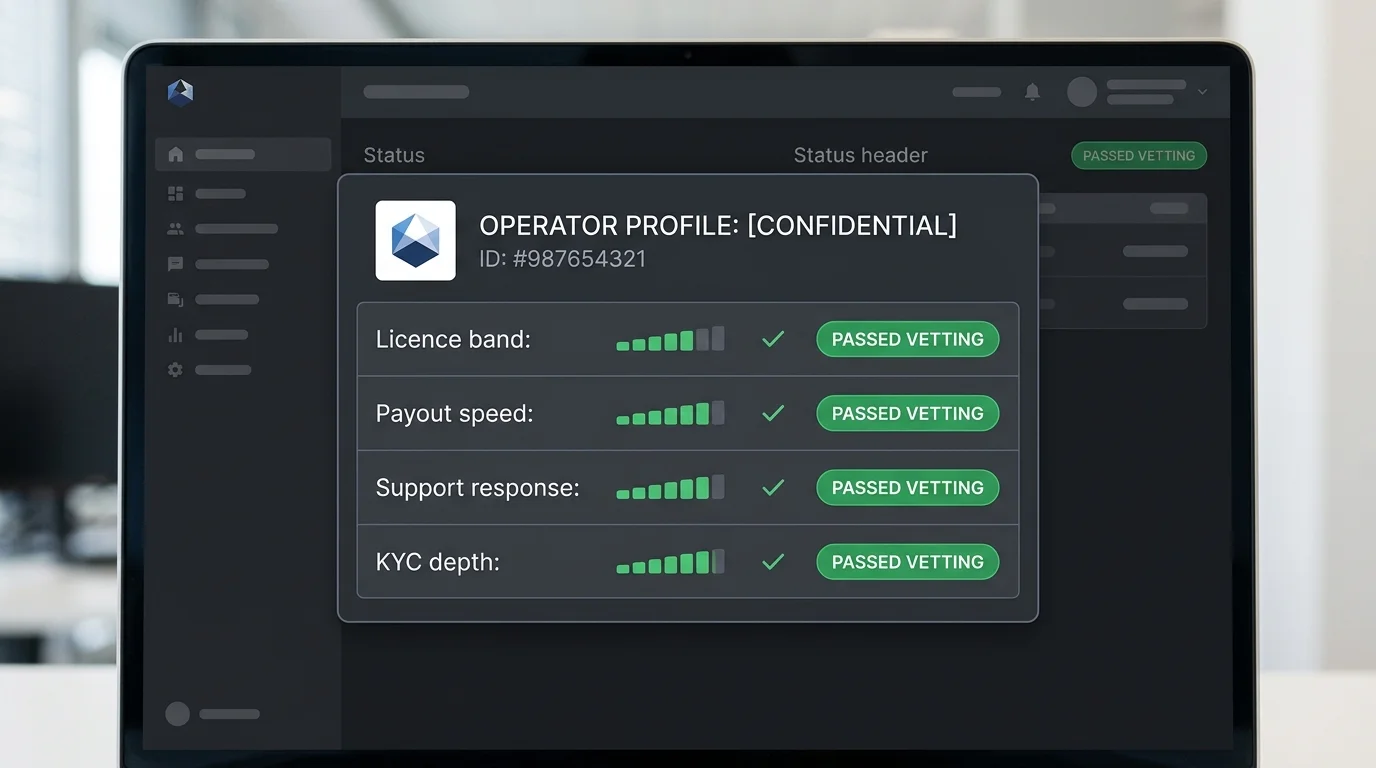
I am not going to publish a shortlist that will rot within a month. Operators move in and out of the safe column quickly, and a Q1 2026 list will be misleading by Q3. What I can describe is the profile of new operators that have passed the nine-step protocol in the first quarter of 2026 — and there are four such operators on my notes, all unnamed here because the right shortlist lives in the live operator section of the site.
The profile looks like this. Domain age between 8 and 14 months. Licence: Curaçao under the new 2024 framework, with the licensor register confirming active status. Corporate entity registered in Cyprus or Malta, with verifiable filings. Deposit test under 90 seconds via PayID, withdrawal test paid within 48 hours. KYC processed within 24 hours. Support response under three minutes via live chat between 9 AM and 11 PM AEST. T&Cs free of the worst “sole discretion” clauses. External forum reputation across at least eight weeks of independent posts, with no pattern of payout disputes.
Operators that hit all of those have earned a place on the watchlist, not a recommendation. Watchlist means I keep monitoring them for another three months before treating them as established. New is never the same as proven; passing vetting is a necessary condition, not a sufficient one.
The signals that tell me a new site is unsafe in under five minutes
The flip side of the vetting protocol is the pattern of red flags that lets you walk away from a bad site without burning the full nine-step checklist. These are the signals I see most often on operators that are not going to clear vetting.
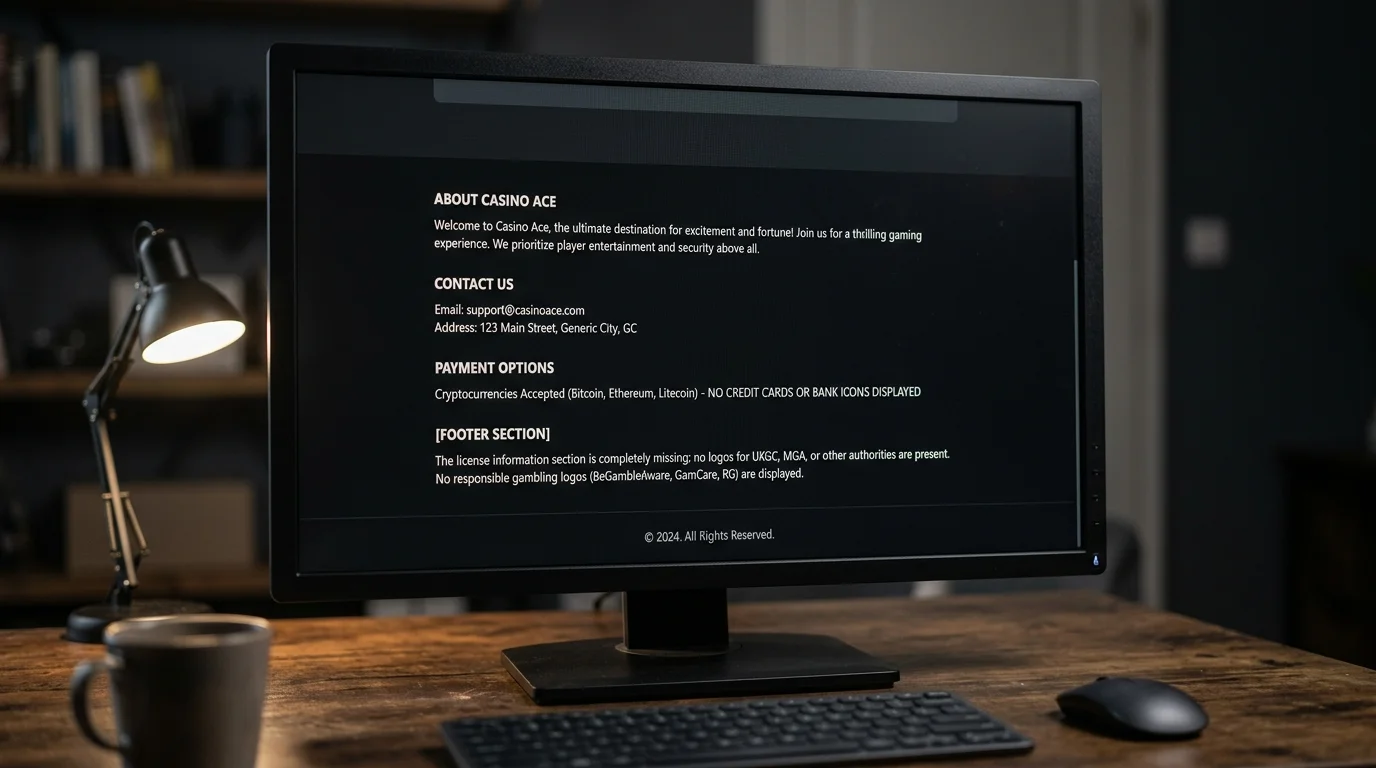
Domain age under 60 days, no footer at all, or a footer that just lists a payment-method logo grid without any corporate or licensing detail. Live chat that starts with deposit promotion before any question is asked — legitimate support waits for the player to speak. Pressure tactics: a 15-minute countdown on the welcome offer, a pop-up demanding deposit before the games load, a “VIP manager” reaching out within an hour of registration.
PayID-only deposit option with no card or crypto alternative is a quiet red flag — established operators always have at least three rails. Casino games loading from a single provider when the site claims a multi-provider library, which usually means white-label content scraped from a single supplier.
T&Cs written in broken English with phrases that suggest machine translation. KYC demands triggered the moment deposit hits, before any play. Withdrawal minimum of A$200 or more, a soft block on testing cash-out before committing. Withdrawal processing window of 7+ days stated in T&Cs — established casinos process within 24 to 72 hours.
Any three of these in combination kills the vetting. Any one of the first three — domain age, footer, chat pressure — kills it on its own. There is no point completing a checklist on a site that has already failed the smell test.
How to actually use a new operator if it passes
An operator that clears the nine steps still gets handled with a test-deposit ceiling. A$30 to A$50 for the first session, no bonus claimed, withdrawal requested before any extended play. Watch the second payout cycle — operators that pay quickly on the first withdrawal and then introduce delays on the second are a known pattern, and the delay is the moment to leave.
Build session size from there only after at least two clean withdrawal cycles and three months of operational history under your own observation. Operators that survive their first year and behave consistently across multiple cash-out cycles earn larger deposits. The ones that wobble in month two or three were never going to be safe, and the small test exposure is the only sensible way to find out which is which.
How long should I wait before trusting a new PayID casino?
Six months of clean operational history is the floor for a small test deposit, and twelve months of consistent payouts across multiple withdrawal cycles is the bar for treating an operator as established. Anything under six months should be limited to an A$30 to A$50 test session with no bonus claimed and an immediate withdrawal request to validate the cash-out flow.
Are first-month bonuses at new PayID casinos usually a trap?
Not usually a trap, but usually loaded with terms that make them unprofitable. New operators compete on headline match percentages — 200% to 400% is common — but the wagering requirements behind those numbers run 40x to 60x bonus, often with live dealer and table games at 0 to 10 per cent contribution. The bonus is real, it just costs more in expected play time than the headline implies, and on a new operator the risk of the operator changing terms mid-wagering is non-trivial.