PayID Casino Deposit Declined
Why nearly every declined PayID deposit traces back to six causes The pattern is consistent enough that I keep a printed checklist next to my desk. Over nine years of…

What documents Aussie PayID casinos request, how long verification takes and why pre-KYC before your first deposit saves you a full day
 Available in AU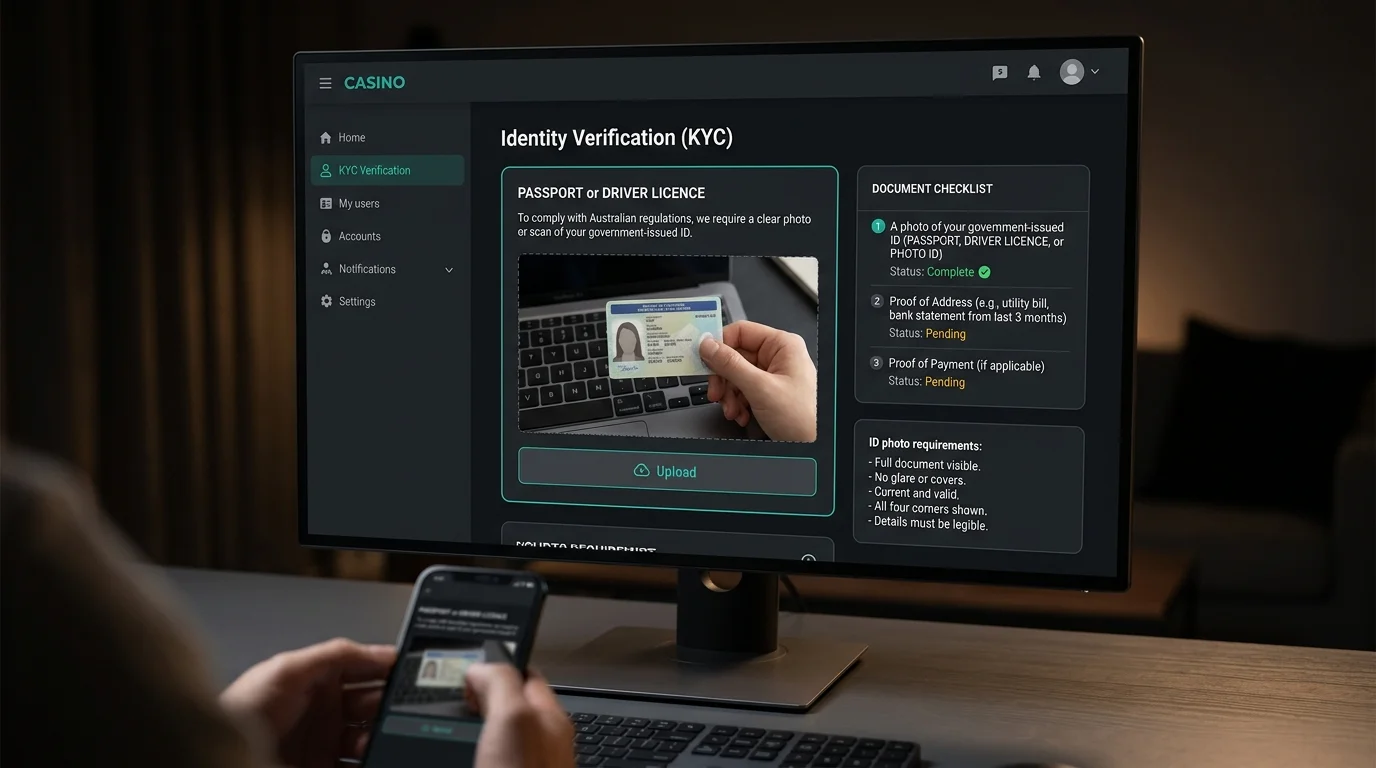
The single biggest source of player frustration I see in the PayID segment isn’t a slow deposit, a declined transfer, or a stalled support ticket — it’s the surprise that the first withdrawal takes longer than every subsequent one. The cause is KYC, the Know Your Customer verification that every legitimate operator runs before releasing funds. Players assume the speed of the PayID rail carries through to the first cashout. It doesn’t. The deposit rail is fast; the verification gate behind it isn’t.
The shortcut that veterans use is straightforward: complete KYC before you ever need a withdrawal. Most operators will accept your documents the day you register, queue them for review, and have you fully verified before your first session reaches its cash-out moment. Doing this front-loads the friction into a low-stakes window. The next 1,500 words walk through what verification actually requires, why operators ask the questions they ask, and how the timing typically plays out across the AU-facing market.
Australia’s Anti-Money Laundering and Counter-Terrorism Financing framework places direct obligations on financial institutions and on the operators they interact with. Offshore casinos accepting Australian players generally apply similar standards — partly because their own licensing regimes require it, partly because the banks processing their PayID outflows refuse to settle large transfers without identity verification trail. The system is structural, not arbitrary.
The Fintel Alliance, which coordinates Australian financial intelligence sharing between AUSTRAC and the major banks, processed analysis of more than 50 million cash transactions in the last year alone — a scale that gives you a sense of how much of the AML machinery is automated. PayID-related transactions to and from offshore platforms sit inside that broader monitoring fabric. The operator’s KYC requirements are the upstream filter that keeps individual accounts inside the bounds the banks will tolerate.
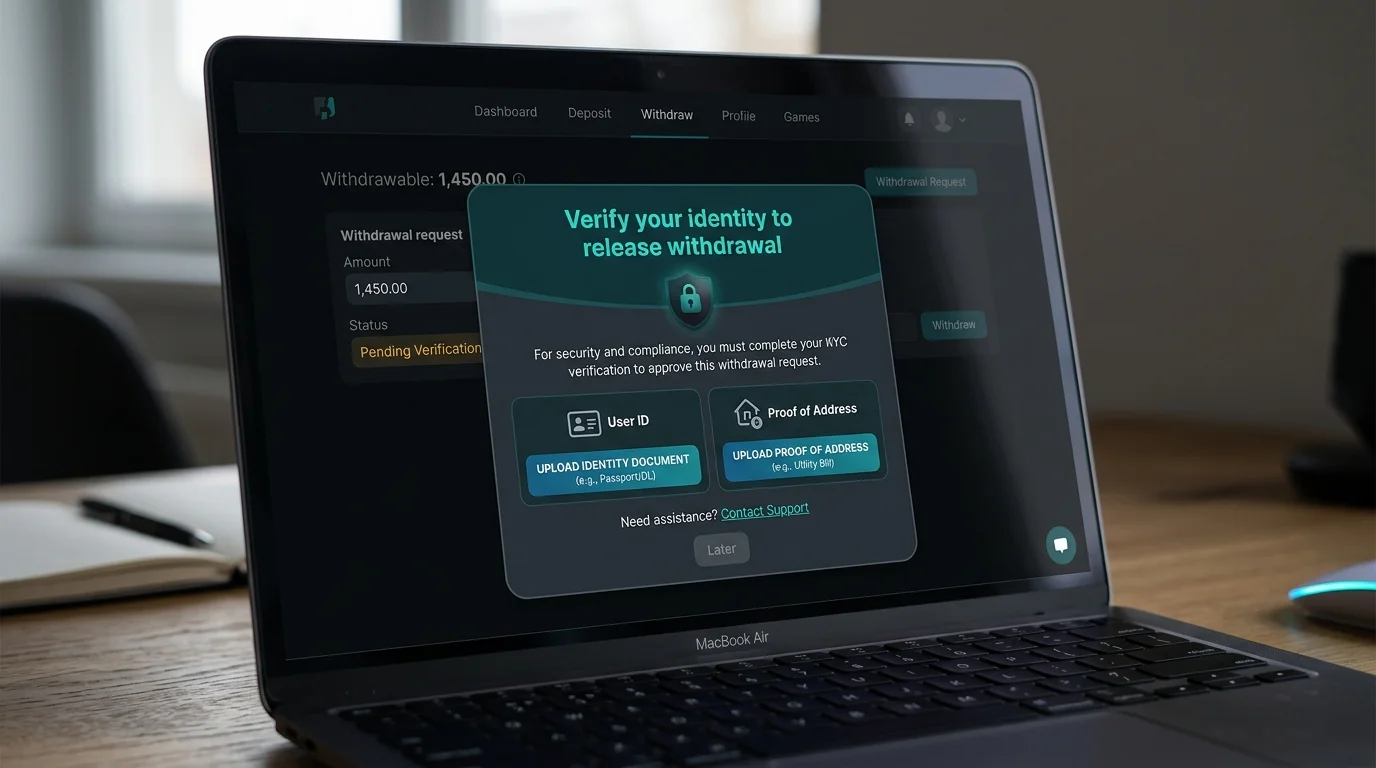
The practical implication for you: KYC isn’t optional, isn’t negotiable, and isn’t going to be waived because you played for two years and made twenty deposits. Most operators time-box verification to the first withdrawal request specifically because the regulatory exposure attaches at that point. They could ask sooner. They could ask later. The cashout moment is the structural sweet spot.
The standard verification pack consists of three items and one optional fourth. First is a government-issued photo identification — Australian driver licence (front and back) or passport. Some operators accept the Australian Photo Card, the proof-of-age card issued by state transport agencies. The photo must be clear, all four corners must be visible, and the document must not be expired. Smartphone camera quality is sufficient if the photo is in focus and well-lit.
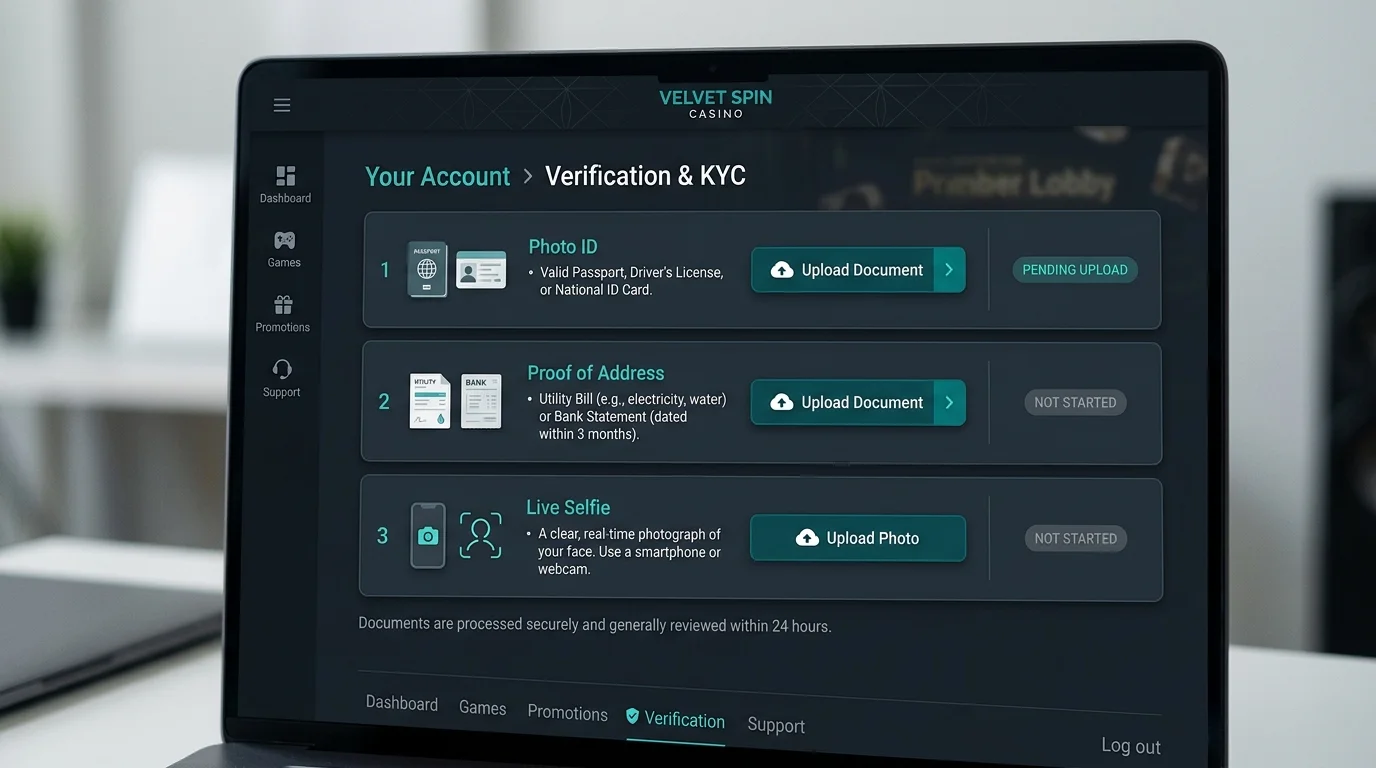
Second is proof of address, dated within the past 90 days. Acceptable documents include a utility bill (electricity, gas, water), a bank or credit card statement, or a council rates notice. The name and address on this document must match your casino account registration exactly. PDF download from your bank’s online portal works for bank statements; a screenshot of the statement page doesn’t, because most operators require a structured PDF.
Third is a selfie, sometimes a “selfie holding the ID document.” The verification algorithm compares the face in the selfie to the face in the photo ID. This step is increasingly automated through third-party identity verification platforms and is the fastest part of the process when it works — under a minute typical processing time. When it fails (poor lighting, glasses, hat, low-res camera), it kicks the case to a human reviewer and adds hours or days to the timeline.
The optional fourth document is proof of payment method ownership. If you’ve deposited via PayID, this is usually waived because the PayID alias is name-checked against the bank account at the rail level. If you’ve deposited via card, expect to provide a screenshot of your bank statement showing the card-to-casino transaction. PayID’s name-match handshake is one of the reasons KYC tends to be smoother for PayID-funded accounts — if your name mismatch needs fixing before it blocks your payout, that’s worth resolving before submitting verification.
Beyond standard KYC, larger or unusual transactions trigger a separate verification tier called source-of-funds. The triggers I see most often: cumulative deposits exceeding A$10,000 within a 30-day window, withdrawal requests above A$5,000, or rapid deposit-and-withdrawal patterns on a fresh account. These thresholds vary by operator, but the structural logic is consistent across the segment.
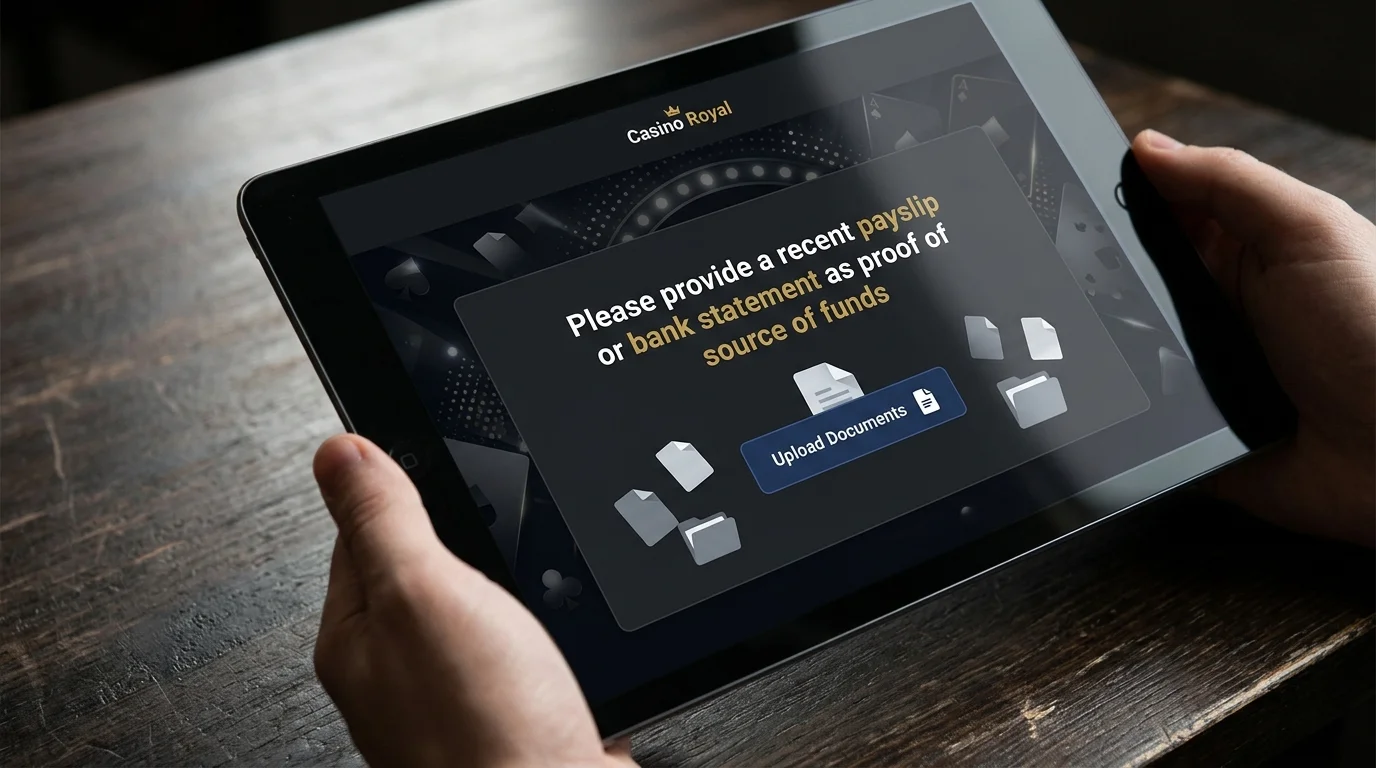
Source-of-funds requires you to document where the money came from. Acceptable evidence includes recent payslips, a tax assessment notice from the ATO, business bank statements showing trading income, sale-of-property documentation, or inheritance distribution paperwork. The operator’s compliance team reviews the documents against the deposit pattern. The bar isn’t “prove every cent” — it’s “demonstrate that the deposit volume is plausibly within your declared income.”
This step adds 1 to 5 business days when triggered, and players sometimes interpret it as harassment or a slow-pay tactic. It’s neither. It’s the operator’s legal obligation under their licensing framework’s AML requirements. Refusing source-of-funds verification or providing implausible documentation usually freezes the withdrawal and, in some cases, results in account closure with funds returned only to the original deposit method.
The actual upload is rarely the problem. The image quality is. Three rules consistently determine whether your KYC clears in 15 minutes or 5 days. First, use natural light — overhead room lighting creates glare that obscures the laminate on driver licences. Holding the document near a window during daylight gives the camera enough contrast to read the text. Second, avoid the flash — it triggers reflective hotspots on the laminate that the OCR layer interprets as image tampering. Third, fit all four corners of the document into the frame with a small border around each side — automated systems reject images where any edge runs to the photo frame.
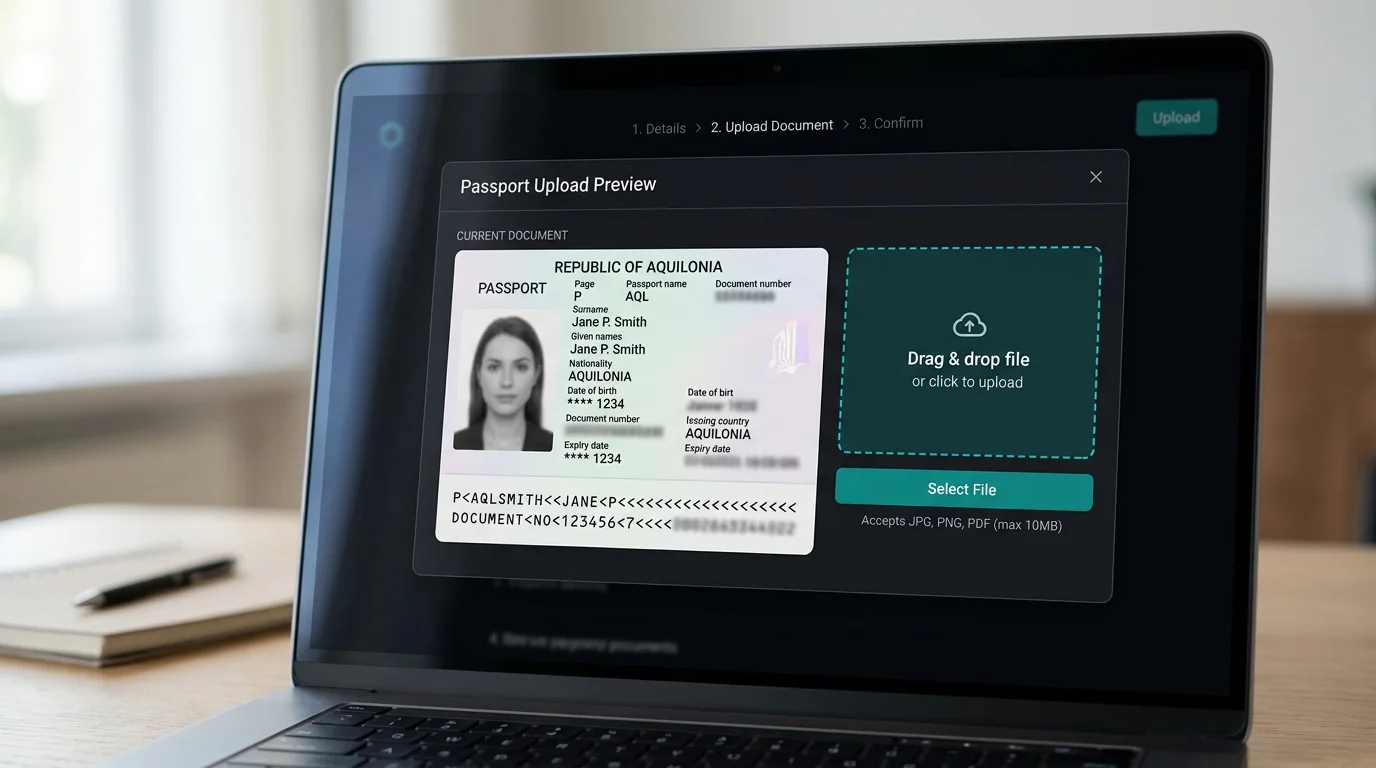
The selfie has its own rules. Plain background, even lighting on your face, no hats, no sunglasses, no obstruction from hair across the face. If your ID is several years old and your appearance has changed substantially, expect manual review — algorithmic comparison degrades when the visual reference is stale.
For document uploads, use a stable Wi-Fi connection rather than mobile data. Most KYC platforms cap file size at 10 MB and silently reject files that timeout mid-upload over a flaky connection. A failed upload triggers nothing — no error message, no retry prompt, just a silently incomplete verification record.
Operator marketing copy advertises “instant KYC” or “verification in minutes.” The reality clusters in three brackets. The fast path — where automated verification clears your documents — runs from 5 minutes to 4 hours. This is the most common outcome when documents are clear and the algorithmic checks pass without exception. Roughly 60% of submissions land here in my testing experience.
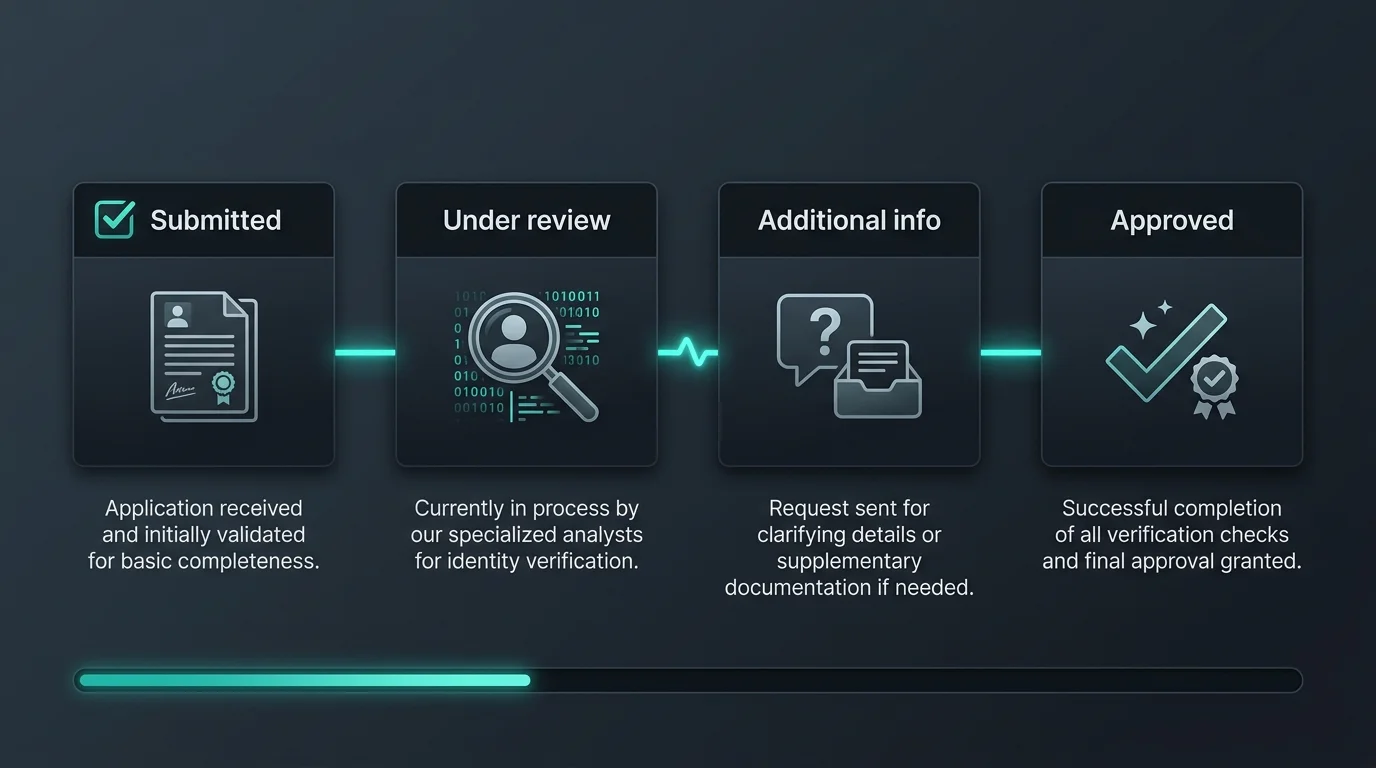
The standard path runs from 24 to 48 hours. Either an algorithmic check flagged the case for human review, or the operator runs all KYC through human review by default. The human team works business hours in whatever timezone the operator’s compliance office sits in — usually Europe or Asia — which means a submission lodged at 11 PM Sydney time on Friday may not be touched until Monday afternoon UTC.
The slow path runs 3 to 7 days. This is where source-of-funds enters, or where the operator requires additional documentation, or where the case gets escalated to a senior compliance reviewer. Less than 10% of standard submissions land here, but if yours does, expect back-and-forth and don’t interpret it as malice — slower compliance teams are usually safer compliance teams. Once KYC is clear, subsequent withdrawals at the same operator typically settle inside the 24-hour window that PayID’s NPP rail makes possible.
The players who never write me KYC frustration emails follow the same routine. They register the account. They navigate immediately to the account verification section — usually under “My Account” or “Verification.” They upload all three standard documents in the first session, before depositing or playing. They wait for the verification status to flip from “Pending” to “Verified,” which takes hours or sometimes a day. Only then do they make their first deposit and start playing.

This sequence front-loads the only friction in the funding loop. When the first cashout request happens, it processes against an already-verified account, and the only delay between cashout submission and bank-account credit is the operator’s treasury batch window. That’s the experience that justifies the speed claims PayID-friendly operators make in marketing copy. The fast cashout exists. It just lives behind the verification you do upfront, not the verification you do at the cashout moment.
Published by the casinopayidau.com team.