PayID Casino KYC Verification
The verification you can skip until your first cashout The single biggest source of player frustration I see in the PayID segment isn't a slow deposit, a declined transfer, or…

Where Aussies find the biggest pokies catalogues with PayID: RTG, Pragmatic, Nolimit City — plus RTP, volatility and vetted operator picks
 Available in AU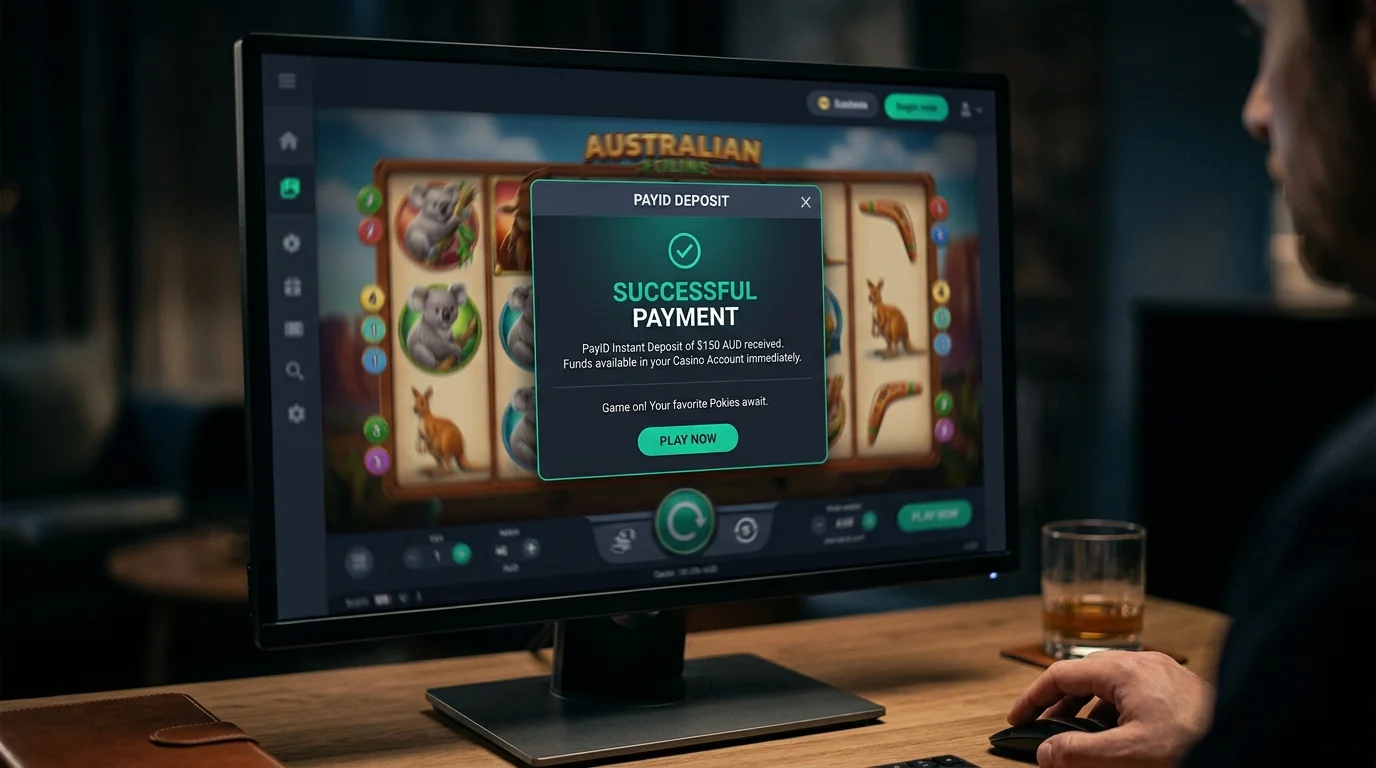
The first time I timed a deposit-to-spin loop on an Aussie pokies session, the stopwatch barely cleared eighteen seconds — phone unlocked, PayID alias confirmed in the banking app, balance updated, reels spinning. That speed is the reason this combination dominates the local market in 2026. Pokies are still the centre of gravity for Australian online play, and PayID has become the funding rail that matches their rhythm.
What you’ll get from the next 1,500 words is the version I wish someone had handed me back in 2017 — what actually makes a pokie a “PayID pokie”, which providers carry the volatility profile Aussies tend to chase, what the genuine RTP picture looks like when you strip away marketing copy, and where mobile spins and progressive jackpots fit in. Nine years of watching this niche has made one thing clear: the deposit method shapes how you play more than people realise.
I get this question every fortnight from new players: “Does the slot know I deposited via PayID?” No, it doesn’t. A pokie is a self-contained piece of software served from a provider’s game server, and it has no idea whether your balance arrived from a card, a voucher, or a New Payments Platform transfer. The provider is paid by the operator on a revenue-share, and the math inside the reels is identical for everyone.
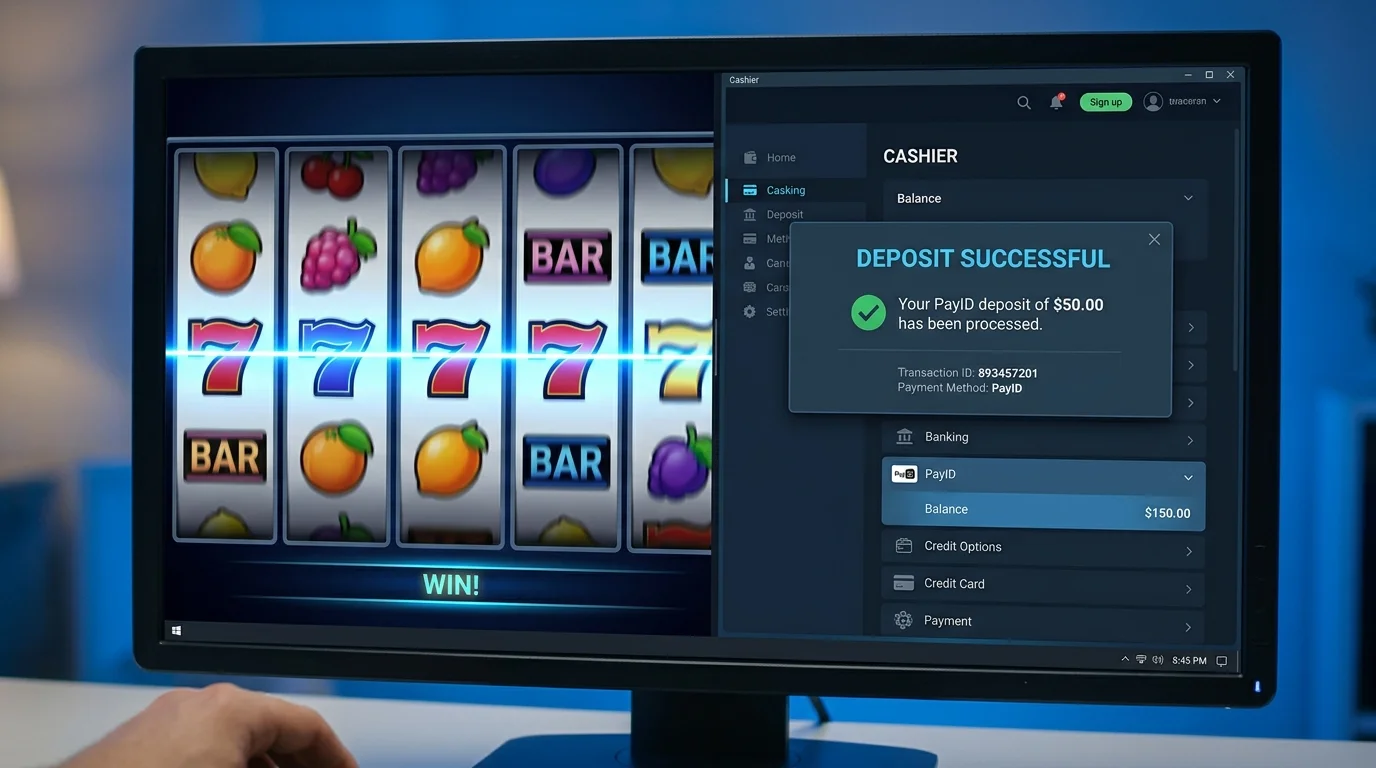
What changes is which operators choose to plug PayID into their cashier and which pokies they then licence. That’s where the segment gets shaped. Australian-facing offshore platforms that integrate PayID tend to cluster around a handful of providers — partly because those providers ship games tuned for high-volatility, big-win sessions that Aussie players respond to, and partly because the licensing economics work for both sides. So when people search for “PayID pokies”, what they’re really asking is: which catalogues are most accessible to me through PayID-friendly cashiers?
Five names dominate the catalogues you’ll see at PayID-accepting operators: Realtime Gaming, Pragmatic Play, Nolimit City, Push Gaming, and Hacksaw Gaming. Each carries a different signature.
Realtime Gaming is the legacy choice — the POLi-era staple that survived the 2023 banking shake-up and still anchors the catalogues of operators with a long Aussie-facing history. Cash Bandits, Bubble Bubble, and Achilles Deluxe carry that brand. Pragmatic Play moved aggressively into the AU offshore segment from 2020 onward and now sits in nearly every cashier I’ve audited — Gates of Olympus, Sweet Bonanza, Big Bass Bonanza. Nolimit City built its reputation on extreme volatility, with titles like San Quentin and Tombstone RIP that pay rarely but pay hard. Push Gaming and Hacksaw fill the mid-tier with cult favourites like Jammin’ Jars and Wanted Dead or a Wild.

The market context matters here: the Australian online casino segment hit 1,657.2 million USD in 2024 and is projected to nearly double by 2030, which is why every provider on that list is fighting for AU-facing real estate. If you want a deeper read on Realtime Gaming specifically, I’ve written a deeper look at the RTG portfolio at PayID casinos covering jackpot networks and RTP variance across the catalogue.
Most pokies you’ll find in PayID cashiers sit between 95% and 97% on the RTP scale. That’s the long-run percentage of wagered money the game pays back to players collectively, calculated over millions of spins. Anything below 95% is a red flag — usually a low-tier provider or a slot version configured for higher house edge. Anything above 97% is rare and worth bookmarking.
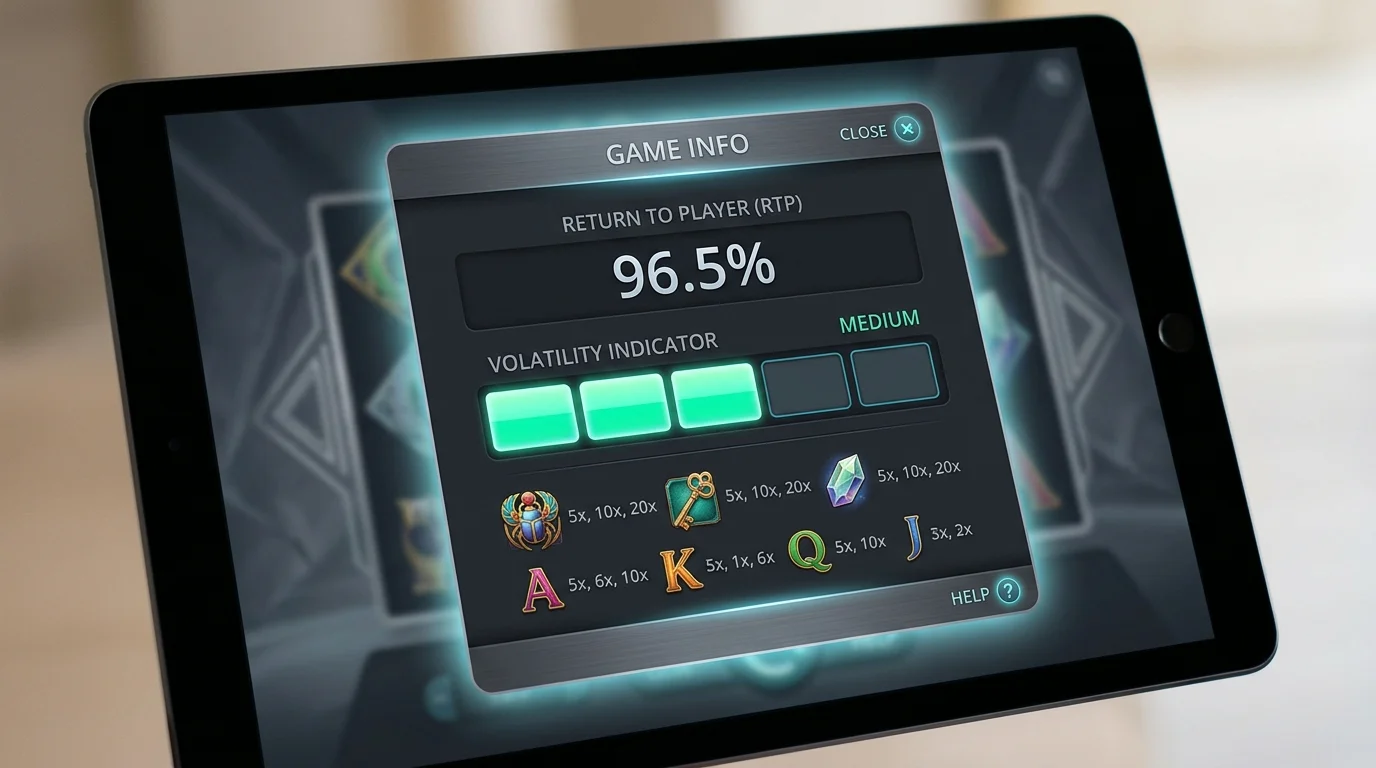
Here’s what nine years of testing has taught me: RTP is the floor, but volatility is the texture. A high-volatility pokie with 96.2% RTP can drain an A$100 balance in twenty spins or turn it into A$3,000 with a single bonus round. A low-volatility 96.2% slot will drift sideways for hours. Same theoretical return, completely different sessions. For a casual A$5-to-A$10 deposit, low or medium volatility makes the bankroll last. For a once-a-fortnight session with an A$200 deposit and the patience to ride the dry spells, high volatility is where the real ceiling lives.
The provider matters here too. Nolimit City openly markets volatility in the 9–10 range; Pragmatic sits across the whole spectrum. Always check the info panel inside the slot — it lists both RTP and a 5-bar volatility indicator. Operators occasionally configure a lower RTP variant of the same title, so verify per-cashier, not per-provider.
Forget the “top 10” listicles. In nine years of auditing this market, I’ve found that PayID-accepting platforms divide into four practical archetypes by pokie portfolio, and your bankroll personality decides which one fits.

The first archetype is the broad-catalogue operator carrying 4,000-plus titles across every major provider — these are usually mid-life platforms with Curacao licensing and an established cashier that processes PayID in under a minute. They’re the safe default for someone who wants choice over depth.
The second is the high-volatility specialist — fewer titles, but heavy on Nolimit City, Hacksaw, and Push Gaming. Smaller libraries, but the bonus-buy options are usually unrestricted, which matters if you chase big-win rounds.
The third is the RTG-anchored old-school operator — usually a holdover from the POLi-era brands. Their PayID integration arrived in 2023–24 and is sometimes less polished, but the loyalty programmes run deeper than newer competitors.
The fourth is the AUD-native operator, which prices everything in Australian dollars at the cashier level. These are rarer but eliminate the currency conversion friction that costs you 1.5–4% on deposits at USD-denominated platforms. If pokies are your primary game, an AUD-native cashier is worth searching for.
The shift to mobile-first play is the single biggest change I’ve watched in the past five years. By 2025, 56.1% of active Australian gamblers played primarily online, and the bulk of those sessions happen on phones — typically during the evening commute, lunch breaks, and the hour before sleep. Operators have responded: every PayID-friendly pokie I’ve tested in 2026 runs in HTML5 directly inside Safari or Chrome, with no installation required.
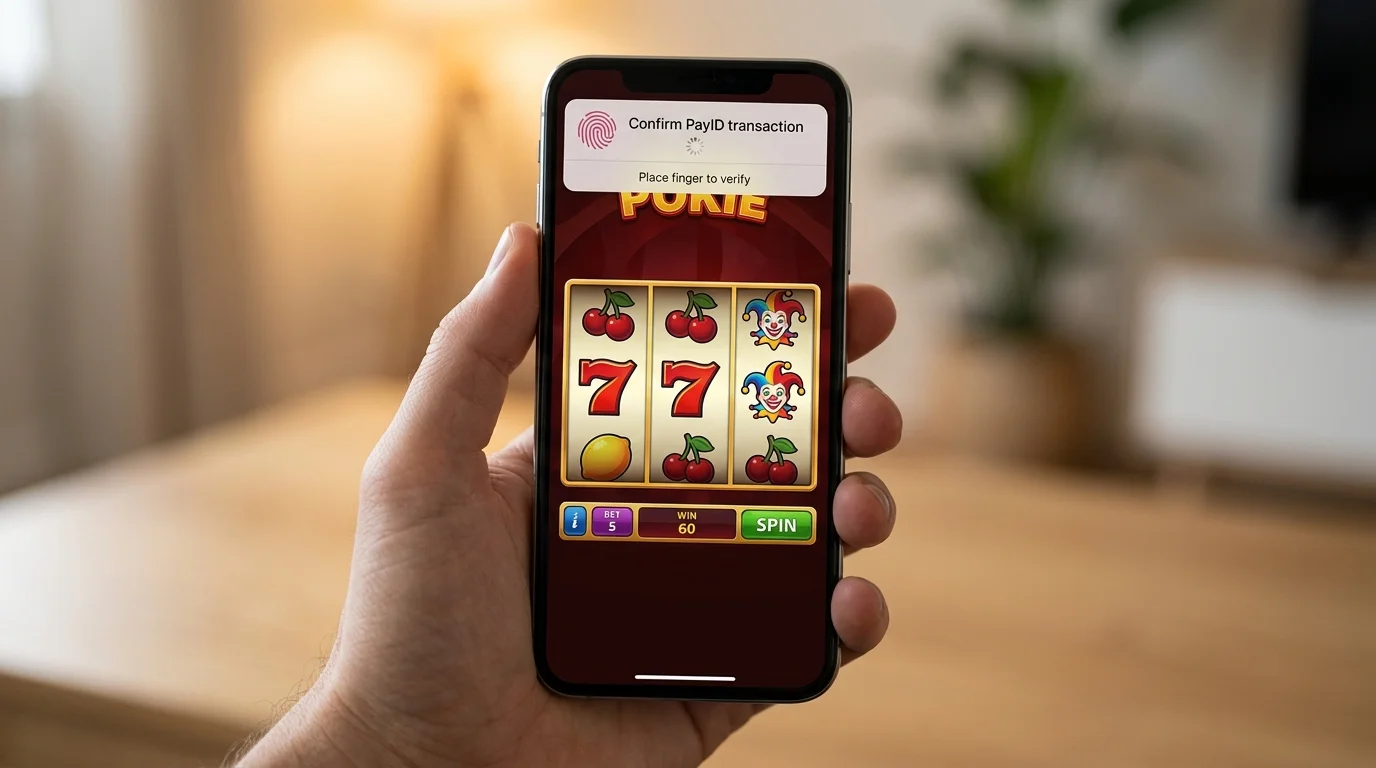
There is no native casino app in the Australian App Store or Google Play — both stores prohibit real-money gambling for AU residents. Instead, operators use Progressive Web App technology, which lets you “Add to Home Screen” from your browser and get an icon that launches the cashier full-screen. The pokies render at native phone resolution, balance updates push through the same banking app you used for PayID, and biometric login replaces password entry on return visits. Loading times for a single pokie session typically sit under three seconds on a 4G connection.
The one mobile-pokie issue worth flagging: portrait-mode reels feel cramped on smaller screens. If a slot offers a landscape toggle, use it.
Progressive jackpot pokies pool a percentage of every wager across multiple operators into a shared prize. Three networks dominate what you’ll find through PayID cashiers: Realtime Gaming’s progressive line (the Aussie Big Red Million sits in this family), Pragmatic Play’s Jackpot Play system, and Microgaming’s Mega Moolah ecosystem, which still has presence at PayID-friendly platforms despite Microgaming’s exit from operator-direct licensing.

The math is brutal — a typical progressive pokie diverts 1–3% of your stake into the jackpot pool, which means the base RTP you experience on non-jackpot spins drops by that much. A “97% RTP” progressive in marketing copy usually delivers something like 93.5% to non-jackpot players. Worth understanding before you commit a session to chasing the prize.
The flip side: when the jackpot lands, it lands. Mega Moolah has paid out multi-million-dollar prizes to AU players in the past, and the PayID rail handles those payouts the same way it handles any other withdrawal — through the operator’s standard NPP transfer pipeline. The seven-digit-life-change scenarios I’ve personally seen happen on roughly 0.5–1% of total active jackpot accounts in any given year.
Pokies plus PayID is the most frictionless setup currently available to Australian players. The deposit clears before you can refill your coffee, the catalogues are deep enough to keep you exploring for months, and the cashier-to-spin loop is short enough that you can do a quick lunchtime session without the rigmarole of card forms or voucher codes. That speed is also the catch — instant deposits mean instant top-ups, which is exactly the friction that helps casual play stay casual. Set a session budget before the first spin and stick to it.
If you’re new to the segment, start with a broad-catalogue operator and a mid-volatility Pragmatic Play title. If you’ve been at this since the POLi days, the RTG-anchored platforms will feel like coming home. Either way, the underlying funding rail is the same — 27 million PayID registrations strong and growing.
The verification you can skip until your first cashout The single biggest source of player frustration I see in the PayID segment isn't a slow deposit, a declined transfer, or…
Why RTG remains the most Australian-feeling provider in offshore catalogues Walk into…
What BetStop covers, and the gap it leaves on PayID-funded play The…
Why wagering is the number that decides whether a bonus is real…
Created by the "casinopayidau.com" editorial team.