PayID Casino Deposit Declined
Why nearly every declined PayID deposit traces back to six causes The pattern is consistent enough that I keep a printed checklist next to my desk. Over nine years of…

Why PayID name checks block casino deposits — and the exact steps to align your bank, ID and casino account name without losing the funds
 Available in AU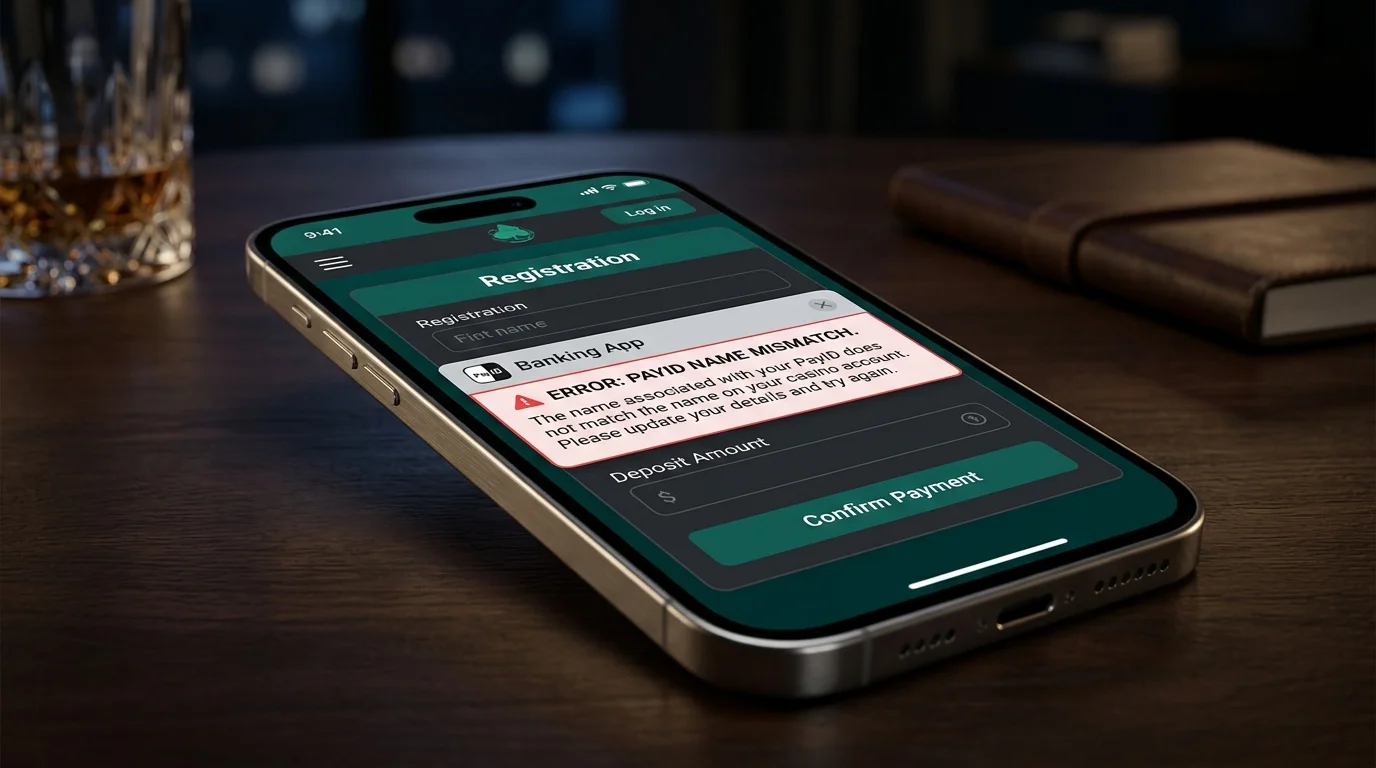
The first time PayID rejected a deposit because of a name mismatch, I thought it was an error. Three years and probably a hundred similar incidents later, I treat that rejection as the rail doing exactly what it was designed to do. PayID’s confirmation-of-payee handshake is what separates it from older bank-transfer rails — when you initiate a transfer, your bank shows you the name of the account that will receive it. The match between the PayID alias name and the casino account name is the AML control that keeps the rail clean, and it’s the single most common reason an otherwise-legitimate deposit fails.
The fix is almost always simple. The frustration comes from the diagnostic — players see “deposit declined” or “name mismatch” without understanding what specifically didn’t line up. This guide walks through the three or four scenarios that cause it, the algorithm for resolving each one, and the small habits that prevent name mismatches from happening again. Most cases close inside one support ticket plus an ID upload.
The technical name for this layer is Confirmation of Payee, and it’s a feature of the New Payments Platform that distinguishes Australian instant transfers from older BSB-and-account-number flows. When you enter a PayID alias into your banking app, the bank queries the central NPP directory, retrieves the registered name on the receiving account, and shows it to you before you confirm the transfer. The intent is fraud prevention — if you’re transferring to “John Smith” and the screen says “Mike Wilson,” you’ve caught the impostor before the money moves.
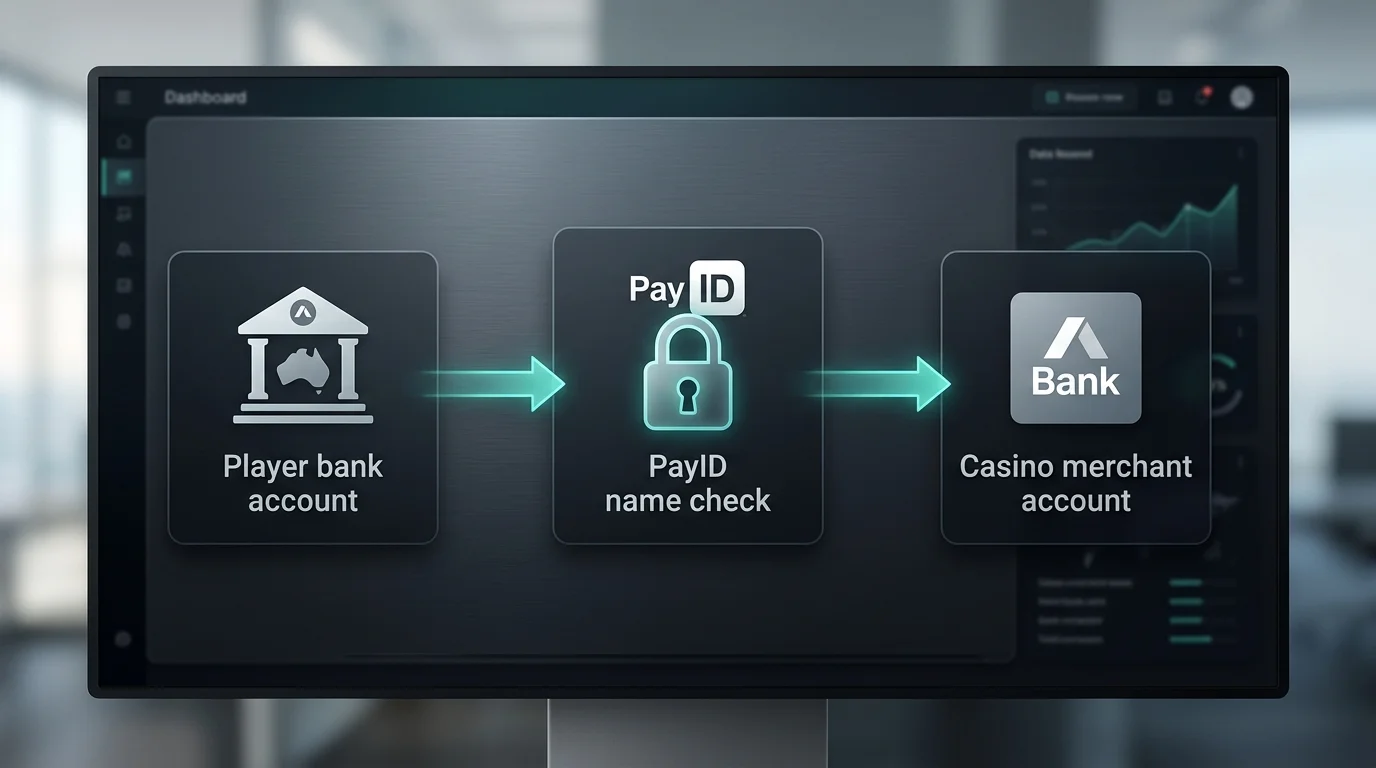
From the casino’s side, the operator runs a parallel check. When you submit a PayID alias in the cashier, the operator’s banking partner queries the same directory and retrieves the same name. The cashier then compares that name to the name you registered with the casino. If they match, the deposit proceeds. If they don’t, the deposit is held — sometimes silently rejected, sometimes flagged for manual review, sometimes returned to the sender’s account.
With 27 million PayID registrations active in the country and a daily transaction volume in the billions, the name-check infrastructure runs at scale. False positives — legitimate transfers blocked because of name variance — happen often enough that every operator’s support team has a standard playbook for them.
The most common is the nickname-versus-legal-name gap. A player registers the casino account as “Sam Thompson” but the bank-side PayID is registered to “Samuel Thompson.” Different name, same person, same legal identity — but the algorithmic name comparison treats them as a mismatch. This catches roughly 60% of the cases I see. The fix is updating the casino-side name to the legal version, which most operators handle through a support ticket plus an ID photo confirming the spelling.
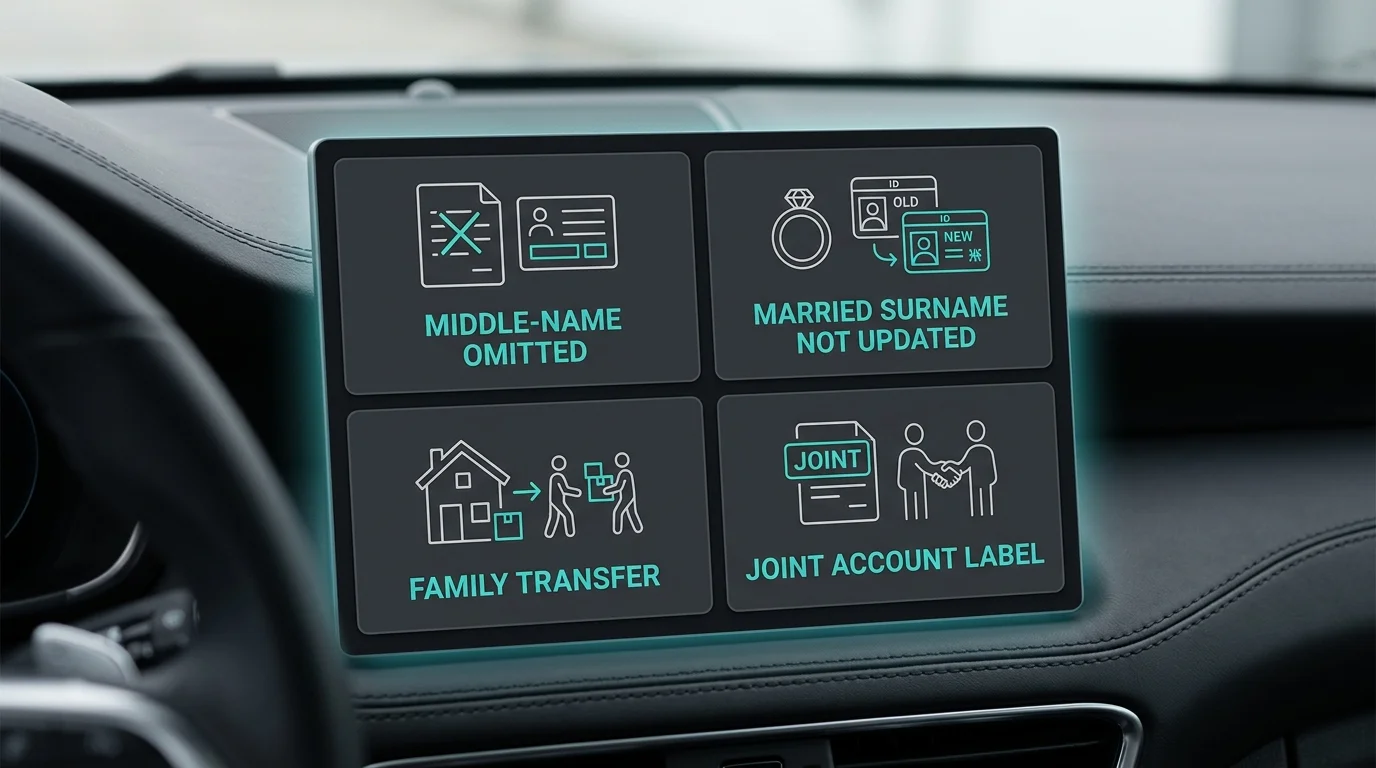
The second is the spousal or partner transfer. Person A funds Person B’s casino account by initiating a PayID transfer from their own bank to the casino’s PayID alias. The operator’s name-check sees “Person A” on the incoming transfer and “Person B” on the casino registration. This is a hard block — operators are not permitted under AML rules to credit deposits from third parties, and this is one of the cleanest detection mechanisms they have. Resolution: the depositing account must be registered to the casino account holder. No workaround.
The third is the transliteration variance, which affects players whose names contain diacritics or characters outside basic Latin. A passport may list “Müller” while the bank registered “Mueller” and the casino registered “Muller.” All three are arguably the same name. The algorithmic check may or may not accept them as matching depending on the operator’s normalisation logic. Resolution: provide the operator with a full ID showing the diacritic, and request manual override.
The fourth is the maiden-name-versus-married-name gap, where one system has been updated and another hasn’t. Resolution: align all three (bank PayID, ID document, casino account) to the same current legal name, which usually means updating the lagging system with a marriage certificate or deed poll.
The structural reason is anti-money-laundering compliance. The Fintel Alliance — the public-private intelligence-sharing partnership between AUSTRAC and the four major banks — analysed more than 50 million cash transactions in its recent reporting cycle to map criminal use of the financial system. PayID transfers feed into that monitoring fabric. The name-match handshake creates a verifiable identity chain: bank-registered customer transfers to operator-registered customer with matching names. That chain is what regulators want to see if any account is later flagged for review.
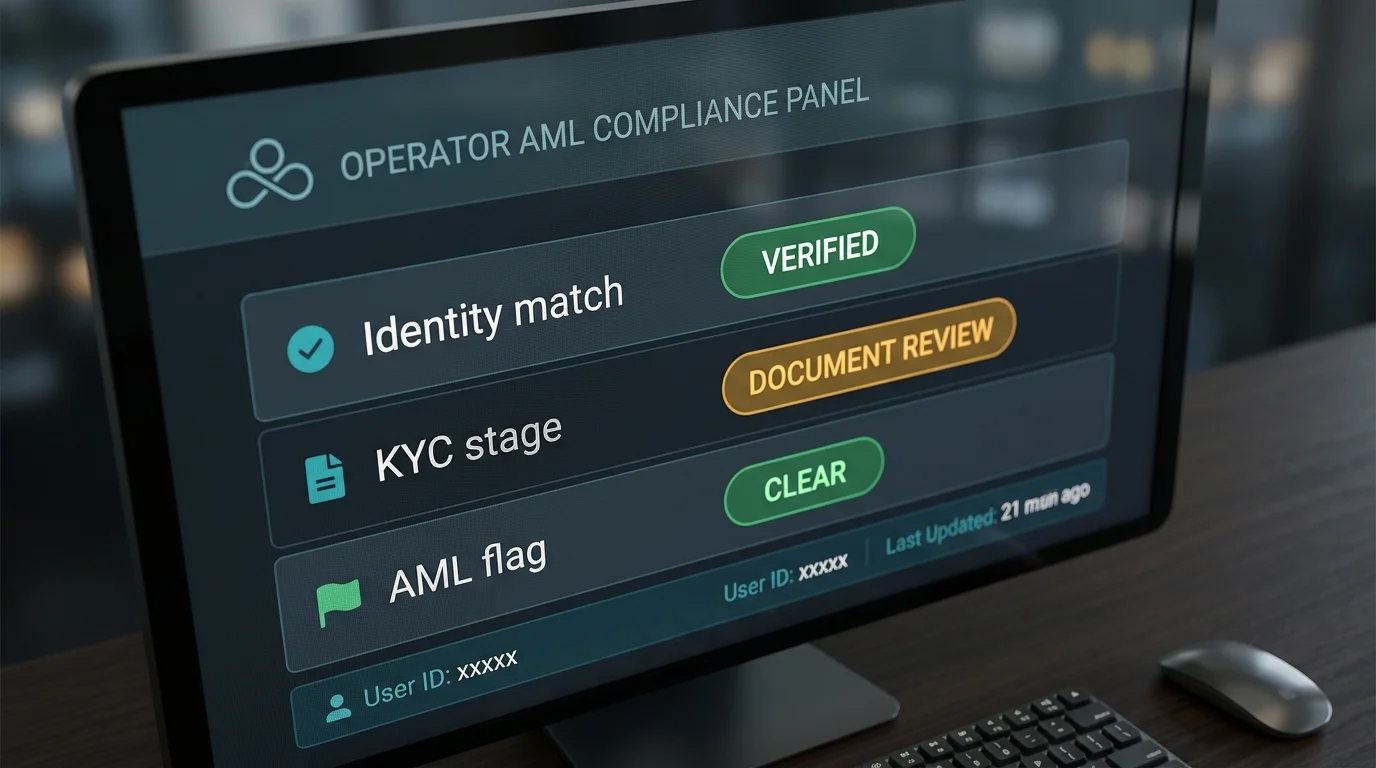
From the operator’s side, accepting a deposit from a name that doesn’t match the registered account holder creates a regulatory exposure they can’t justify to their licensing authority. Even if both parties are legitimate and the transfer is between a husband and wife on shared finances, the operator has no way to verify the relationship at the cashier and isn’t permitted to assume it. The system errs on the side of strict matching because the cost of false positives (frustrated players, support tickets) is low compared to the cost of false negatives (regulatory violations, fines, licence risk).
The micro-laundering risk profile the regulators worry about specifically involves multiple small deposits from different sender names flowing into a single recipient account. Name-match enforcement at the PayID handshake closes that pattern almost completely.
Step one: confirm your legal name as it appears on your photo ID. This is the canonical version — every other system needs to align to it. If your driver licence says “Jonathan David Cooper,” that’s the name. Step two: check your bank-side PayID registration. In your banking app, navigate to PayID settings and verify what name is registered to the alias you intend to use. If it says “John Cooper” or “J D Cooper” instead of the full legal name, update it. This typically takes 30 seconds and a two-factor confirmation.
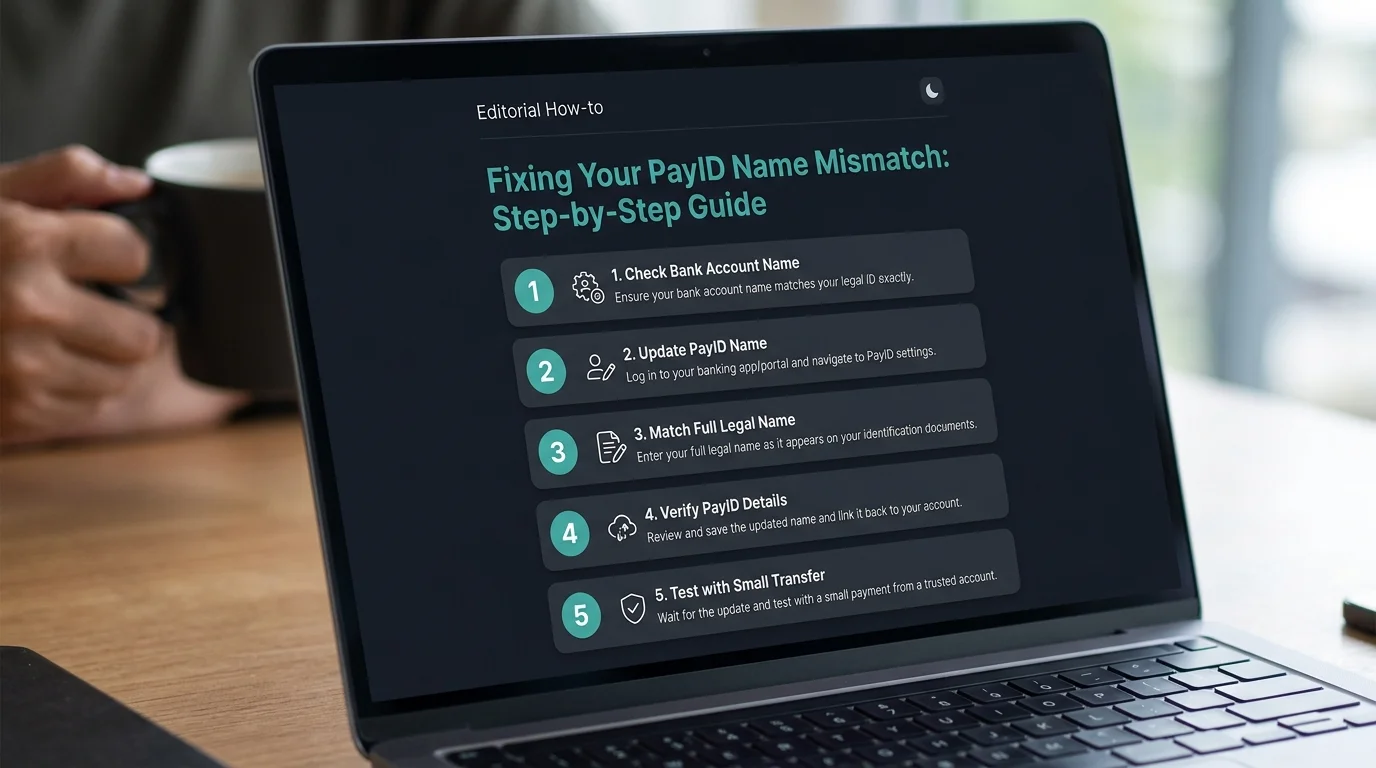
Step three: check your casino account name in your account profile. If it differs from the ID, submit a support ticket with a clear photo of the ID and request a name update. Most operators process this within a few business hours; some require the original deposit method to be unchanged before the update applies.
Step four: re-initiate the deposit. With all three systems aligned on the same legal name, the PayID handshake should clear and the cashier should accept the transfer without flagging. Step five: keep that alignment going forward. Don’t update your bank-side PayID to a nickname for convenience and forget to update the casino. Don’t register a new alias mid-relationship with an operator without verifying the casino-side. Drift between systems is the underlying cause of every mismatch I’ve ever diagnosed. For complementary diagnostic scenarios, the related deposit-decline scenarios piece walks through other failure modes that share symptoms.
Two small habits eliminate name mismatch issues for the long run. First, register your casino account with your full legal name exactly as printed on your ID — first name, middle name if any, last name. Don’t use nicknames, don’t abbreviate, don’t drop the middle name even if you never use it. The casino account is the document that matches against everything else, and getting it right at registration is the cheapest possible prevention.
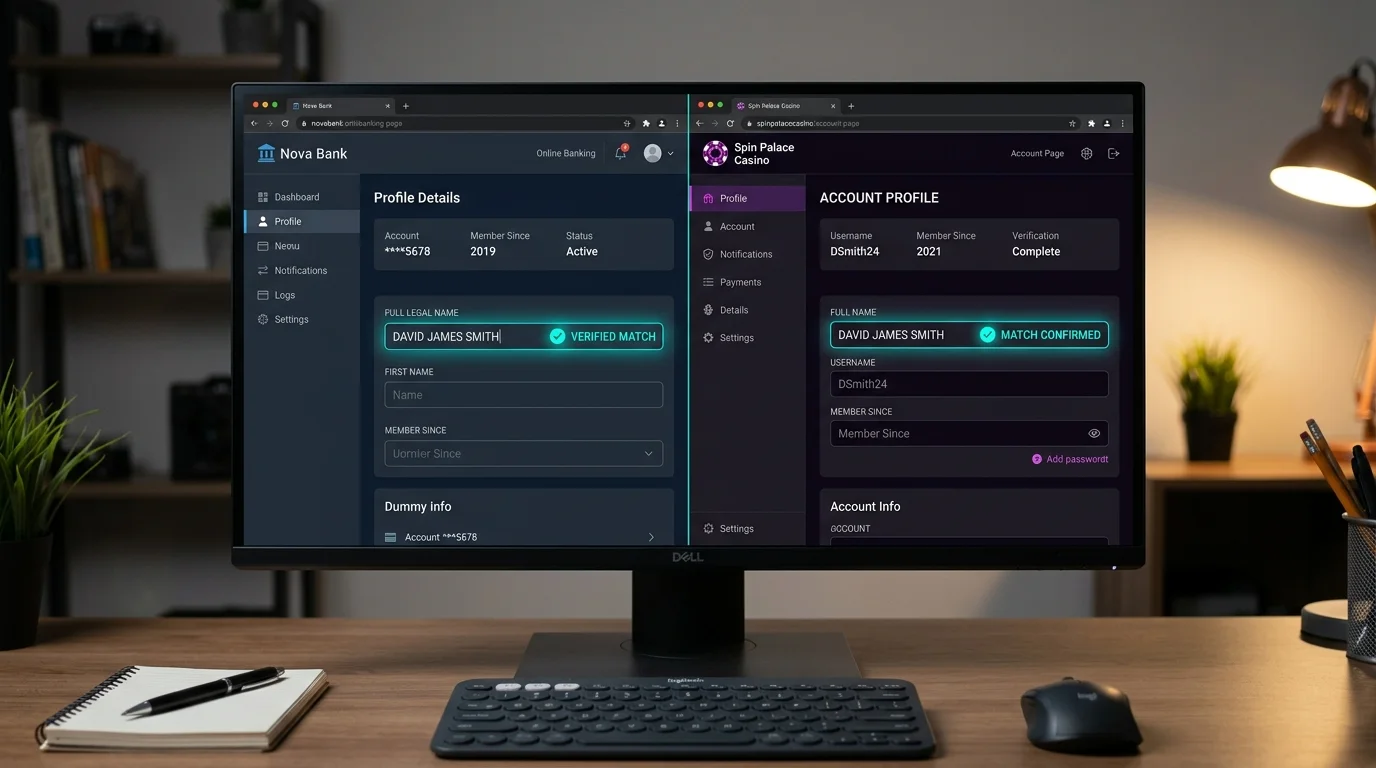
Second, audit your bank-side PayID every 12 months. Banks occasionally update their PayID directory format, and an alias registered in 2019 may not have the same metadata as one registered in 2025. A quick verification in your banking app — “is this alias still pointing to my main account, and is the registered name current?” — takes under a minute and surfaces any drift that’s accumulated.
For high-value players, doing a small test deposit (A$30–A$50) when opening a new account is the third precaution. The small transfer surfaces any name-match issue at low cost, and resolving it before a serious deposit removes the worst-case scenario where A$5,000 sits in limbo waiting for support to manually release a held transfer.
If you’re reading this with a held deposit in front of you, the resolution playbook is short. Open a support chat with the operator. Tell them clearly: “PayID deposit held due to name mismatch — requesting manual review.” Provide the deposit amount and approximate timestamp. Attach a photo of your photo ID. Request that they confirm the bank-side name registered to the alias matches the ID. In nine cases out of ten, support resolves this within hours and the funds either credit to the casino account or return to the bank account.

The tenth case is the one where the deposit was genuinely from a third party — spouse, parent, friend — and the operator returns the funds to the originating bank account. That’s not a system failure; that’s the AML control doing its job. The lesson for next time is to deposit only from your own legally-registered PayID alias to your own legally-registered casino account.
Why nearly every declined PayID deposit traces back to six causes The pattern is consistent enough that I keep a printed checklist next to my desk. Over nine years of…
Why CommBank ends up being the default Aussie casino rail Roughly seven…
The legal answer that ends the comparison before it starts The crypto-versus-PayID…
The verification you can skip until your first cashout The single biggest…
Written by the editors at casinopayidau.com.