BetStop and PayID Casinos
What BetStop covers, and the gap it leaves on PayID-funded play The most important fact about BetStop, the Australian National Self-Exclusion Register, is also the most under-communicated: BetStop applies to…

PayID vs Neosurf at AU casinos: speed, limits, anonymity and withdrawals compared — and when each method actually fits an Aussie player
 Available in AU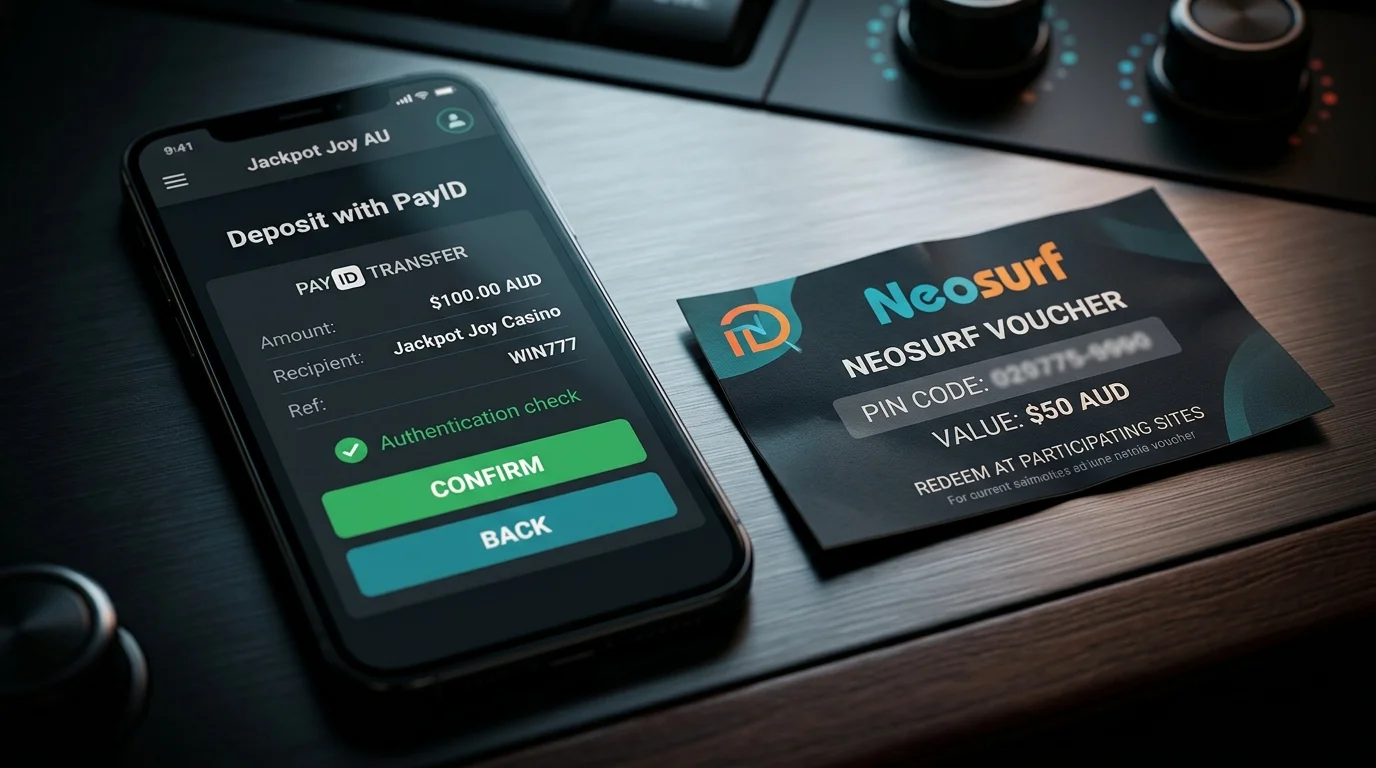
The “PayID vs Neosurf” question is the second most common email in my inbox, and almost every time the player has already decided which one they prefer — they just want validation. I’ll spoil the takeaway: there’s no universal winner. The two methods solve genuinely different problems, and the right choice depends on which one of those problems is yours.
PayID is a real-time bank transfer running on the New Payments Platform. It’s connected to your bank account, it’s reversible in theory, it moves money in seconds, and it has a confirmation-of-payee handshake that prevents most fraud. Neosurf is a prepaid voucher you buy in cash at a newsagent or kiosk and redeem at the casino by entering a code. It’s anonymous to the operator, has a hard cap per voucher, and has no withdrawal pathway — the cash leaves your wallet and the only way money returns is through a separate withdrawal method. These are different tools, not competing products.
The PayID flow runs end-to-end through your banking app and the casino’s cashier. You enter the casino’s PayID alias — usually a phone number or email registered to the operator’s banking partner — into your bank app. Your bank queries the central NPP directory, retrieves the name registered to the alias, displays it to you for confirmation, and on your authorisation pushes the transfer across the rail. The casino balance updates within seconds. The whole transaction is logged at your bank and at the receiving bank, with a clear paper trail on both sides.
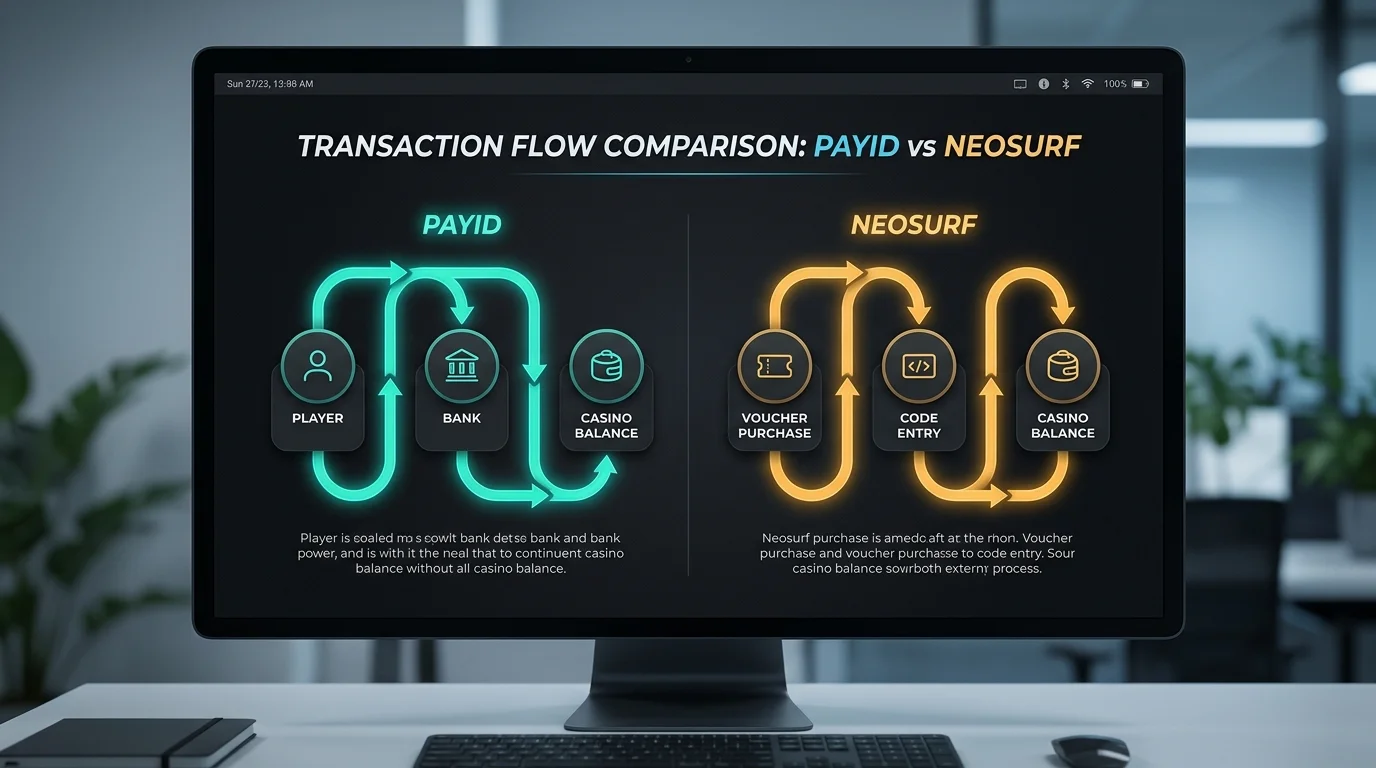
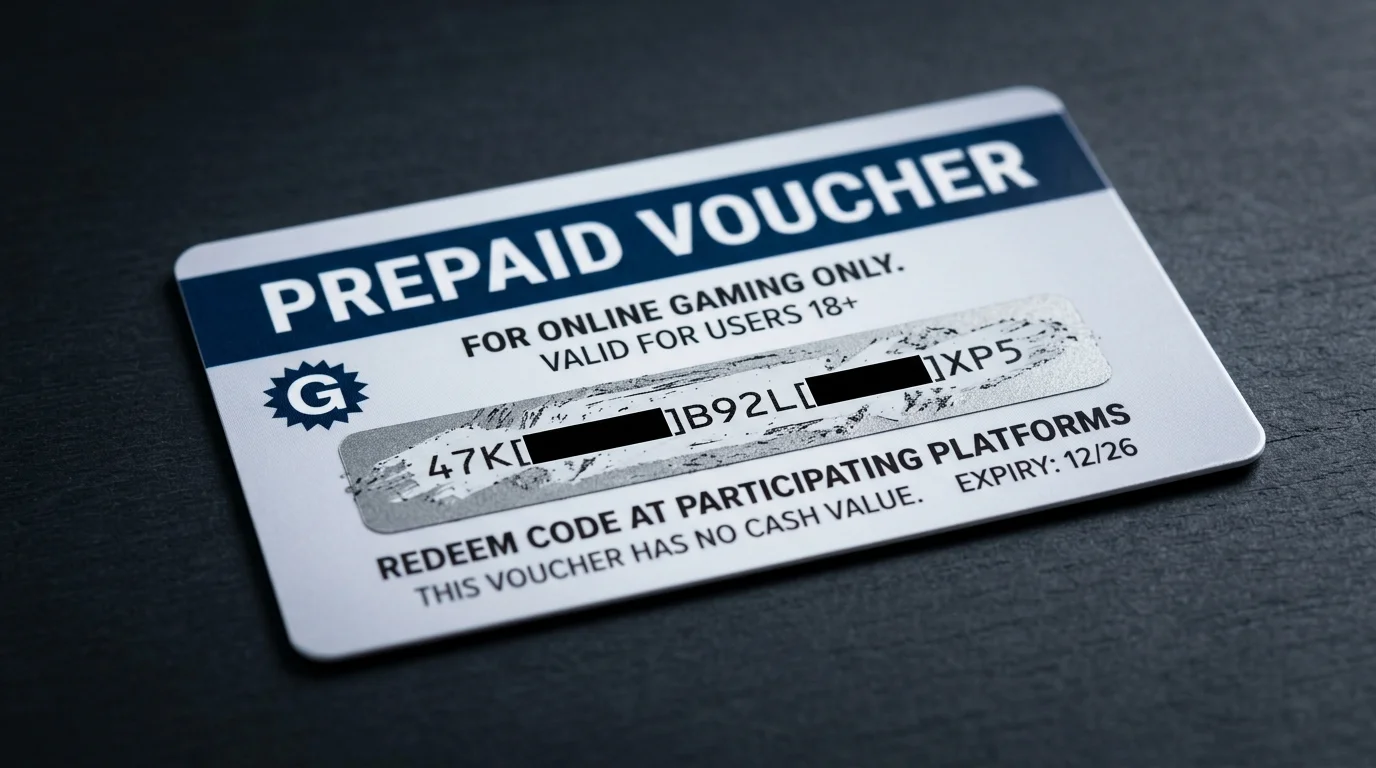
The Neosurf flow has two separate phases. Phase one: you visit a participating newsagent or kiosk (there are several thousand across Australia), pay in cash or by card, and receive a printed voucher with a 10-digit code. The voucher denominations are typically A$10, A$30, A$50, A$100, A$200, and A$500. Phase two: at the casino cashier, you select Neosurf as the deposit method, enter the code, and the value credits to your account. The voucher is single-use — once redeemed, the code can’t be reused, and any unused portion is lost.
The structural difference matters. PayID involves your bank as an intermediary that knows everything about the transaction. Neosurf involves a third-party voucher network where the casino only sees the code, not the purchaser. NPP processed nearly 2 billion real-time payments in 2025 — the rail is mainstream infrastructure. Neosurf is niche by comparison but established enough to be a reliable option.
Both methods credit deposits to the casino account within seconds. PayID arrives via the NPP rail; Neosurf credits as soon as the code clears its anti-fraud check. From the player’s perspective, there’s no meaningful difference at the deposit step — both feel instant.
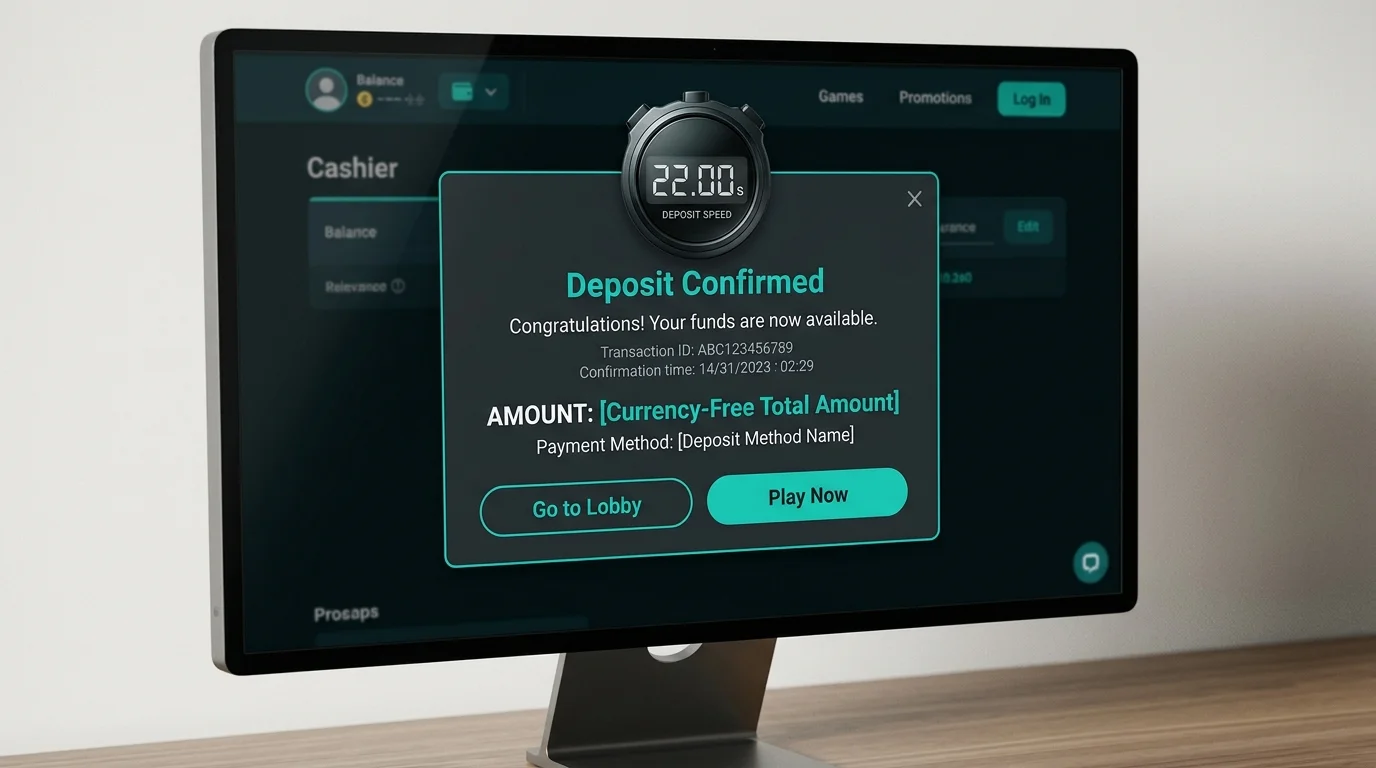
The withdrawal side is where the speed comparison becomes a structural difference. PayID supports outbound transfers from the casino back to your bank account, usually within 24 hours after withdrawal approval. Neosurf does not support outbound transfers at all. There’s no “deposit via Neosurf, withdraw via Neosurf” pathway because the voucher system runs in one direction only. Players funding via Neosurf must nominate a different withdrawal method when the time comes to cash out — most commonly a bank wire transfer, sometimes a card refund up to the original deposit amount, occasionally Bitcoin where the operator supports it.
This is the practical consequence of the difference: a player who deposits A$200 via Neosurf and wins A$1,000 needs to provide separate withdrawal documentation (often including a bank account they’ve never linked to the casino before), which triggers a fresh KYC review on that withdrawal method even if standard KYC has already passed.
Neosurf is the privacy choice. The casino sees the voucher code, not your name, not your bank account, not your identity. The newsagent saw the cash transaction but isn’t connected to the casino’s records. From the operator’s side, a Neosurf deposit is effectively pseudonymous at the deposit step — your identity only becomes connected when you complete KYC for withdrawals or for AML compliance.
PayID is the opposite. The confirmation-of-payee handshake means the casino’s banking partner sees your name attached to the PayID alias. The deposit is logged at your bank with full transaction details, the operator’s bank, the timing, the amount. There’s no anonymity layer between you and the casino on this rail.
The privacy difference is meaningful but limited in practical terms. Both methods require full KYC verification before any withdrawal of significance, which means the operator learns your identity either way. What changes is the timing and the data trail at your bank. A Neosurf deposit doesn’t appear on your bank statement as “casino payment” — it appears as a cash withdrawal or a voucher purchase. For players who share statements with family or accountants, that distinction can matter.
Neosurf vouchers cap at A$500 per voucher. To deposit larger amounts via Neosurf, you’d need to purchase multiple vouchers and redeem them sequentially — which works in principle but adds friction (multiple kiosk visits, multiple codes to enter, multiple per-voucher fees) and quickly becomes impractical above A$1,000 to A$2,000 total deposit volume.
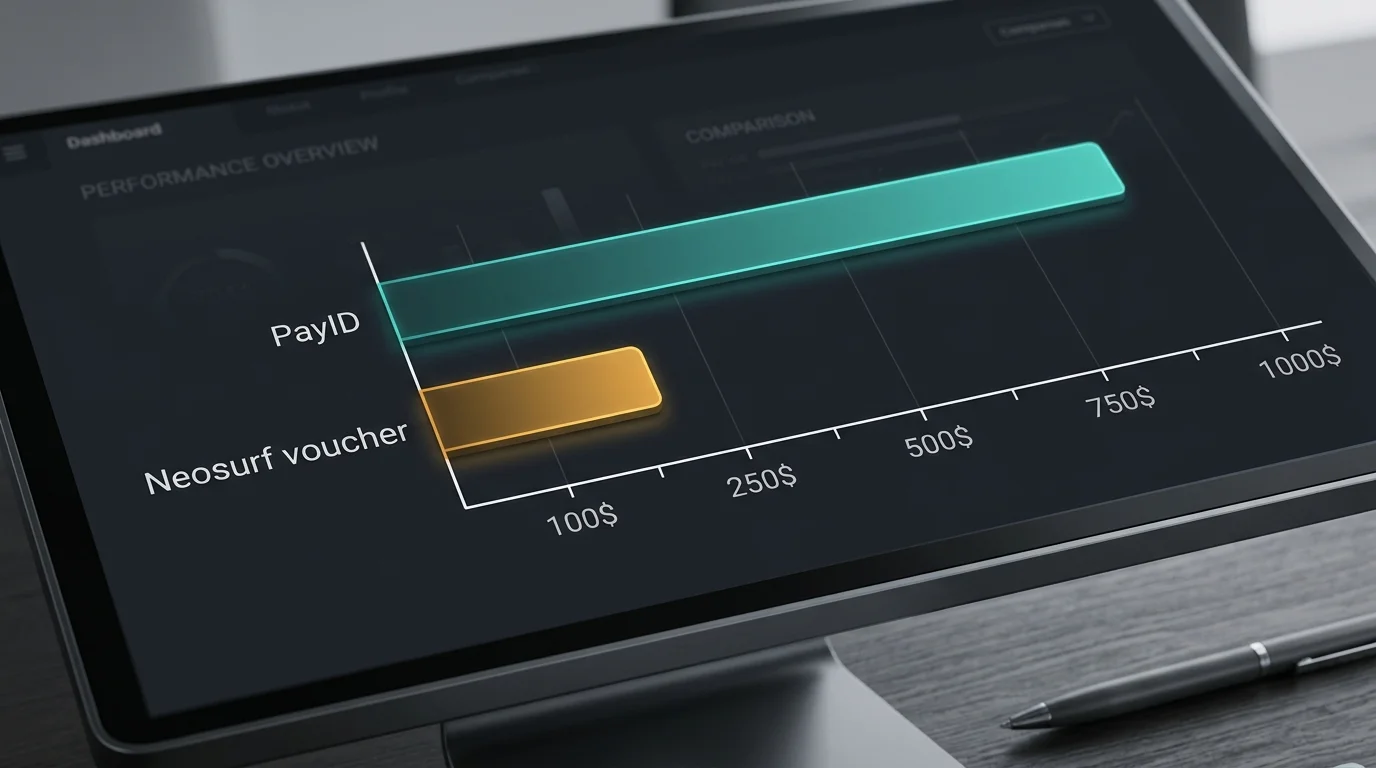
PayID, by contrast, supports daily transfers up to A$25,000 at the Big 4 with raised limits. The casino-side per-transaction ceiling typically sits at A$5,000 to A$20,000, but the bank rail itself comfortably handles transfers that would require ten or more Neosurf vouchers to replicate. For players running session sizes above A$500, PayID is the practical-only option; Neosurf becomes unwieldy quickly.
PayID is free at the bank end and at the casino end. Big 4 banks don’t charge for outgoing PayID transfers. Casino operators don’t charge for incoming PayID deposits. The total transactional cost is zero on the deposit side.
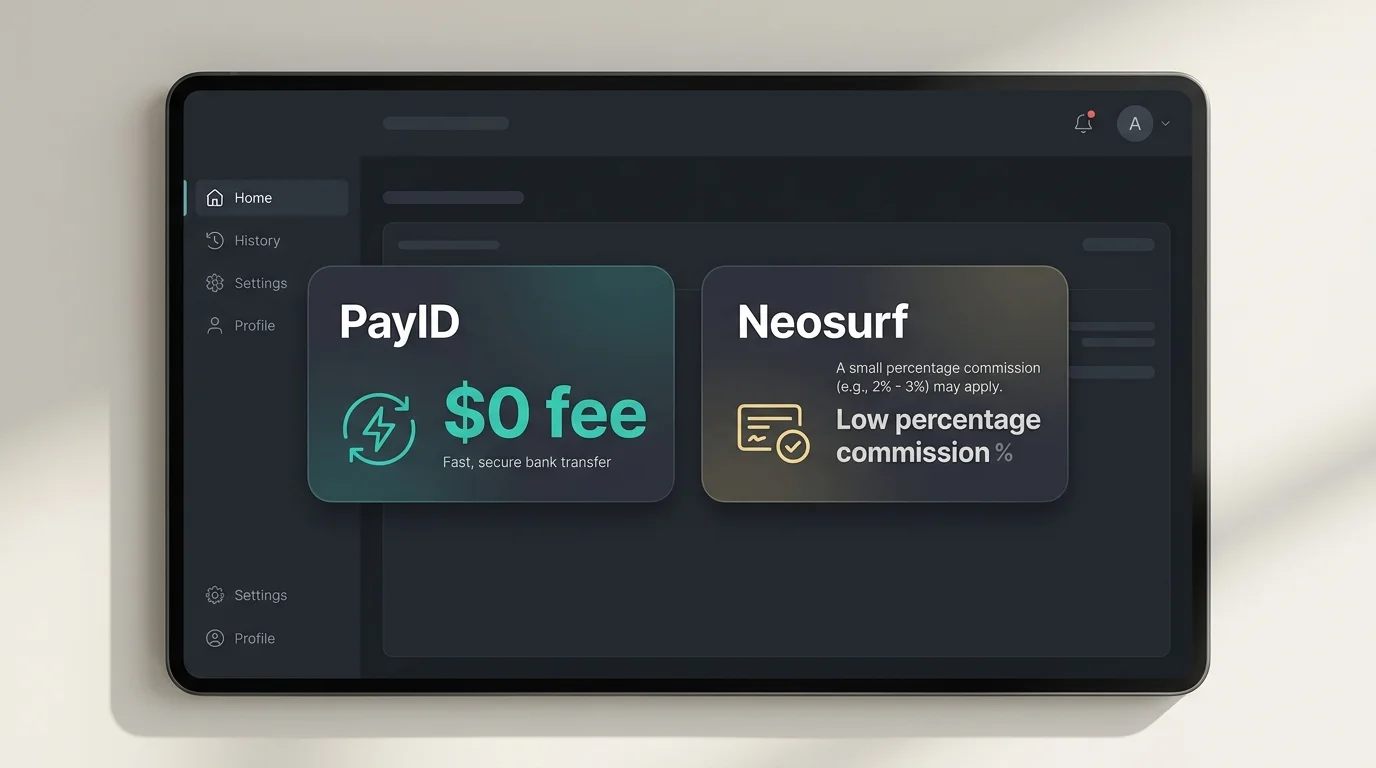
Neosurf has a kiosk markup. The retailer selling you the voucher typically charges a 5% to 10% premium over the face value — an A$100 voucher costs you A$105 to A$110 in cash. The casino doesn’t visibly charge a fee at the deposit step, but the markup is real and irreversible. If you regularly fund A$500 monthly via Neosurf, that’s A$300 to A$600 per year in voucher purchase costs. For someone funding the same A$500 monthly via PayID, the equivalent annual cost is zero.
That said, Neosurf’s cost is the cost of privacy. The premium isn’t waste — it’s the fee for buying a payment instrument that doesn’t link your bank account to your gambling activity. Whether that fee is worth paying depends entirely on how much you value the privacy.
Three scenarios cleanly favour Neosurf. First, casual play with strict bankroll discipline — buying an A$50 or A$100 voucher and treating that as your hard ceiling forces the constraint that PayID’s instant-deposit ease undermines. Second, privacy-conscious play where you’d prefer the casino activity not appear in your bank statement category data. Third, jurisdictions where your bank quietly blocks PayID transfers to certain operators — Neosurf bypasses the bank-side payment categorisation entirely.

Three scenarios cleanly favour PayID. First, regular play with withdrawals — the cashout pathway is the decisive factor; Neosurf-funded play means you’ll always need a secondary withdrawal method. Second, deposits above A$500 — the voucher cap becomes impractical at that scale. Third, players who want bonus access — most welcome bonuses count both methods equally, but a few platforms exclude voucher methods from the headline match, and PayID is universally included.
If your priority list shifts further toward privacy, the crypto comparison is the third comparison worth running. Crypto offers stronger privacy than either of these methods, with very different regulatory trade-offs in 2026.
PayID is the everyday transaction rail for Australian online play. Most players use it for most sessions because it’s free, fast, supports withdrawals, and integrates cleanly with the banking apps people already use daily. Neosurf is the niche specialist — a useful tool when privacy matters more than convenience, or when bankroll discipline matters more than transaction efficiency, or when a small voucher-funded deposit is the right way to test a new operator without exposing your bank account.
For most regular players, the answer is PayID as the default with occasional Neosurf use for specific privacy scenarios. For occasional casual players who treat gambling as a once-a-month entertainment expense, Neosurf’s discipline mechanism (no easy top-ups) is actually a feature. Match the tool to the situation, not the situation to the tool.
What BetStop covers, and the gap it leaves on PayID-funded play The most important fact about BetStop, the Australian National Self-Exclusion Register, is also the most under-communicated: BetStop applies to…
Why live dealer demands a payment rail that keeps up The first…
Why nearly every declined PayID deposit traces back to six causes The…
Why CommBank ends up being the default Aussie casino rail Roughly seven…
Prepared by the casinopayidau.com editorial staff.