ANZ PayID Casino Banking
Why ANZ is the most cautious Big Four bank for PayID ANZ was the last of the Big Four to fully integrate PayID into its retail offering, and the lag…

Why BetStop alone won't stop PayID deposits at offshore casinos and how to combine NSER, bank gambling blocks and account closure for full coverage
 Available in AU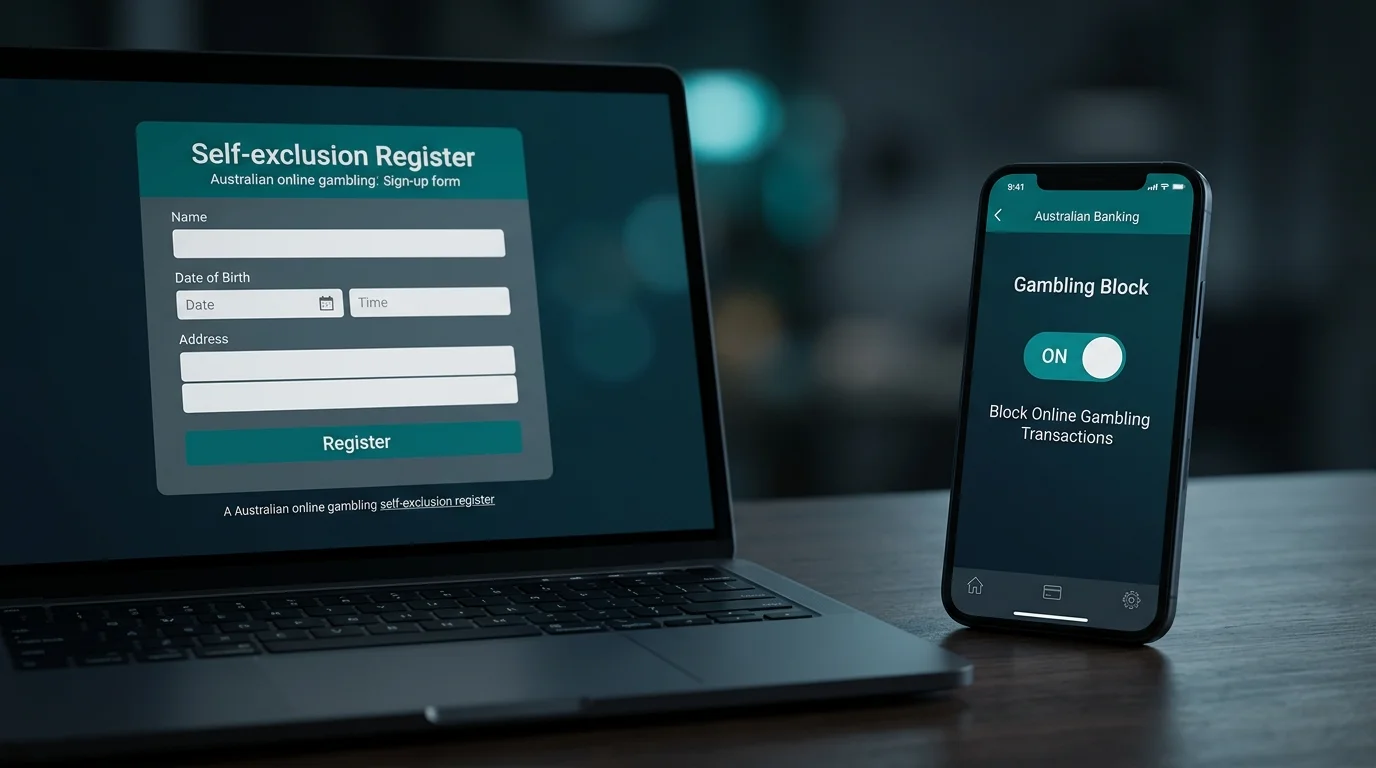
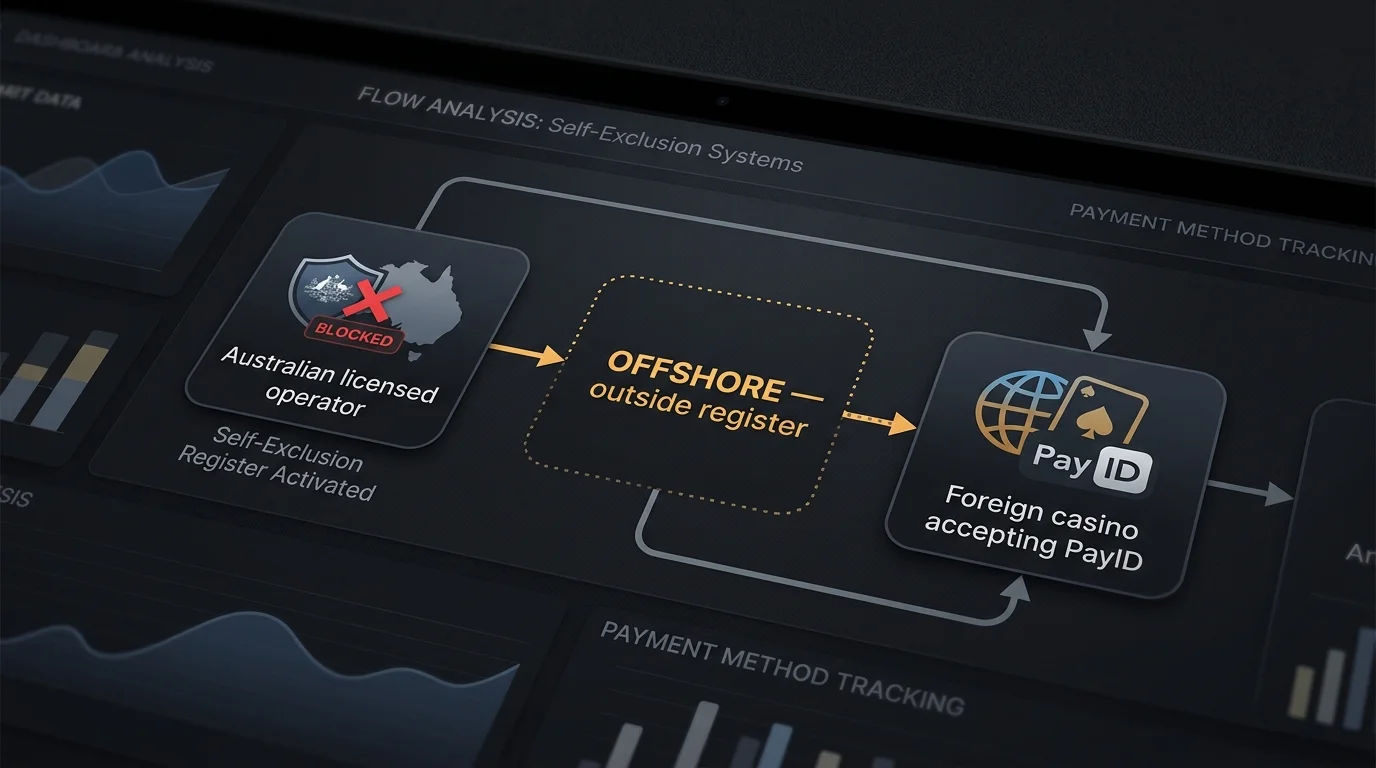
The most important fact about BetStop, the Australian National Self-Exclusion Register, is also the most under-communicated: BetStop applies to operators licensed in Australia, and offshore casinos accepting PayID deposits are not licensed in Australia. This means a player who registers with BetStop is genuinely protected against the licensed AU operator universe — sportsbooks, lottery products, the small handful of casino-adjacent licensed services — but is not automatically blocked from depositing at offshore casinos via PayID. The protection is real but partial, and understanding where the line sits matters more than understanding the registration mechanics.
This piece walks through what BetStop covers and what it does not, why the offshore gap exists, the bank-side tools that can be layered on top to close part of the gap, the registration statistics that show how Australians are actually using the system, and the combination of layers that produces genuinely effective self-exclusion. The framing throughout is operational rather than judgmental — self-exclusion is a personal decision that comes with its own complexity, and the goal here is to describe how the tools work, not to argue for or against using them.
BetStop is operated by ACMA and runs from betstop.gov.au. Registration takes 5 to 10 minutes online and requires identity verification: full name, date of birth, address, contact details, and an identity document scan. Once submitted, the registration activates within 48 hours and applies retroactively to all AU-licensed operators — meaning existing accounts at licensed operators are closed automatically and new account creation is blocked.
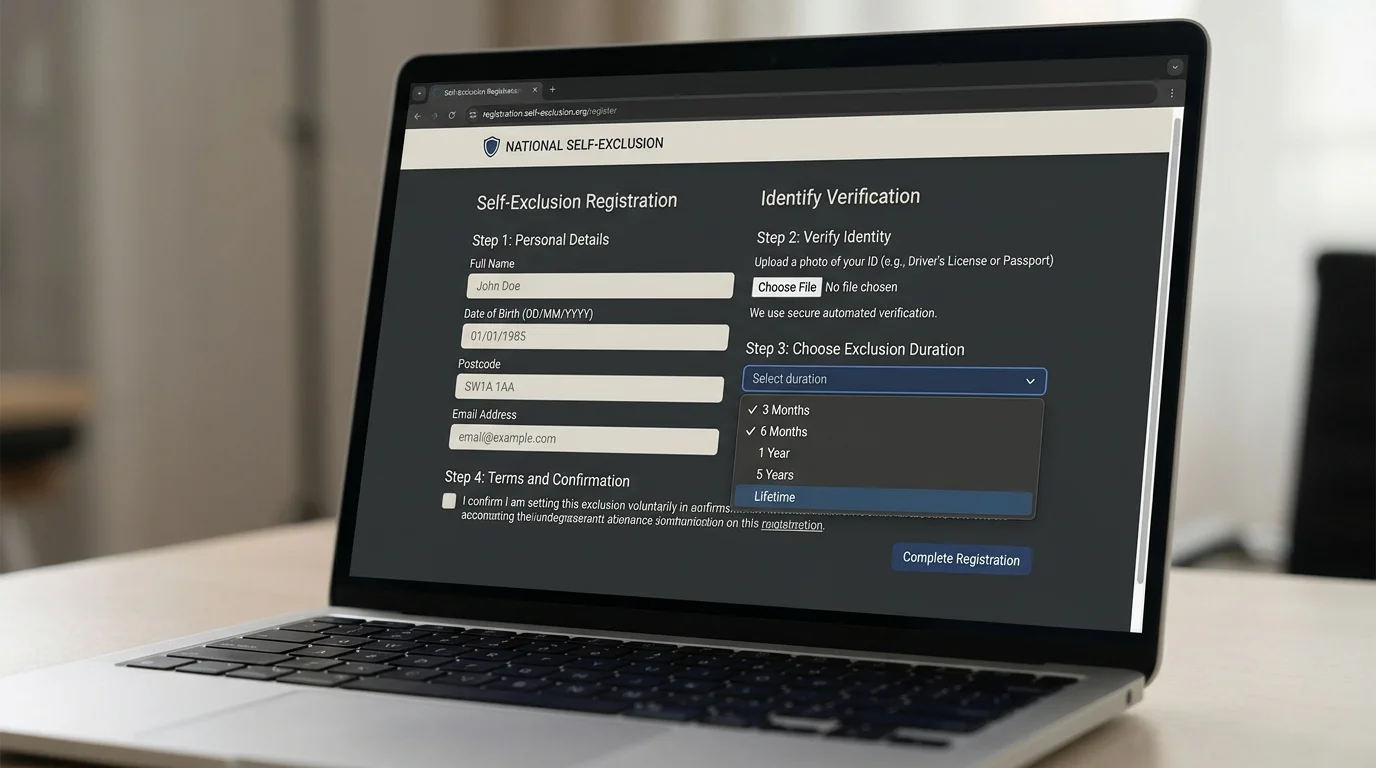
The exclusion period choices are three months, six months, twelve months, eighteen months, twenty-four months, three years, five years, seven years, or lifetime. The shorter periods (three to twelve months) are revocable after the minimum period if the registrant follows a defined cooling-off process. Longer periods and lifetime registrations are irreversible — once the period elapses the registration ends automatically, but the player cannot cancel the registration during the period itself.
The scope of BetStop covers all licensed Australian wagering services. This includes the major bookmakers (Sportsbet, TAB, Ladbrokes, BetEasy, Neds, and around 80 other licensed operators), licensed lottery products, and the licensed daily-fantasy services. It does not include offshore-licensed casinos — and this is the structural gap.
Once registered, the operator-side check is automated. Any AU-licensed operator must verify customer details against the BetStop register before allowing deposit, bet, or account creation. The lookup runs in seconds and the operator must refuse service to any registered individual. Compliance failures face ACMA enforcement, with operators found non-compliant facing meaningful penalties.
Offshore casinos — the ones accepting AUD via PayID — do not connect to BetStop. They are licensed in jurisdictions like Curaçao, Anjouan, or Kahnawake, and those licensing frameworks have no obligation or technical mechanism to check the Australian self-exclusion register. A BetStop-registered player who attempts to register at an offshore casino will be accepted, can deposit via PayID, can play, and can withdraw — the operator has no visibility into the BetStop status.
ANU POLIS research, by Suomi, Hahn, and Biddle, has documented the broader pattern: online gambling harm has intensified in recent years across Australian populations, with risky-gambling indicators rising sharply through 2024 and 2025. The offshore segment is where much of the intensified harm sits, partly because the offshore operators are not bound by the regulatory protections that apply to licensed AU operators — and BetStop is one of the most consequential of those protections.
ACMA has blocked 1,455 illegal gambling sites since November 2019, which addresses the supply side of the offshore problem. But site blocking is a moving target — operators rotate domains, players use VPNs, and the underlying demand persists. For a BetStop-registered player who wants the registration to actually function as protection, the offshore gap means BetStop alone is insufficient. Additional layers are required to close the PayID-funded path to offshore play.
The intent of the BetStop framework is not in question; the framework was designed for the licensed AU market and works correctly within that scope. The gap is structural, not a flaw in the implementation. It exists because the Australian government cannot impose registration requirements on operators outside its jurisdiction, and the offshore market predates the BetStop framework by more than a decade.
Bank-side gambling blocks are the most accessible layer to add on top of BetStop. CommBank’s Gambling Block, NAB’s Gambling Block, Westpac’s Gambling Stop, and ANZ’s spend-control equivalent all operate on the same principle: block card transactions to merchants tagged with the gambling MCC (7995). When active, these tools prevent card-funded gambling at both onshore and most offshore card processors.
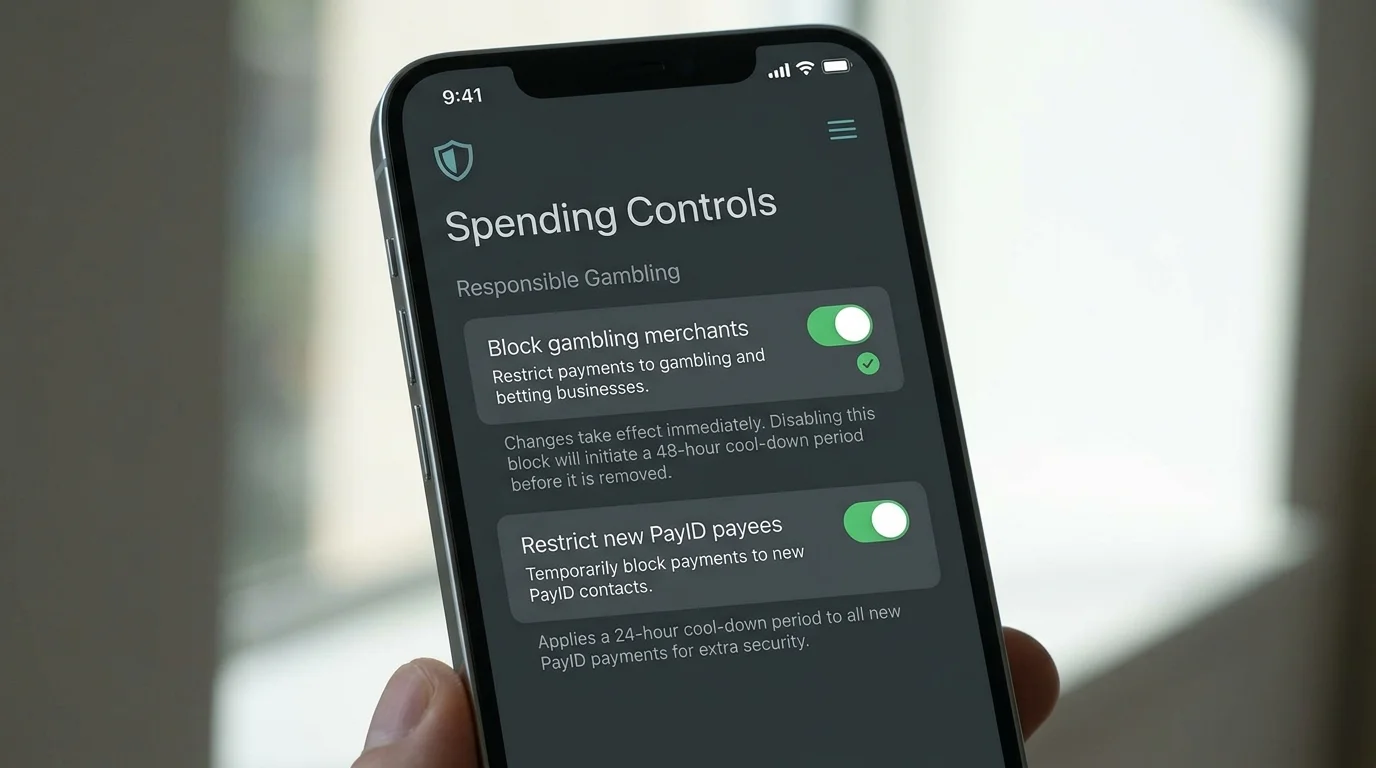
The structural limit on bank-side tools is the same across all Big Four: they cannot block PayID transfers because PayID does not run through card networks and therefore does not carry an MCC. The Gambling Block sees a PayID transfer as an outbound NPP transfer to an Australian bank account, structurally identical to sending money to a friend. The block cannot distinguish gambling-bound PayID from any other PayID.
This is the central limitation BetStop-registered players need to understand. Enabling CommBank Gambling Block on top of BetStop registration closes the card-funded path but leaves the PayID-funded path open. A player committed to genuine self-exclusion needs to address the PayID gap separately. For the specific setup mechanics of bank-side blocks, see CommBank Gambling Block setup detail.
The PayID-specific protective measures that do work include closing the bank accounts that have PayID aliases registered, removing PayID aliases entirely from active accounts, and using friend-or-family financial guardrails where another person controls access to the funds. These are not bank-side tools in the strict sense — they are user-side decisions that the bank does not block or enforce — but they are the layer that closes the gap that bank-side tools cannot.
BetStop registrations have grown steadily since the register launched in 2023. The first quarter of the 2025-26 financial year recorded 49,382 new registrations, and the total lifetime registrations reached 59,830 by 31 March 2026. The geographic distribution shows New South Wales at 18,601 registrations, Victoria at 16,063, and Queensland at 12,310 — broadly proportional to state populations but with slight over-representation in NSW relative to its share.

The duration choice tells a more specific story: 39 per cent of registrants choose lifetime exclusion. This is a striking number because lifetime is irreversible. Players who select lifetime are not testing the registration — they are committing to permanent removal from the licensed AU operator market. The pattern suggests that for a significant share of registrants, the decision is the culmination of a harm experience that has already crossed a threshold, not a precautionary measure.
The remaining 61 per cent split across shorter periods, with the three-month and twelve-month windows accounting for most of the shorter-term registrations. These shorter registrations are revocable after the period elapses through a documented process that includes a cooling-off period and counselling contact.
What is not captured in the BetStop data is offshore activity. A player who registers with BetStop and then continues to play at offshore PayID casinos does not show up in the BetStop compliance statistics because the offshore operators do not report against the register. This means the publicly available registration numbers describe AU-licensed-market behaviour cleanly but provide no signal about offshore activity by the same individuals.
For a player committed to genuine self-exclusion, the practical layering is BetStop plus bank-side block plus PayID-account closure plus operator-account closure plus support contact. Each layer addresses a specific failure mode and together they cover the gaps that any single layer leaves.

Step one is BetStop registration with the duration choice you can commit to. Step two is enabling the bank-side gambling block on every account you hold — CommBank, Westpac, NAB, and ANZ all support this in-app and the activation typically takes under five minutes per account.
Step three is removing PayID aliases from your active bank accounts. Open the bank app, navigate to PayID management, and close any registered aliases. This prevents the rail from operating from your specific bank profile, even if a casino tries to initiate the transfer. Aliases can be recreated later if circumstances change, but the active aliases are the channel that needs closing.
Step four is contacting every casino account you currently hold and requesting account closure or self-exclusion at the operator level. Even unlicensed offshore operators have operator-level exclusion processes — they are not legally required to apply them, but most operators will honour requests because the alternative is reputational damage. Send the request via the operator’s verification channel and follow up if the confirmation does not arrive within 72 hours.
Step five is engaging Gambling Help Online or an equivalent counselling service. The technical layers above prevent transactions; the counselling layer addresses the underlying behaviour. The combination of all five layers is what produces genuinely effective self-exclusion. Any subset leaves a gap, and the PayID gap specifically is closed only by steps three and four together.
BetStop is necessary but not sufficient for an Australian who wants to genuinely exclude themselves from gambling. The register works correctly for what it covers; the offshore-PayID gap is structural and requires layered protection to close. A player using BetStop in isolation is protecting themselves from licensed AU operators while leaving the offshore-PayID path entirely open — which, for the segment of players whose harm sits primarily in offshore casinos, means the registration does not address the actual exposure. The full protection flow addresses this honestly, and the gap exists not because BetStop is poorly designed but because no single tool can cover the entire surface of gambling-harm risk in the current Australian market.

Prepared by the casinopayidau.com editorial staff.